Tuesday, August 27, 2013

whatever happened to the Orient Express?

The EuCheMS chemistry congress will take place in Istanbul next year, so I was wondering whether I could go there by train. The SNCF website says it doesn’t sell tickets to that destination. Deutsche Bahn can’t tell the price, but at least it gives me a connection.

Travelling from Frankfurt, it would take three nights, two days (55 h 50 mins total duration), and five changes to get there:

  • Night train Frankfurt to Vienna (EN421)
  • Vienna to Budapest
  • Budapest to Beograd
  • Night train Beograd to Sofia
  • 10 hours wait in Sofia
  • Sofia to Dimitrovgrad, Bulgaria
  • Night train Dimitrovgrad to Istanbul

The first train, EN421 comes from Cologne, so the connection also works from there, as well as from other German stations including Bonn, Koblenz, Mainz, Würzburg, Nürnberg, Regensburg, Passau.

Deutsche Bahn very kindly gives me a connection from Paris as well, although it doesn’t even cross German territory. I could take a TGV Paris to Zurich, direct night train Zurich to Budapest, and then it’s the same as above for the rest of the journey (total: 60 hours). From London it recommends going via Brussels and Cologne, 63 hours.

I think the last change in Dimitrovgrad is where they lost me. I wouldn’t actually mind travelling three nights in a row and having some time to look at the cities in between. But Dimitrovgrad, population 38,015, not to be confused with the eponymous town in Russia, sounds random and a bit scary.

Whatever happened to the Orient Express? (I looked it up, the short answer is, it ceased to exist, the long answer is on Wikipedia.) Shouldn’t there be a direct line across Europe, linking all those new member states?

So, well, maybe I’ll skip this conference. Unless somebody has a bright idea? Are there any prospects for improvements in Bulgarian railways?

image source: wikipedia

Friday, August 23, 2013

sweaty horses

Just one article out in German this month, which is about the surfactant protein latherin from horse sweat:

Pferdeschweiß-Protein hält Forscher auf Trab

Chemie in unserer Zeit

Volume 47, Issue 4, page 208, August 2013

Abstract and restricted access to PDF file

An English version of this story appears here.

Monday, August 19, 2013

how cereals tricked us

In my latest feature, out today, I looked at the origins of agriculture. People like to think that it was an invention in the sense that neolithic hunter-gatherers "invented" farming and found it more efficient so switched from food-finding to food production.

However, recent research has shown up a massive paradox in this narrative. For the people concerned, farming wasn't a better way to make a living than foraging. If anything, they had to work harder for less reward. Also, the feat of "domestication" wasn't a clever trick devised by early plant breeders. Rather, people harvested the grains they liked and took them home, and unwittingly exerted selection pressure that changed the species they ate.

When birds spread plant seeds by eating berries, we tend to credit the plant for recruiting the animals as helpers in their own reproduction. After writing this feature I arrived at the conclusion that the origin of agriculture was very similar. Barley tricked humans into spreading its seeds around the world.

Anyhow. Full story here:

The paradoxical evolution of agriculture

Current Biology, Volume 23, Issue 16, R667-R670, 19 August 2013 doi:10.1016/j.cub.2013.08.001

Free access to:

HTML text

PDF file

Image source: Wikimedia commons

Saturday, August 17, 2013

life and times of Ginkgo biloba

Some species have apparently changed very little in hundreds of millions of years and are sometimes called "living fossils". One of them is the ginkgo tree, whose reproductive strategy is older than both conifers and flowering plants. Ginkgo trees very similar to those around today cast their shadows on the first and the last of the dinosaurs, which I find quite mind-boggling.

I've written a short essay review on the book

Ginkgo: The tree that time forgot, by Peter Crane,

which is out in the August issue of Chemistry & Industry, page 49.

Restricted access

Monday, August 05, 2013

hopes and fears for coral reefs

My latest feature in Current Biology is on the recent findings of resilience in coral reefs, and the continuing threats they face:

Hopes and fears for future of coral reefs

Copyright © 2013 All rights reserved. Current Biology, Volume 23, Issue 15, R635-R637, 5 August 2013 doi:10.1016/j.cub.2013.07.062

Free access to

HTML text

PDF file

PS: This is post number 1111, by the way.

Thursday, July 25, 2013

anonymously yours

Back in 2003, the web was a very different place – there was no facebook, and I used to socialise on the Shakira forum where at that point people still went by pseudonyms and didn’t show their faces except after you’d won their trust. I got to know quite a few lovely people this way, mainly by exchanging written words, and it always intrigued me how we influenced each other’s lives just through writing. I always wanted to write a movie script about that experience, but I didn’t quite have the right address book to make this sort of thing work.

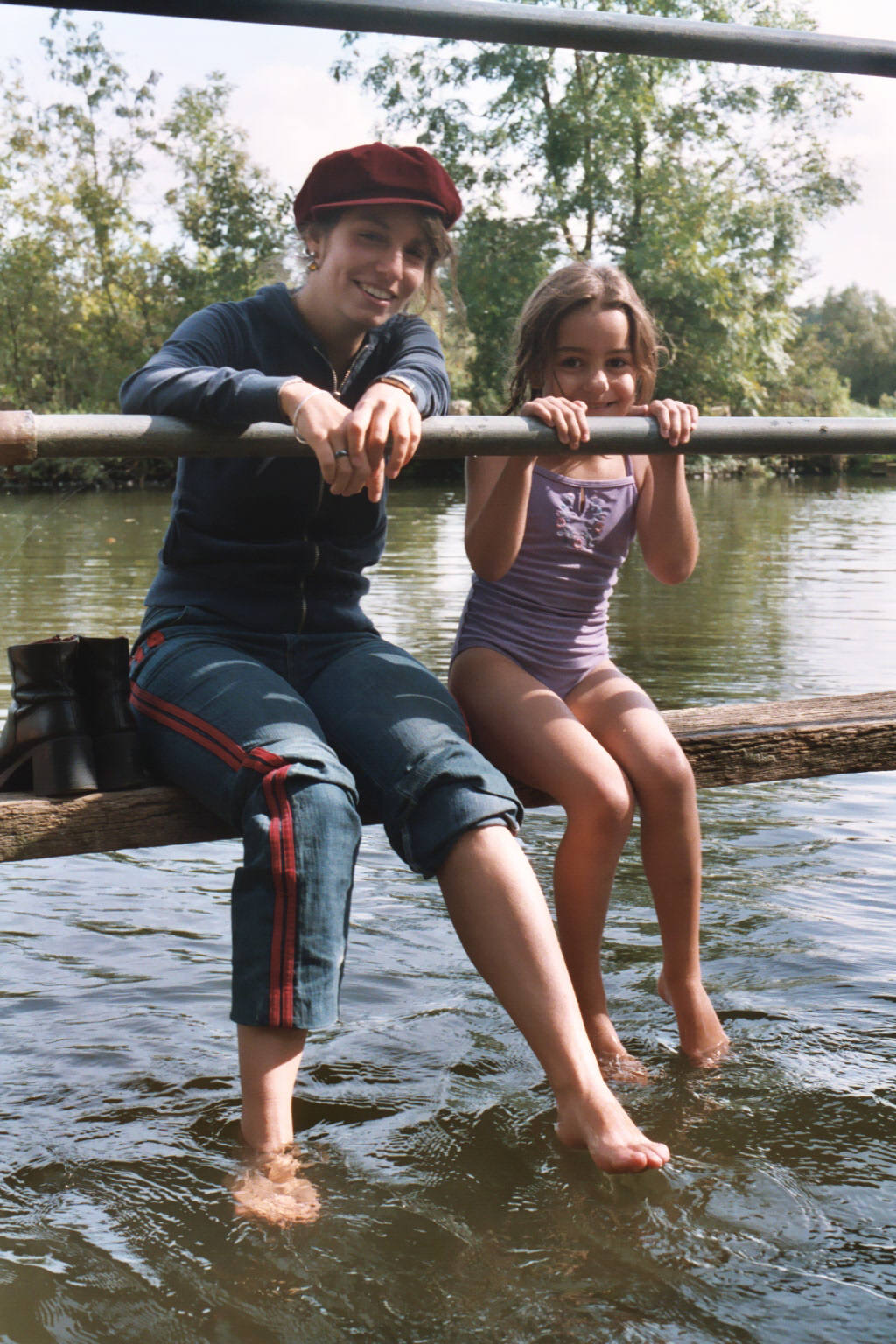
Over time, I had the pleasure of meeting a few of my forum friends in real life, among them Ana Esther from Spain who spent a few months in Ireland and came over on a night coach to stay with my family for a weekend:

We met again for a concert in Madrid, but then lost touch, except for google+ which we both hardly use at all. Checking google+ this week, I found a link to one of her videos (she’s studied audiovisual communication) and through that discovered an earlier video where she examined the issue of anonymity in online chat. A boy who pretends to be a girl chats with a girl who pretends to be a boy. And when they meet up and discover their mutual deception, they look extremely cute and embarrassed.

Ana Esther wrote the script and plays the girl, check it out (Spanish only, I’m afraid), I love it to bits:

PS I'm basking in the warm glow of the illusion that I might have provided 0.0001% of the inspiration for this, even though I've never pretended to be a girl. Still, my nick, pensandoenti, may have come across as a bit girly, I suppose?

Monday, July 22, 2013

drugs prohibition kills

I wrote a feature about psychoactive drugs a few weeks ago, mainly inspired by the recent paper from David Nutt and colleagues who argued that the blanket ban of psychoactive drugs harms progress in neuroscience (apart from ruining the lives of millions of people with the unwinnable "war on drugs").

Since then, tragic events, including the death of a teenage girl here in Oxford, have highlighted the issue. There is a properly dangerous drug making the rounds in the UK right now, PMA (paramethoxyamphetamine) (probably called Dr Death for a reason), but as drugs are banned regardless of their harm, it's hard to know what is and what isn't dangerous. Plus, there is no quality control, and if kids buy an illegal pill, it could contain anything. In the Netherlands, by contrast, there are labs checking up on what is being traded, and they haven't had problems with PMA yet.

Essentially, my bottom line is, people always have used mind-altering drugs and always will do, and if there wasn't this blanket prohibition banning harmless and dangerous things alike, it would be much safer for them to do so. Hardline prohibitionists are just creating most of the problems they are pretending to solve.

Oh well. Don't get me started on this, it drives me up the wall in no time. Just read my feature:

Drugs prohibition is criminals’ gain, neuroscience’s loss

Current Biology, Volume 23, Issue 14, R585-R588, 22 July 2013 doi:10.1016/j.cub.2013.07.012

which is freely accessible (and legal, still!) as

HTML text

PDF file.

Cannabis sativa - picture credit: GW pharmaceuticals.

PS: couple of further links re. the recent deaths linked to PMA:

PPS only after publishing this blog entry I became aware of the organisation Transform Drug Policy Reform, which has published detailed suggestions for a drugs regulation based on actual scientific evidence and on policies that are feasible (borrowing bits and pieces from established frameworks such as the handling of prescription drugs). "After the War on Drugs: Blueprint for Regulation" is freely available as a PDF download, but if you would like to support the organisation, you can also order it as a book from them. You can also download the executive summary only, which is also available in several other languages including Spanish, Russian, and Italian.

Monday, July 08, 2013

people, pets, and predators

My latest feature in Current Biology covers the triangular relationship between humans, their pets, and undomesticated animals that may come in conflict with one or the other. I've specifically looked at two cases that made headlines recently, namely badgers vs. cattle, and cats vs. birds. As always, problems are complex, and emotional involvement that people tend to have with specific animal species can make it even harder to find rational solutions.

The feature is out in today's issue:

Where wildlife and tame life collide

Current Biology, Volume 23, Issue 13, R545-R548, 8 July 2013 doi:10.1016/j.cub.2013.06.038

Free access to

Full Text (HTML)

PDF file

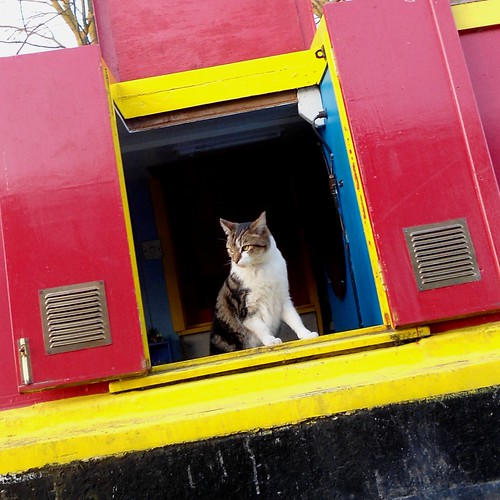
houseboat cat revisited

pet predator from my flickr pics.

Tuesday, July 02, 2013

foam from the horse's mouth

In a late follow-up to the frog foam story from 2009, I covered the structure of an equine protein coming from the same groups. Latherin is found in the sweat and saliva of horses and has unusual surfactant properties suggesting a new mechanism.

Read all about it in Chemistry World (free access):

A foaming protein from the horse’s mouth

NB: this came out so quickly that I actually missed it when it appeared, hence the slight delay in horn-tooting.

horses & buttercups

Some not so sweaty horses salivating over buttercups in a field near our house.

Sunday, June 23, 2013

algae, bees, and chemists

The roundup of German pieces published in June includes red algae caught stealing, bees being invited for coffee, and chemists in high office.

Nachrichten aus der Chemie 61, 647
Blickpunkt Biowissenschaften: Extremophile Rotalge des Gen-Diebstahls überführt

Nachrichten aus der Chemie 61, 623
Ausgeforscht: Wir sind Papst (und mehr)

Chemie in unserer Zeit 47, 146
Koffein stärkt Gedächtnis der Bienen Abstract and restricted access to PDF file

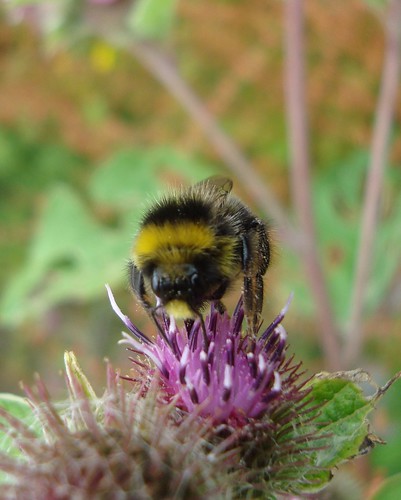
bee25

one of the bumblebees buzzing around on my flickr photostream.

Friday, June 21, 2013

Vénus noire

review of the film

Vénus noire by Abdellatif Kechiche (France 2010)

This film from the auteur of Cous cous (La graine et le mulet) and this year’s Palme d’Or winner Blue is the warmest colour (La vie d’Adèle) tells in epic breadth the sufferings of Sarah Baartman, one of the African women shown around as a curiosity ("the Hottentot Venus") in European cities at the beginning of the 19th century.

While mentions and images of the historical Venuses are familiar to many, I think they remained curiosities so far. The film very successfully lifts the human being caught up in this show off the page and makes her experience of hopes, disappointment and exploitation the focus of the story. With the benefit of living in a (slightly) more enlightened age, we can see that she is beautiful, intelligent, and talented in ways that the contemporary audiences – neither the workers in London nor the aristocrats and scientists in Paris – could hardly fathom.

Seeing her strength in the face of adversity is uplifting, but watching her European audiences and the males that exploit her is very uncomfortable if you happen to be white and/or male. The underlying curiosity for people who are different from one’s own is of course not a bad thing, but without respect for the otherness it can have devastating effects.

I find it rather puzzling and depressing that this film didn’t get a UK release (not even on DVD - I bought mine in France, and amazon UK offers an import version). In many ways the London episode (where anti-slavery campaigners even try to liberate Baartman from her employer in a court case) is the less depressing part of the story.

Image from amazon.co.uk

Thursday, June 20, 2013

1000 photos

Tomorrow marks the 3rd birthday of my Flickr photostream, and as it happens, I am also celebrating my 1000th picture there. Oh, and I even got used to the new design. Looks kind of cool as long as you don't scratch the shiny surface and it saves me money on the pro membership ...

The most-viewed photos are still the same ones as last year, so instead I'm posting a brand-new one here, photo number 1000:

liege guillemins

This is of course Calatrava's Liege Guillemins station.