Showing posts with label climatechange. Show all posts

Monday, July 20, 2026

antarctic in danger

The Antarctic is in danger of losing both its ice shield and its biodiversity. These two issues are typically treated separately, but are both linked via the climate catastrophe we are causing, so I hooked them up together in my latest feature, which is out now:

The Antarctic faces climate threats

Current Biology Volume 36, Issue 14, 20 July 2026, Pages R777--R779

Restricted access to full text and PDF download

Magic link for free access
(first seven weeks only)

(Unfortunately, this year's features will no longer become open access one year after publication - do contact me if you would like a PDF and the magic link has expired.)

See also my new Mastodon thread where I will highlight all this year's CB features.

My mastodon posts are also mirrored on Bluesky.

Last year's thread is here .

Gentoo penguins (Pygoscelis papua) have recently been recognised as four separate species,
three of which are threatened. (Photo: Liam Quinn/Flickr (CC BY-SA 2.0).)

Monday, December 01, 2025

30 years of climate failure

I get a bit of an anger management problem around the time of year when another COP climate summit confirms that humanity has spent another year not doing anything to stop the climate catastrophe. Even worse when it's a round number, like this year's COP30 marking three decades of failure to even stop emissions from rising, never mind reducing them. I think my first COP-related article was this one on the preparations for COP15 in Copenhagen (2009). We still had hope back then.

By way of therapy, I channel that anger into a vaguely climate-related feature. This year's climate-rage writeup is about the Lancet climate report on the health impacts of the climate catastrophe. Obviously depressing, but then again it is also refreshing that the Lancet authors name the acute dangers we're facing loud and clear whereas the normal media coverage has all but given up on this emergency.

So, well, I've calmed down and my feature is out now:

An unhealthy climate

Current Biology Volume 35, Issue 23, 1 December 2025, Pages R1127-R1129

Restricted access to full text and PDF download
(contact me if you would like a PDF)

See also my Mastodon thread where I highlighted all CB features of 2025.

The thread for 2024 is here .

The city of Belém, shown in this satellite view, is surrounded by Amazonian rainforest. (Photo: Coordenação-Geral de Observação da Terra/INPE (CC BY-SA 2.0).)

Tuesday, September 23, 2025

planet aqua

It's strange that we are calling our planet "Earth" as there isn't all that much earth around here. There's a metal core, some rocky stuff around it, and just a very thin layer of earth covering less than a third of the surface. So, looking at it from the outside, it makes sense to call it Planet Aqua instead, and to write a book about how the history of civilisations is really about managing the flow of all that water, and how due to the climate catastrophe which we have caused, we are now losing that control over the hydrosphere. Which Jeremy Rifkin has done:

Planet Aqua: Rethinking our home in the Universe
by Jeremy Rifkin
Polity Press 2024
My long essay review of the book is now out in the September issue of C&I:

Go with the flow

Chemistry & Industry Volume 89, Issue 9, September 2025, Page 34

access via:

Wiley Online Library (paywalled PDF of the whole review section)

SCI (premium content, ie members only)

As always, I can send a PDF on request.

Tuesday, August 05, 2025

oceans acidified

I've covered ocean acidification many years ago, when it was beginning to emerge as a threat to corals and other calcifying sea organisms, and I've written about the planetary boundary concept (most recently, when chemical pollution was found to have exceeded the boundary).

Thus the new research suggesting that ocean adicification is also outside the planetary boundary (as the seventh of the nine parameters in the original planetary boundary paper) presented a good opportunity to visit both issues in one go.

My feature is out now:

Oceans acidified beyond boundary

Current Biology Volume 35, Issue 15, 4 August 2025, Pages R739-R741

Restricted access to full text and PDF download
(contact me if you would like a PDF)

See also my Mastodon thread where I highlighted all CB features of 2025.

The thread for 2024 is here .

The cover image is not really related to my article, but to me it also symbolises the interaction between the oceans and the atmosphere, because: "Bluebottles or man-o'-war, cnidarians in the genus Physalia, use a gas-filled float and sail to catch the wind and sail the ocean surface."

Cover of Current Biology, vol. 35, issue 15, 2025.

Monday, May 19, 2025

how the Sahara became a desert

The Sahara isn't exactly the place where you would want to store your DNA for a few millennia and expect it to still be readable, so it was a bit of a sensation that researchers recently published the first genome-wide analysis of 7000-year-old DNA of humans who lived there, when it wasn't a desert yet. A good excuse to look a bit more closely at the "Green Sahara" and how it became the Sahara desert we know today. It also serves as a warning, as some places are at risk of desertification due to climate change.

The resulting feature is out now:

Becoming a desert

Current Biology Volume 35, Issue 10, 19 May 2025, Pages R357-R359

Restricted access to full text and PDF download
(contact me if you would like a PDF)

See also my Mastodon thread where I highlighted all CB features of 2025.

The thread for 2024 is here .

Photo of the Acacus Mountains in Southwest Libya

The Acacus Mountains in Southwest Libya, where archaeological excavations at sites such as the Takarkori Cave have revealed a rich fauna and human habitation during the African Humid Period. (Photo: Franzfoto/Wikimedia Commons (CC BY-SA 3.0).)

Monday, April 21, 2025

amphibians feel the heat

From the apocryphal story of frogs being boiled alive in gradually warming water to the construction of frog saunas against chytrid disease, everything you always wanted to know about amphibians and climate change is in my latest feature which is out now:

Amphibians feel the heat

Current Biology Volume 35, Issue 8, 21 April 2025, Pages R273-R275

Restricted access to full text and PDF download
(contact me if you would like a PDF)

See also my Mastodon thread where I highlighted all CB features of 2025.

The thread for 2024 is here .

The pickerel frog (Lithobates palustris) is not endangered yet but appears in recent research as one of the species that may suffer from further climate warming. (Photo: Oak Ridge National Laboratory/Flickr (CC BY 2.0).)

Monday, March 24, 2025

a global meltdown

In case you didn't realise, 2025 is the International Year of Glaciers’ Preservation and March 21 was the annual World Day for Glaciers. The frozen freshwater stocks of our planet urgently need all the awareness and support they can get. At 1.5 degrees warming and rising, they are disappearing fast and that will affect the water supplies of two billion people, contribute to sea level rise, and accelerate further warming through the loss of albedo.

So, plenty of reasons to care about glaciers, and high time to dedicate a feature to them, which I hadn't done before.

a world in meltdown

Current Biology Volume 35, Issue 6, 24 March 2025, Pages R199-R201

restricted access to full text and PDF download
(contact me if you would like a PDF)

See also my Mastodon thread where I highlighted all CB features of 2025.

The thread for 2024 is here .

Glaciers around the world offer imposing, landscape-defining sights, but many are shrinking and doomed to disappear. The photo shows the Perito Moreno Glacier, Patagonia, Argentina. (Photo: pclvv/Flickr (CC BY 2.0).)

Monday, March 10, 2025

moving backwards and breaking things

I've been trying to distil the events unfolding in the US since January 20 into a reasonable narrative that remains valid during the 2.5 week production period and beyond, so I focused on the public health implications of dismantling both international cooperation and federal agencies meant to protect people. Whereas there is no telling which changes will remain and which ones won't, one thing is for sure that many people will suffer and die as a result of certain oligarchs moving backwards and breaking things, and the climate catastrophe will accelerate further, which, again, will cause more suffering and death among humans and wildlife alike.

In retrospect, why didn't the assaults on global public health and on the survival of a habitable biosphere in the early weeks of the Deatheaters takeover get a similarly energetic response from Europe to what we're now witnessing in the context of Ukraine policy? I happen to think that on a dead planet, there won't be a free Ukraine either, so protecting the planet should have been be a bit more important.

Anyhow, my trumpocalypse 2 feature is out now:

Rolling back public health

Current Biology Volume 35, Issue 5, 10 March 2025, Pages R159-R161

FREE access to full text and PDF download

See also my Mastodon thread where I highlighted all CB features of 2025.

The thread for 2024 is here .

Healthcare for women is particularly threatened after the US administration announced the departure from the WHO. The photo shows a Shakila midwife listening to the heartbeat of a pregnant woman at the mobile clinic organised by the WHO at the Garm Abak of Waras district in Bamiyan, Afghanistan. (Photo: © World Health Organization/Rada Akbar, 2015.)

Monday, November 04, 2024

brown algae and blue carbon

There is another COP climate summit coming up this week, and to fend off the evil spirits of fossil fuel dependency I've written another climate related feature to appear just ahead of the event. So delegates have something to read when they get bored. This time it's about kelp both as a casualty and as a potential saviour in the climate catastrophe. I'm afraid the choice between these two paths rests very much with us (ie humanity). So judging on current performance in global affairs, not much hope there.

Anyhow, the feature is out now:

Brown algae and blue carbon

Current Biology Volume 34, Issue 21, 4 November 2024, Pages R1059-R1061

FREE access to full text and PDF download

See also my Mastodon thread where I highlighted all CB features of 2024.

The thread for 2023 is here .

Kelps can capture and sequester carbon on a scale that is significant for climate mitigation. (Photo: freddy an/Pixabay.)

Monday, August 05, 2024

the AI tipping point is nigh

I am slightly allergic to the whole AI hype and the tendency to use it for everything regardless of risks and side effects (a hundred years ago it was radium). So I successfully avoided writing about it, but recently the news about new data centres for AI and their exorbitant carbon footprint piled up and that at least is an angle worth reporting, I thought.

So here goes, entirely written by my own two hands, no AI involved:

The artificial intelligence tipping point

Current Biology Volume 34, Issue 15, 5 August 2024, Pages R709-R711

FREE access to full text and PDF download

See also my Mastodon thread where I highlighted all CB features of 2024.

The thread for 2023 is here .

The rapid expansion of data centre facilities built to serve the demand of AI applications is at risk of endangering energy supplies and climate policies. (Photo: Rawpixel.com.)

other recent (anti) AI news published after I submitted my feature:

Monday, March 11, 2024

tipping over

Climate tipping points were once a hypothetical risk in a distant future. After humanity spent the first quarter of the new century not sorting out climate change, we're now at the point where shit gets real. Tipping points will tip, and it's only a question of when, and how they will interact with each other. For instance, the Greenland ice sheet may topple the North Atlantic's AMOC (and thus the Gulf Stream), which in turn may kill the Amazon rain forest. Interesting times.

I remember very vividly a climate workshop back in 2012 where we were told that AMOC was safe. I wrote a feature about it then. Now there is mounting evidence that AMOC is no longer stable and could pass its tipping point at any time. So I had to write another feature to correct my record on that.

This feature is out now:

North Atlantic tipping point ahead

Current Biology Volume 34, Issue 5, 11 March 2024, Pages R175-R177

FREE access to full text and PDF download

See also my Mastodon thread where I highlighted all CB features of 2024.

The thread for 2023 is here .

After recent rapid heating in the Arctic and accelerated melting of Greenland ice, the collapse of the Gulf Stream has become a real possibility. (Photo: Jennifer Latuperisa-Andresen/Unsplash.)

Monday, January 08, 2024

highway to hell

The first time I wrote something along the lines of we need to stop pumping so much carbon dioxide in the atmosphere was in 1989 - so that will have a 35th anniversary some time this year. But does anybody listen? Year after year it gets more and more depressing to see all these climate summits going by that effectively don't address the problem. COP28 happening at a petrol state for the petrol states was probably the most depressing one so far, but I'm sure Azerbaidjan is poised to beat that record.

In the final days of the summit, I channelled all that rage into another climate feature, and I borrowed Antonio Gutierres's lovely quote from last year for the title:

On the highway to climate hell

Current Biology Volume 34, Issue 1, 8 January 2024, Pages R1-R3

FREE access to full text and PDF download

See also my Mastodon thread where I highlighted all CB features of 2024.

Dubai, UAE hosted the COP28 climate summit, which called for a “transition away” from fossil fuels but did not show a way to make it happen. (Photo: © Jen Houston.)

Monday, November 06, 2023

power to the peatlands

In September I attended the conference Power to the Peatlands in Antwerp and learned lots of things about the ongoing efforts to save or restore peatlands, not just as ecosystems but also as carbon storage that has a major impact on climate change. What I love most about this topic is how our idea what progress means has turned by 180 degrees in just a few decades - until around 1970 draining the swamps was considered a good idea (which today mainly survives in political metaphor), whereas now progress is all about rewetting the landscapes we once drained.

Now I've rounded up everything from the cultural history to current climate efforts in my latest feature which is out now:

Powerful peatlands

Current Biology Volume 33, Issue 21, 6. November 2023, Pages R1127-R1129

FREE access to full text and PDF download
(open archives)

See also my Mastodon thread where I highlighted all CB features of 2023.

I'm not on Instagram myself, but I believe if you follow CurrentBiology there, you'll find my features highlighted there as well.

Population pressure and generous investments made the Netherlands a pioneer in draining wetlands to create new land for agriculture. The iconic windmills now admired by tourists often served as pumps to remove water from low-lying areas. (Photo: R Boed/Flickr (CC BY 2.0 DEED).)

PS back in the noughties, I read various sources about wetlands drainage programmes in 17th century France for family history reasons, because Octavio Strada Junior, grand-son of Jacopo Strada, was involved with them and made quite a success of it. His well-documented descendants include French president Valery Giscard d'Estaing. A firm connection to my Strada ancestors remains to be found though.

Saturday, September 30, 2023

transforming London's air

I don't often read books by politicians, least of all those currently in office, but as I'm interested in the ongoing transformation of London and more generally the role of cities in addressing climate change, I volunteered to review Sadiq Khan's book on these issues:

Sadiq Khan
Breathe: Tackling the climate emergency
Hutchinson Heinemann 2023

It is called Breathe because it was adult onset asthma (contracted after running in London's less than perfect air) that made him fight for a better environment. He was also strongly influenced by the case of Ella Adoo-Kissi-Debrah, who died at the age of 9 and became the first person to have air pollution recorded as the official cause of death.

The whole story of his path from SUV driver to fighter for clean air is well told and an amazingly good read, so my review, now out in C&I is also an endorsement:

Mayor's take on climate

Chemistry & Industry Volume 87, Issue 9, September 2023, Page 35

access via:

Wiley Online Library (paywalled PDF of the whole review section)

SCI (premium content, ie members only)

As always, I'm happy to send a PDF on request.

PS shame though that he doesn't mention the very amazing London WNBR, which for many years was just about the only environmental thing happening there and I could have used one of my photos, so instead I have to show the actual book:

Monday, August 21, 2023

our planet is in hot water

We have just experienced the warmest month since records began and reports of new weather extremes have become a regular feature of the news. Most of the extra heat we are inflicting on our planet doesn't end up in our cities and landscapes however. Most is absorbed by the oceans. There it will not only disrupt marine ecosystems, it also feeds more deadly storms and accelerates the loss of the ice caps and thus sea level rise. Even if we can still be grateful that the oceans save us from even worse heating, all of these changes will eventually come back to bite us.

Pegged to the ongoing marine heatwaves in the North Atlantic and Southern Ocean, my feature looks at what we can learn from previous heatwaves and how the warmer oceans are going to affect life on Earth, both marine and terrestrial. The feature is out now:

Oceans feel the heat

Current Biology Volume 33, Issue 16, 21. August 2023, Pages R829-R831

FREE access to full text and PDF download

See also my Mastodon thread where I highlighted all CB features of 2023.

I'm not on Instagram myself, but I believe if you follow CurrentBiology there, you'll find my features highlighted there as well.

Kelp forests off the Californian coast and their residents, such as this kelp bass (Paralabrax clathratus), were affected by the extended marine heatwave nicknamed the North Pacific Blob in the years 2014 to 2016. (Photo: © Chris Honeyman.)

Friday, July 28, 2023

how the monkey got stuck

Stuck monkey is an adorable metaphor for our civilisation's dilemma - said monkey has his hand trapped in a glass jar trying to pull out a banana, and gets stuck simply by not letting go the fruit. I read and reviewed the book mainly on the merit of the title, but it does have some interesting facts too.

Stuck monkey: The deadly planetary cost of the things we love
James Hamilton-Paterson
Head of Zeus 2023

My long essay review with some thoughts on how the monkey got stuck is out now:

Stuck monkey syndrome

Chemistry & Industry Volume 87, Issue 5, May 2023, Page 35

access via:

Wiley Online Library (paywalled PDF of the whole review section)

SCI (premium content, ie members only)

As always, I'm happy to send a PDF on request.

Here's a snippet of my review:

The author goes through the environmental costs of a wide variety of things that people like to do and don’t want to give up even if it kills the planet, from keeping carnivores as pets to getting internet shopping delivered the next day. He can be devastating in deconstructing some of the more outrageous examples of planet-destroying wealth issues, such as golf courses. There are 26 of them in Phoenix, Arizona, he claims, in a location which is fast becoming uninhabitable to humans.

Wednesday, May 24, 2023

it's WNBR season

The UK's World Naked Bike Ride season kicks off this Saturday with the Portsmouth Ride, so I'll compile some relevant info here. I typically get the tip-offs from this page but don't find its alphabetical order very helpful, so I am sorting everything in chronological order, as long as it can be reached from Oxford in a day trip using public transport. As time passes and rides happen, I'll update the list with links to photos, press reports, and whatever I find about them. Updated 3.7.2023

27.5. Portsmouth - haven't seen any pictures yet?
4.6. Oxford - a small ride but perfect weather. My photos are now in this flickr album (most are rated as "moderate" which may mean you have to log in to see them).
10.6. London - it was amazing as always. Perfect weather and I suspect a record number of participants. My gut feeling says it may have been 2000 (1000 would be a normal attendance for the London ride). My flickr album is now complete with 72 photos covering the ride from Regent's Park to Wellington Arch. I also found a photo of me on the ride. These require you to be logged in (although twitter amazingly showed a preview of the latter photo when I shared a link).
11.6. Brighton -
17.6. Cambridge, Bruxelles - some Cambridge pics here; some pics from Brussels here (mostly blokes) here (mostly one woman) The relevant relevant flickr group (all years) is here.
18.6. Bristol - I couldn't attend this time, but here's a press report and here is a huge flickr album by Mark Gilbert
2.7. Hastings
8.7. Cardiff - album by flickr user Dariusz, only started 22.8., am hopeful there will be more!
23.7. Portsmouth (again, after 27.5. looks like they're really planning two rides this summer)
5.8. Romford (East London) - rescheduled to 9.9.
2.9. Coventry (cancelled)

Outside my range, there will be several other rides in Essex and the north of England, check the WNBR Wiki for dates.

own photo, taken at the London WNBR 2019.

Sadly I didn't make it to any of last year's rides, so my list of rides I participated in has a significant gap:

2015 Bristol
2016 Bristol, London
2017 Bristol, Brighton
2018 London
2019 London
2023 Oxford, London

Monday, April 10, 2023

wandering wine

As the climate gets hotter, wine cultivars will have to move polewards to remain in favourable conditions (as I discussed previously in C&I). A recent massive genome study unravels the past moves of grapevines since their domestication so that's been a good excuse to write about wine and climate again, and also throw in a bit of family history (of which the longer version is here).

The resulting feature is out now:

Wine on the move

Current Biology Volume 33, Issue 7, 10. April 2023, Pages R239-R241

FREE access to full text and PDF download

See also my Mastodon thread where I highlighted all CB features of 2023.

I'm not on Instagram myself, but I believe if you follow CurrentBiology there, you'll find my features highlighted there as well.

Climate change has shifted the growth regions of traditional grapevine varieties, to the extent that merlot grapes can now be grown in Canada, as shown here in the Okanagan Valley, British Columbia. (Photo: laughingmango/Getty images.)

Sunday, February 05, 2023

people move

In one of the most important books of recent years, Gaia Vince managed to knit together two big issues of our time, climate catastrophe and migration, into a coherent argument that even manages to squeeze some hope out of the mess we're in. Whereas politicians and media too often tend to exaggerate migration problems while ignoring or playing down climate problems, Vince argues that migration is not only a normal part of being human but also a necessary part of the solution to the problems we're facing including climate catastrophe.

Nomad Century
by Gaia Vince
Allen Lane 2022

The book has already been widely reviewed and recommended, so to add my voice to the choir, here's my long essay review out now in C&I:

Moving times

Chemistry & Industry Volume 87, Issue 1, January 2023, Page 36

access via:

Wiley Online Library (paywalled PDF of the whole review section)

SCI (premium content, ie members only)

Blackwells

Monday, October 24, 2022

climate canaries

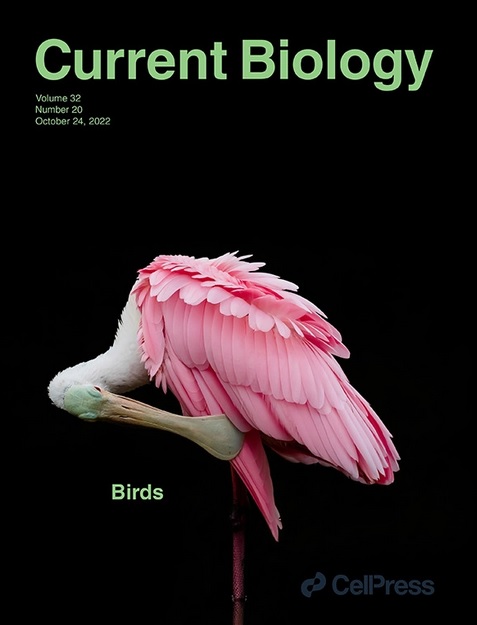
Today's issue of Current Biology includes a special section on birds with lots of exciting stuff including eg a Quick Guide on bird song by Emily Doolittle, plus bird behaviour, brains, culture, migration, you name it. My contribution is on the impact of climate change on bird populations.

Exceptionally, my feature is not at the front of the issue, but at the front of the special section:

Climate canaries

Current Biology Volume 32, Issue 20, 24 October 2022, Pages R1044-R1047

FREE access to full text and PDF download

NB: as the 2022 features move into the open archives, I will add them to this thread on Mastodon.

Cover of Current Biology, issue 20 of 2022, showing a roseate spoonbill (Platalea ajaja) in Florida. This wading bird, one of six species of spoonbills, uses its eponymous bill to sift through water for small prey animals but is here seen preening.