Showing posts with label morocco. Show all posts

Sunday, October 09, 2022

from Alsace to Morocco

Leïla Slimani

Le parfum des fleurs la nuit

Le pays des autres

This June was the first time in too many years that I got to spend some time in France, so I had some catching up to do. In a bookshop at Nimes, I spotted a pair of paperbacks by Leila Slimani lying around on a table where they didn't belong, and as I loved her first novel, Dans le jardin de l'ogre (published in English as Adele), and generally have a soft spot for her, I read this as a sign and bought the pair unseen.
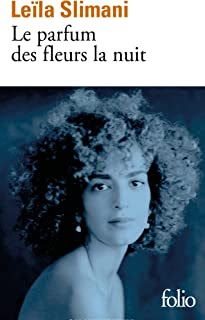
I read the slimmer one first, and it turned out to be an autobiographical sketch about an occasion when she agreed to spend a night locked into a museum in Venice and write about it. I mainly learned from this that she smokes too much, doesn't care much about visual arts, and had a grandmother from Alsace. As I had two grandparents from Alsace/Lorraine, I was intrigued and wanted to know more.
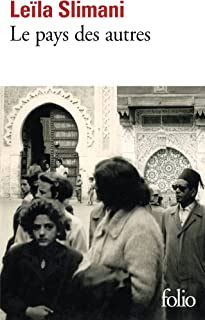
Luckily, the other book told me all about the Alsatian grandmother, albeit in fictionalised form. In the novel she's called Matilde and married a Moroccan soldier stationed near her home during the second world war, and followed him to his native country then still under French rule, but with calls for independence getting louder. Very much the type of book I want to read right now, making sense of our recent past and migration stories in an appealing format.

Ooh, and I hear there is a sequel too, called Regardez-nous danser. will have to get my hands on that (as soon as it comes out in paperback).

See also my twitter thread listing books I read in 2022.

PS Wikipedia names the real-life grandmother as Anne Ruetsch. My Alsatian grandparents were the son of Heinrich and Maria who fell in love in Stasbourg but then were forced to move to Dieuze (Lorraine), and the granddaughter of the stationmaster of Adamsweiler. Both lineages only came to the region after 1871, but Maria also had a much earlier Alsatian ancestor from Sainte-Marie-aux-Mines, unfortunately called Paul Simon, which must be the most useless name for online searches one can imagine. Considering all of this, I'm now creating a tag for all things Alsatian.

Wednesday, December 06, 2017

estevanico's stories

review of:

The Moor’s account

Laila Lalami

I have a thing about the history around 1492 – the end of the reconquista (expulsion of Arabs and Jews from the Iberian peninsula) and the beginning of the conquest of the New World. Arguably, that’s where all our problems started, including slavery, global imperialism, never-ending wars allegedly about religion. One of my cultural reference points here is from Don Quijote - the scene on a market place in Toledo where Christians, Jews, and Moslems mingle and the narrator has no trouble finding a translator for an Arabic document when he needs one. The imperialism and nationalism emerging after the reconquista banished that kind of multiculturalism from Spain for centuries, and other European nations looked at monocultural Spain as an example.

Given this mild obsession, the Moor’s Account is perfectly positioned to attract my attention – it is set just after 1492, with the protagonist, an African Muslim slave getting involved in a Spanish expedition to Florida that goes catastrophically wrong. Estevanico is one of only four known survivors of a crew of several hundreds that set out from Sevilla in 1527. The other three have given reports that were recorded, but his weren’t, or they didn’t survive. Thus, Laila Lalami fills this gap and uses her imagination to figure out what he might have written.

History knows little about the real Estevanico (although he does have a decent Wikipedia entry), but Lalami has given him a childhood and nascent career as a merchant in Azemmour, Morocco, where (according to her guess) he sold himself into slavery in time of need. The value of freedom is a key theme of the novel, as is the power of storytelling. The latter is of course a favourite subject of almost everybody who writes, but it is handled very convincingly here. Storytelling saves Estevanico’s life multiple times, and the novel is also structured as a collection of stories.

Using the accounts of the other three survivors as a scaffold, Lalami also fills in significant events that the Spaniards may have plausibly swept under the rug, including cannibalism among starving groups of the shipwrecked party, their role as healers among the Native Americans (she hints that catholic authorities would have frowned upon that as suspected witchcraft), and marriages with Native women.

The resulting account looks very convincing as invented history and makes a lovely novel. Only occasionally did some English phrase that doesn’t exist in Spanish remind me of what I would consider its only weakness, namely that it is written in a language that Estevanico would have never encountered in his life. (Then again, the same applies to Robert Harris’s brilliant 3-volume biography of Cicero, which purports to be the lost work of his secretary, Tiro.)

In any case, with the links it draws between the Muslim world, Europe and the Americas, and the problems that were to overshadow centuries, it is a great novel not just about what happened after 1492, but about what went wrong in the last 500 years.


PS by crazy coincidence, while I was reading the book I discovered one of the sources that Lalami used at the flea market - Bernal Diaz, The conquest of New Spain, a beautiful hardback of the English translation for £1. Not entirely sure I'll actually want to read it as well, but it does have lovely illustrations ...


Thursday, March 06, 2014

fertiliser challenges

oooops, looks like I forgot to announce the publication of my feature on the challenges surrounding the fertiliser elements phosphorus and nitrogen:

Fertile Ground?

Chemistry & Industry January 2014, pp 24-27

Full text - free access

In the same issue of C&I I also have a review of the book:

The bet: Paul Ehrlich, Julian Simon and our gamble over Earth's future, by Paul Sabin

which appears on pp 50-51 (restricted access)