Showing posts with label bach. Show all posts

Saturday, July 25, 2026

a barefoot cellist

Thanks to a very inspired suggestion of the youtube bots, I discovered the performance of Dvorak's cello concerto by Anastasia Kobekina which opened the Schleswig Holstein Festival on 5.7. (the video on youtube has now been blocked, but it is available via the ARD Mediathek). I guess the bots not only remembered that I love this concerto but also that I watched a number of movies from ex-Soviet Union countries with a manic pixie dream girl character in the main role. As the video fits all of these these criteria, it was an easy catch. (Anastasia Kobekina is Russian but has been living in Germany since the age of 18 or so, according to this German TV documentary about her.)

I'm loving her emotionally intense interpretation of the Dvorak to bits. As the cherry on the cake, I discovered some way into the Adagio that she was playing barefoot on this very posh occasion of a festival opening concert, so that just tipped me over and I had to look up her entire back catalogue as well. Turns out that she very much likes the repertoire pieces that I like, so I'll list a few links below to her videos of pieces for which I have the sheet music in the hope that it helps to inspire me to actually learn some of these pieces.

Barefoot publicity shot from her website.
©Nicolas Hudak_Sony Music Entertainment

Bach: Cello suites 2 and 3 - recorded in the plague year 2020, when I was also studying these suites.

Debussy: Cello Sonata - recorded 2018.

Franck sonata in A - recorded with an orchestra in 2017 at the Queen Elisabeth Competition, with other pieces including movements of the 6th Bach suite. I've played the Franck sonata on the flute at some point.

Haydn: Cello concerto Nr 2 in D - recorded with an orchestra in 2017 at the Queen Elisabeth Competition.

Marin Marais: Les folies d'Espagne - a music video filmed in 2022 to promote an album. More barefoot playing in this one. I tried this on the flute around the same time, but didn't get the hang of it.

Schubert: Arpeggione sonata - recorded in 2015 with a pianist. I've always loved the arpeggione sonata and actually played it on the flute when I had lessons. I also have the cello version, although my daughter's teacher insisted that it is too difficult for mere amateurs.

PS I had looked at the German version of her Wikipedia entry but not at the English one - I only just discovered that it has a very lovely barefoot (and spikeless) photo of her which I would have nicked:

Kobekina in deSingel Antwerp
Source: Wikipedia

Sunday, September 17, 2023

new departures

Heinrich the cello has now left the premises, and I am keeping up the practice habit with Jenny, the new cello on the block:

I am keeping up a revision rota of Bach movements, which haven't improved much since I reached peak Bach in the summer of 2021, but I still enjoy playing them, and I also need the revision to make sure I don't forget them. Here's the second minuet in G, liberated from the grip of the first minuet:

I am beginning to realise that the things I feel as raw and energetic when I play them may come across as scratchy and crude on the video. Oh well. For comparison, my recording of the same minuet with old Heinrich starts here.

Apart from keeping up with Bach, I am also learning the thumb position(s), which turns out to be much easier since I learned the essential fiddle playing. And I am trying to do something about my dismal sight reading. Long term plan: set up the world's worst string quartet.

In other cultural news, I am beginning to realise that there is a lot about Bach in the French TV series "Astrid: Murder in Paris", whose eponymous character has autism. I am learning a lot about both Bach and autism, even though I fear that it may reinforce the perception that enjoying Bach may be a symptom of autism. Will have to do a review of sorts when I'm through with the first season.

Oh and there was also a folky flashmob in the Weston Library last weekend, on the occasion of the Playford exhibition now open.

Tuesday, February 28, 2023

post-plague Bach project

Plague Year(s) Bach Project, 3-year anniversary

Three years after starting the Plague Year Bach Project, I'm not convinced that the pandemic is over, but I do realise that in the absence of lockdowns I'm not making much progress with memorising the suites. With everything else going on (and my shoulder still playing up sometimes), one movement per month (or two months) has turned into half a movement in four months, so I guess it's time to make a new plan.

I now have six movements that I can play from memory, so I'll keep these on the revision cycle to make sure they stay in my memory. They tend to survive my occasional 10-day trips abroad, but I would forget them if I stopped playing on the timescale of months.

memory list:
1.3 Courante
1.4 Sarabande
1.5 Minuet I&II- VIDEO
1.6 Gigue
2.5 Minuet I&II
3.5 Bourree I&II - VIDEO

And the other part of my daily Bach practice / meditation will be sight-reading of one of the six movements I had (partially) memorised before, just keeping the vague familiarity, without keeping the notes in my head. Making more regular use of sight-reading should also be beneficial for my orchestral adventures and chamber music ambitions.

reading list:
2.4 Sarabande
2.6 Gigue
3.4 Sarabande
3.6. Gigue
4.3. Courante
4.5. Bourree I & II

I still haven't got much patience for these two, but might retry them once in a while (would be nice to be able to play the entire first suite):
1.1. Prelude
1.2 Allemande

A Westbury cello I spotted in a charity shop earlier this month and considered buying (as old Heinrich will at some point run off with the young cellist). I played some fragments of Bach suites in the shop. It did sound lovely and looked unused, which is a bit of a tragedy. After some consideration, I think I'll hold out for an old and battered instrument that needs rescuing. I am also making progress with the old family fiddle (blog entry coming up tomorrow), so if and when I end up without a cello in the house I still have some strings to scratch with a bow.

PS In these last 3 years of daily cello practice I have also managed to use up the first new bow hair that we put on Heinrich's old bow back in 2009. As the young cellist uses a different bow, this is exclusively my work - and I will have a go at replacing it myself.

Saturday, January 21, 2023

cello meditations

Plague Year(s) Bach Project, update

I am beginning to notice that my Bach practice is becoming a meditation exercise more than a learning one. I start with one of the five movements I know really well (1.3 - 1.6, 3.5), then the one I have recently re-learned after forgetting it during the gap time (2.5), and finally the one I'm trying to learn, the first bourree in Eb (4.5). By which time I am so elevated in spirit I have a completely relaxed attitude to any learning progress or lack thereof. I have managed to memorise 3/4 of the bars by now, so there may be an end in sight (but I know I've said that before).

In the long term, however, when the brain is full and the supply of learning ambition empty, I could imagine just playing two known movements each day for meditation, that's very soothing in troubled times.

I have run out of cello pics, but here's old Heinrich's bow, which I am using, while the young cellist uses her own bow. You'll notice that I have almost used up my first set of bow hair - not sure how many hours of playing that translates to, but it's a fair few:

The cork is useful because I hold the bow from the end not from above - the way I learned to bow the double bass many years ago. A bass bow has a much bigger frog so enough material to grab it by from the side. With a cello bow it's a bit trickier but the cork keeps it in place. Also, I read that at the time when Bach wrote the suites, the modern bow hold from above hadn't become common practice yet, so I can always claim I do it in the name of authenticity. Moreover, on the top right you notice the dent where old Heinrich's index finger has worn off the bow. By holding it from the other side, I can preserve this historic trace of our old cellist.

Saturday, January 07, 2023

old dogs and new tricks

Two months into the experience of learning to play my aunt's ancient violin I am tempted to say: If I had known that it was so easy, I would have started 50 years earlier. I'll admit, however, that 20 years of obsessing about cello playing (first the young musician's, more recently my own) has helped to make it appear easy. Firstly, the skills are more transferable than I thought, and also I have been exposed to quite a bit of violin advice eg in string classes at the Oxford Music Festival. Moreover, seven years of folk sessions have taught me that you don't have to be Paganini to get some music out of a fiddle.

Oh and I realised that the top three strings of the fiddle are essentially a D whistle. Anything I can play on a D whistle I can also play on the fiddle - which is handy because two years ago I made a list of tunes to practice on the whistle, I can just transfer that. In a broader sense, this covers most of the Slow Session repertoire, anything with one or two sharps. I am not attempting anything with flats yet.

So, anyhow, here's my two-month video playing the Handlarens Vals and messing up the B part a bit. I am really pleased I can sort of play it though, because this lovely Scandi tune doesn't really work on the flute. And it fits the fiddle range just perfectly. Give me another month and I might even be able to play it a bit faster.

On the cello front, I am very slowly approaching the tail end of the first bourree in Eb major (4th suite), so watch this space.

Sunday, December 11, 2022

string theory

Plague Year(s) Bach Project, update plus violin news

Slow progress - have now re-memorised the minuet in D minor to complete movement 2.5, one of the more difficult movements in the first three suites. It still needs sorting out with the metronome. Also, getting the hang of the bourrees in Eb minor, with half of the first (much longer) bourree memorised and the rest of it beginning to make some kind of sense when I play it.

Now looking forward to a few quiet weeks to to advance a bit more.

In other string-playing news, I managed to restore my aunt's violin, which hadn't seen the light of day in more than half a century, to a playable condition, and actually quite enjoy playing it. Waking up an instrument neglected for decades, it would be rude not to play it, right?

Although the fingering on the violin is different from the cello, and the hand is the wrong way round, I found to my surprise that the automatic playing transfers quite quickly. By this I mean that I think of a sound and the fingers will find it - John Holt explained it nicely: when you whistle a tune you don't plan what your tongue and cheeks and lungs are doing either. Playing the violin in the afternoon and the cello in the evening, I have one or two violin related errors when I pick up the cello (ie putting down the 3rd finger where I should use the 4th), so I guess it is important to practice both to make sure the cello code doesn't get overwritten with violin code (that's my string theory at least). But otherwise all good.

So far, I'm only playing folk tunes that I know by heart (eg those from the Oxford Slow Session), and they do tend to come out ok once I figured out which note to start on. Here is a video recorded one month into the fiddle-playing experience - I picked a slow tune, Inisheer, to demonstrate the sound of the instrument, which I think is actually improving as it wakes up from its long slumber, and as we are learning each other's ways. Playing these folk tunes also made me realise to what extent they are written to fit into first position on the fiddle - I've effortlessly played a few that I still find awkward on the flute. Oh, and we made our debut appearance at the Slow Session last Sunday.

Heinrich the cello and Christa the violin. Come to think of it, their human namesakes and previous owners may or may not have met in Idar Oberstein in the 1950s. It may be too late to find out if they did. The attic years of both instruments likely started within 6 months of each other, the cello's after Heinrich's widow died in October 1961, and the violin's after Frieda the pianist died in April 1962 (until then the violin had resided on the top of her piano). Oh, and Frieda's piano also went into storage at that point, but it was the first of the three instruments to see daylight again, at the end of 1968.

Wednesday, November 02, 2022

back to Bach

Plague Year(s) Bach Project, update

Back in July I did learn about half of the first bourree in Eb major, so that went to plan, but then August through to October were kind of busy and I've just about managed to consolidate the movements I can still remember. Just too much going on in the world.

Now I'm vaguely hopeful I can carry on memorising the rest of the bourree this month, might have to go into hibernation and cancel other activities, but fingers crossed.

Of the movements I had once learned, I have almost recovered the minuets 2.5, to add to the list of 1.3-1.6 and 3.5, so that will be six movements in an almost presentable shape which I keep on my revision list.

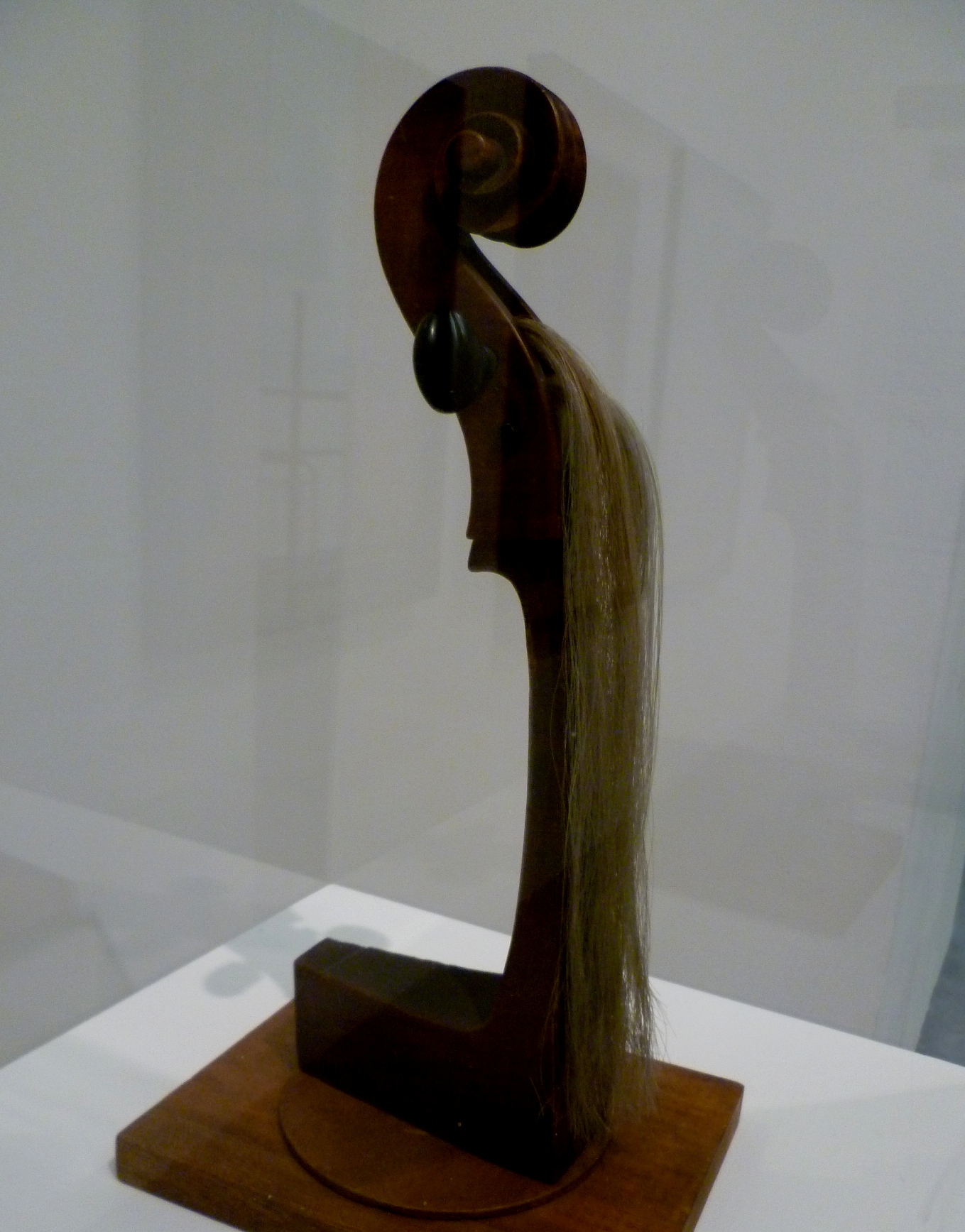
Emak Bakia, a piece of cello-inspired art by Man Ray which I saw at the Tate Modern in October, more info here.

Saturday, July 02, 2022

an uneven pair of bourrées

Plague Year(s) Bach Project, 20th month

Time to try a new movement, although I've only managed to memorise half of the Courante from the fourth suite. Staying in the key of Eb (which I am beginning to enjoy now I've grasped the geography of those three flats), I am now tackling the very curious pair of bourrées of the fourth suite. They are both in the same key (while the paired dances in the other suites typically have the second dance departing from the key of the suite). And the second bourrée is dramatically shorter than the first, in a relation of 1:4 (12 bars to 48 bars). In his short book about the suites, Steven Isserlis mused whether Bach was having a bit of fun with the number 4 here - it is the fourth dance movement of the fourth suite after all, if we leave the prelude out of the count.

Anyhow, it looks manageable, doesn't have any chords in the longer bourrée, which is a bonus for me. As always I am starting with Inbal Segev's video (which is quite short this time).

Performance videos: There aren't many to choose from, but this version by Christine J. Lee works for me.

I seem to have run out of random snaps of the cello, so this recent selfie will have to do:

During Covid I discovered that I kind of like having a bicolour fur pattern around my chin. Once it's going all white, I may shave that off again.

Wednesday, June 29, 2022

stepping up the scales

Slow progress in the Plague Year Bach project, as I am still stuck half-way into the Courante from the fourth suite. But the movement has already served the purpose for which I chose it, namely making me lose the fear of keys with more than two flats.

Essentially, the keys with up to two flats or sharps are easy on the cello as you can play the scales using only elementary technique, ie first position and open strings for orientation. Losing the guidance of open strings (and harmonics) is what makes me panic whenever I see more than two flats or sharps in a key signature, like eg. this very lovely repertoire piece:

After learning the Eb major scale which I needed for the Courante, I realised I can recycle this fingering for other flat scales, and stumbled upon a consistent method that in principle works for all scales in remote keys (and is different from the fingerings I find in books). So here goes (sorry the formatting doesn't quite align across the strings, in my original it is a word file with courier font, where it does):

scales with flats

3xb: Eb (loses open A)

A ¦---1-34
D ¦01-3-12-4
G ¦01x24
C ¦---2-4

that one was fairly obvious, but I’m now taking the upper octave of that and shifting it down the strings to make it the lower octave for the next scales, and I get:

4xb: Ab (loses open D)

A ¦-1-34-1-3-12
D ¦---1-34
G ¦-1-3-12-4

5xb: Db (loses open G)

A ¦---12
D ¦-1-34-1-3
G ¦---1-34
C ¦-1-3-12-4

scales with sharps

3x#: A is trivial (upper oct: 01-34-13-12)

4x#: E (loses open D) finger sequence like Ab, Db works here too, doesn’t need open A.

A ¦---1-3-12
D ¦----1-34
G ¦-12-4-1-34
C ¦----1-3

5x#: B (loses open A) finger sequence like E, Ab, Db.

A ¦----1-34-1-3-12
D ¦-12-4-1-34
G ¦----1-3

i.e. for the lower octave, or if the upper octave starts near an open string (eg Eb on D string), use 13 124 134 For an upper octave that starts on 4th finger, carry on: 4 134 13 12

The combined sequence 13 124 134 134 13 12 works for four scales: Ab, Db, E and B. (although with the E major scale it unnecessarily avoids the open A string).

NB books seem to prefer the sequence 1x24 1x24 124 124 134, which has only four shifts instead of five, but the extensions add difficulty where I’m already in unfamiliar terrain, so I prefer mine.

PS the example shown above is the beginning of the Élégie by Gabriel Fauré, Op 24. Watch a very lovely performance from Nadège Rochat here.

Tuesday, May 03, 2022

carry on courante

Plague Year(s) Bach Project, 18th month

I'm back in the swing of daily Bach practice, and have recovered the five performance-ready movements listed under 4) and 5) below. Still need to work on the other five listed under 2) and 3). So far I've managed to recover the memory of the second minuet of the second suite, which is a lovely piece but only a small step towards remembering all I had memorised by the end of June last year.

Progress with the Courante from the fourth suite is also slow, so I'll just keep trundling on with that this month as well, hoping that by the end of the month I can at least memorise the majority of it.

1) movements I've studied for a month, then put aside for now (still true)
1.1. Prelude
1.2 Allemande

2) movements memorised in a significant part
3.4 Sarabande (1/3)
4.3. Courante (work in progress)

3) movements memorised in their entirety (once upon a time, but now mostly forgotten)
2.4 Sarabande
2.5 Minuet I&II
2.6 Gigue
3.6. Gigue

4) movements memorised and synchronised with metronome
1.3 Courante

5) movements recorded on video and also performed in public
1.4 Sarabande
1.5 Minuet I&II- VIDEO
1.6 Gigue(ooops, need to upload the video, watch this space!)
3.5 Bourree I&II - VIDEO

The five movements listed under 4) and 5) are currently my performance practice list - I play a set of three on one day and a set of two on the other, and I normally manage not to get lost.

I like to sit on one instrument when I play the other ...

Oh, and in cello-related book news, I'm currently reading Mercedes Cebrian's excellent memoir Cocido y violonchelo. Here's my review (accompanied by a cello reading list).

Saturday, April 09, 2022

suites à suivre

Plague Year(s) Bach Project, 17th month
(resuming after a 9-month interval from July 2021 to March 2022)

As of the beginning of April, my shoulder has improved to the extent that I can practice Bach suites for one hour, which I think is the amount I need to make meaningful progress. So, here we go again (and the pandemic is still going strong, thanks to the unwavering support of the death eaters in government).

For this month, I am tackling the Courante from the 4th suite. Part of the idea is that I really need to get my head around the geography of Eb major on the cello, because key signatures with 3 flats or more are holding me back in my orchestral adventures (which relaunched last September).

I also really like this Courante, and with its 64 bars it will likely keep me busy for two months.

As usual, I am picking up useful hints and tips from Inbal Segev.

Loving this performance by Emanuelle Bertrand so much that I won't be looking for any other. (Very artsy video, too, involving shadow play and a mirror, which can be a bit confusing when she seems to be playing with the wrong hand.) I also have Inbal Segev's and Rostropovich's recordings on CD.

In terms of the movements I learned until June last year, I can still play 1.3-1.6 and 3.5 from memory. Will take some time to recover the movements I learned from the 2nd suite. I'll resume the list once I have something to add, rather than to substract.

In other Bach-related news:

  • I read Steven Isserlis's companion to the suites, see my review here. While he was writing the book, he also recorded suites 1 and 3 in this lovely cafe performance (he mentions his work on the book in the intro).
  • Now reading: Friedemann Bach by Albert Emil Brachvogel, a novel about JS Bach's oldest son, Wilhelm Friedemann Bach, alleged to bear very little resemblance to his real life.
  • Spending more time with my other instruments, I'm also looking at a flute adaptation of Bach's partita No. 2 for violin in D minor (I have the entire partita for flute on my revision list, it's kind of the motor that drives me to keep the revision schedule going!).
  • when I have a really ambitious day I also try playing bits of the Brandenburg concerto in F on my alto recorder. A solo adaptation of this happens to be in the big Altblockflöten-Solobuch by Barbara Hintermeier and Birgit Baude. Just give me a few years for that one.
  • I'm now building a twitter thread for the #PlagueYearBachProject, one tweet for each movement tackled.

Tuesday, March 15, 2022

some notes on the cello suites

Some thoughts on:

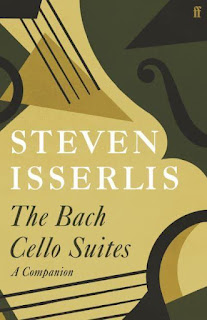
Steven Isserlis, The Bach Cello Suites: A companion
Faber & Faber 2021

Considering the length of the work it covers, 6 suites, 36 movements, around two hours worth of music, this companion from star cellist Steven Isserlis is surprisingly slim, just under 200 pages (plus glossary, bibliography etc). More of a very short introduction.

What we get is: a very short potted biography of the composer - reminiscent of the author’s successful children’s books about composers, but with that extra bit of focus provided by the age old mystery of when, how and why Bach wrote six suites for unaccompanied cello, questions which he then addresses in a separate chapter. Then a chapter on the dance forms, one with playing tips, one looking for religious subtext, which I almost skipped, but then discovered it has also bits about numbers, which were more to my taste, and finally one going through the entire work at lightning speed, just dropping little hints here and there.

Isserlis always emphasizes the fun of playing (play like you would sing in the shower, he advises at one point) and apologises each time he goes into more technical questions like bowing patterns.

For me as a hopeless cellist having spent more than a year on the first three suites, this is just a little light reading, an enjoyable summary of many things I knew already, plus a few interesting thoughts that were new to me.

Sitting half way between proper cellists who can play the suites well and the lay audience who only know them from recordings, I may be well placed to appreciate the compromise that was attempted here. I fear the book may be too light for the former group and too heavy for the latter. But it does look nice in any musical book collection. And it certainly helped me get back into the mood for more suite work after the injury-related rest. So, as we go into Plague Year Three, watch this space for more Bach.

Image source

Friday, October 01, 2021

a few bars rest

update on the Plague Year Bach Project

Heinrich the cello and I had a lovely summer playing chamber music in the park every week, and now the orchestra is moving back into a well-ventilated indoors space.

Over the summer break, I had built up courage to tackle a new suite and new key signature (the 4th suite in Eb major), but at the same time my left shoulder started causing a bit of trouble and limiting the things I can do with my left hand. Chamber music, orchestra, and the occasional revision of the movements learnt are just about feasible, but I reckon serious daily practice might make the problem worse. So no new movements for now.

I have heard that a "frozen shoulder" can take up to three years to resolve - slightly scary, but I'm glad that the more ergonomically designed instruments like the tenor sax or the alto recorder still work fine, so I'm sure I can adapt to the situation and still make some noise.

Heinrich's shoulders are absolutely fine, fortunately.

Thursday, July 01, 2021

summer holiday

Plague Year(s) Bach Project, interval

I think after 16 months of suffering my attempts at playing Bach, dear old Heinrich deserves a holiday. Also, we are regularly playing chamber music in Florence Park now, so I'll obsess about that instead (here's a list of duos for cello and flute, I'll post trios some other time). Seeing how the UK is effing up the covid response for a third time, I expect we will be back to lockdown Bach come September.

In June, I almost managed to memorise the second half of the Gigue in D minor, just a few loose bars left to tie up. I also shifted the Courante and Sarabande in G to the next level, so the first suite is now beginning to take shape. Just need to find a way of doubling the speed of the Courante.

So after 16 months with 446 practice days, 12 movements studied, and 462 bars memorised, my list now looks like this:

1) movements I've studied for a month, then put aside for now
1.1. Prelude
1.2 Allemande

2) movements memorised in a significant part
3.4 Sarabande (1/3)

3) movements memorised in their entirety
2.4 Sarabande
2.5 Minuet I&II
2.6 Gigue
3.6. Gigue

4) movements memorised and synchronised with metronome
1.3 Courante

5) movements recorded on video and also performed in public
1.4 Sarabande
1.5 Minuet I&II- VIDEO
1.6 Gigue(ooops, need to upload the video, watch this space!)
3.5 Bourree I&II - VIDEO

It's all downhill from here ...

Tuesday, June 01, 2021

jigging into summer

Plague Year(s) Bach Project, 16th month

As I write this, it is becoming clear that the govt. has lost control over the spread of Covid for the third time, so if they continue to eff up things like this, I'm still in with a chance to get through a considerable part of the Bach suites.

In May, I memorised what was missing from the Courante in G, and promoted it to metronome work - although it's rhythmically very simple, it still needs speeding up considerably. It's a running dance, and I'm still sleepwalking. I also consolidated the minuets in D major and D minor to an extent that I can play them as a unit as they are meant to be played.

In June, I am aiming to memorise the second half of the Gigue in D minor, and also do more park "performances" (if people around politely ignore me that's good enough). May was very rainy, so not much luck with playing cello in the park, but at least the Wednesdays were ok for Cowley Orchestra, which in very much reduced formation played some chamber music on three evenings this month. And accidental audiences were very appreciative - many will not have seen any actual humans playing actual musical instruments in more than a year!

So after 15 months with 420 practice days, 12 movements studied, and 424 bars memorised, my list now looks like this:

1) movements I've studied for a month, then put aside for now
1.1. Prelude
1.2 Allemande

2) movements memorised in a significant part
2.6 Gigue (1/2)
3.4 Sarabande (1/3)

3) movements memorised in their entirety
1.3 Courante
2.4 Sarabande
2.5 Minuet I&II
3.6. Gigue

4) movements memorised and synchronised with metronome
1.4 Sarabande

5) movements recorded on video and also performed in public
1.5 Minuet I&II- VIDEO
1.6 Gigue
(ooops, need to upload the video, watch this space!) 3.5 Bourree I&II - VIDEO

Saturday, May 01, 2021

memory full

Plague Year(s) Bach Project, 15th month

I've just about managed to memorise the 24 bars of the first minuet in D this month, but I am increasingly getting the impression that new bars learned risk pushing out some of the not quite secure enough ones learned before. So for this summer, I'll focus on securing and polishing the 12 movements I have studied so far and won't be adding any new movements for now.

I've also done a debut performance of the most advanced movements (those at the bottom of my list, below) at Oxford's only bandstand (Florence Park), which was great fun, and I'm planning to do that more often, to practice keeping the concentration while random children are running behind my back and dogs come sniffing at my legs. Other than that, the audience has politely ignored me which is the best I can hope for.

One movement I might complete this month is the Courante in G - seeing that there isn't much missing.

So after 14 months with 389 practice days, 12 movements studied, and 409 bars memorised, my list now looks like this:

1) movements I've studied for a month, then put aside for now
1.1. Prelude
1.2 Allemande

2) movements memorised in a significant part
1.3 Courante (2/3)
2.6 Gigue (1/2)
3.4 Sarabande (1/3)

3) movements memorised in their entirety
1.4 Sarabande
2.4 Sarabande
2.5 Minuet I&II
3.6. Gigue

4) movements memorised and synchronised with metronome
1.6 Gigue

5) movements recorded on video and also performed in public
1.5 Minuet I&II- VIDEO
3.5 Bourree I&II - VIDEO

No f in Heinrich, but two f holes

Wednesday, March 31, 2021

recording some progress

Plague Year(s) Bach Project, 14th month

In March, I managed to memorise the first half of the gigue in D minor (38 bars out of 76) so I'm quite happy with that.

Staying in the 2nd suite, I am now hoping to learn the other minuet, to complete the movement 2.5 which I started in January. See that month's blog entry for the relevant links. I already know the last bar of the D minor minuet, as it ends on an open D chord, and playing that before starting the D major minuet is an enormous help, because the first note fills in the missing F# to switch from minor to major. (This is one atom of Bach which I understood all by myself, so ignore me while I'm gloating about it.)

At the output end of the pipeline, I am now beginning to get some recordings that I am almost happy with, see the first youtube upload. I will list recordings under step 5 below, and possibly replace them if and when I manage to get a less embarrassing one of the same movement. Also hoping to get some outdoors videos, see if the birds would like to sing along ...

So after 13 months with 360 practice days, 12 movements studied, and 385 bars memorised, my list now looks like this:

1) movements I've studied for a month, then put aside for now
1.1. Prelude
1.2 Allemande

2) movements memorised in a significant part
1.3 Courante (2/3)
2.5 Minuet I&II (1/2)
2.6 Gigue (1/2)
3.4 Sarabande (1/3)

3) movements memorised in their entirety
1.4 Sarabande
1.6 Gigue
2.4 Sarabande
3.6. Gigue

4) movements memorised and synchronised with metronome
1.5 Minuet I&II

5) movements recorded on video
3.5 Bourree I&II - here's the VIDEO

I may have snapped this one accidentally while trying to set up the camera for a video, but then I decided I kind of liked it.

Monday, March 01, 2021

jigging into spring

Plague Year(s) Bach Project, 13th month

I enjoyed learning the Sarabande in D minor in February, which was a perfect match as the piece has 28 bars, so I've been able to stick to my established speed of memorising a bar per day (skipping some of the troublesome chords which I can always fit in later). I do feel the sadness and the strength in that one.

Staying in the second suite, I'm now tackling the gigue, which has a few bars more, so I might end up with another fractionally memorised movement, let's see how it goes.

Some helpful links:

I'm starting with Inbal Segev's musings, as always, and I found a few recordings of the whole D minor suite, (with timestamps for the gigue in the link to take you there directly) from:
Ariana Kashefi
Eva Lymenstull
Misha Maisky
Laurens Price-Nowak

I'm also adding these videos to my youtube playlist "cello repertoire".

After 12 months with 329 practice days and 347 bars memorised, the list now looks like this (parts 2 upwards make up my revision rota, with the two most recently learned movements being revised on alternating days, and the others in a separate cycle):

1) movements I've studied for a month, then put aside for now
1.1. Prelude
1.2 Allemande

2) movements memorised in a significant part
1.3 Courante (2/3)
2.5 Minuet I&II (1/2)
3.4 Sarabande (1/3)

3) movements memorised in their entirety
1.4 Sarabande
1.6 Gigue
2.4 Sarabande
3.6. Gigue

4) movements memorised and synchronised with metronome
1.5 Minuet I&II
3.5 Bourree I&II

5) watch this space ...

... like a briiiiiidge over troublllllled water ...

Saturday, January 30, 2021

sadness and strength

Plague Year(s) Bach Project, 12th month

Ariana Kashefi recently played the D minor suite in a lockdown livestream and explained that it represents sadness and grief with an underlying sense of strength and courage. So I guess it's perfect for lockdown number three and the beginning of plague year number two. And to properly wallow in the sadness bit, I'm now moving on to the Sarabande.

Some helpful links:

I'm starting with Inbal Segev's musings, as always, and I found a few recordings of the whole D minor suite, (with timestamps for the sarabande in the link to take you there directly) from:
Ariana Kashefi
Eva Lymenstull
Misha Maisky
Laurens Price-Nowak

I'm also adding these videos to my youtube playlist "cello repertoire".

In January, I learned the second minuet of the D minor suite (there were some scary chords that put me off the first minuet). It took me just over 21 days to memorise its 24 bars, which inspired me to check if the rate of 1 bar per day of practice is typical and indeed it is: since March 15 2020 I have clocked up 300 days of practice and managed to memorise 311 bars. I should check how many bars the six suites have overall, but I suspect three years won't be enough to learn them all.

I spent the rest of the month memorising what was left of the Gigue in C, and learning to play the Bourrees in time with a metronome, so with all these improvements, the list now looks like this:

1) movements I've studied for a month, then put aside for now
1.1. Prelude
1.2 Allemande

2) movements memorised in a significant part
1.3 Courante (2/3)
2.5 Minuet I&II (1/2)
3.4 Sarabande (1/3)

3) movements memorised in their entirety
1.4 Sarabande
1.5 Minuet I&II
1.6 Gigue
3.6. Gigue

4) movements memorised and synchronised with metronome
3.5 Bourree I&II

Heinrich at last September's socially distanced slow session in Florence Park.

PS: predictably, I couldn't resist doing the maths, I think the total is 1933 bars, so learning all at one bar per day would take five years, three months and two weeks. Realistically though, I've spotted quite a few bars in suites 5 and 6 that I definitely won't be able to get into my head.

Friday, January 01, 2021

new year, new minuets

I would say happy new year everyone, but I guess last year's data show that the wishes don't really work, so let's just get on with it.

For the eleventh month of my Plague Year Bach Project, I have been bold and moved into a new key, choosing the Minuets from the second suite, which is in D minor. Thus, the first of the minuets is in D minor and the second in D major. After a quick go at sight reading both, I am now slightly scared by the awkward chords in the first minuet, so I'll start with the second, which looks quite a bit easier.

Some helpful links:

I'm starting with Inbal Segev's musings, as always, and I found recordings from:
Eva Lymenstull (that's the whole D minor suite, but I've included the timestamp for the minuets in the link to take you there directly).
Misha Maisky (ditto)
Laurens Price-Nowak (ditto)

I'm also adding these videos to my youtube playlist "cello repertoire".

In December, I didn't tackle a new movement but completed memorising the Bourrees from the third suite and also started playing the first bourree with a metronome. Also making progress with memorising the Gigue in C, only a couple of lines left to learn of this movement which is quite long. I've made a ranking of the movements in tiers last month (inspired by the covid tiers), but it now occurred to me that it would be more constructive to have a system where rising numbers mark progress (as in grade exams) rather than crisis levels. So, flipped upside down and with the bourrees promoted by a grade, my revision list now looks like this:

1) movements I've studied for a month, then put aside for now
1.1. Prelude
1.2 Allemande

2) movements memorised in a significant part
1.3 Courante (2/3)
3.4 Sarabande (1/3)
3.6. Gigue (4/5)

3) movements memorised in their entirety
1.4 Sarabande
1.5 Minuet I&II
1.6 Gigue
3.5 Bourree I&II

Future levels with higher numbers may include: able to play with a metronome at a reasonable speed, able to perform, actually performed.

Did I mention that Old Heinrich has a very beautiful backside?