Friday, February 20, 2026

not understanding quantum mechanics

As a chemist, I have of course used quantum mechanics in various ways and learned the essential textbook equations, but like everybody else on the planet I don't really understand it. I find comfort in the wise words of Richard Feynman that went something like "If you think you understand quantum mechanics, you don't understand quantum mechanics."

After a few decades of not using my non-understanding of quantum mechanics on a regular basis any more, I found the book Why Nobody Understands Quantum Physics by Frank Verstraete and Céline Broeckaert a welcome refreshment of nearly lost memories.

My review of the book is now out in the February issue of Chemistry & Industry:

Quantum understanding

Chemistry & Industry Volume 90, Issue 2, February 2026, Page 34

access via:

Wiley Online Library (paywalled PDF of the whole review section)

SCI (premium content, ie members only)

As always, I can send a PDF on request.

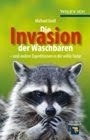
To sell books about quantum mechanics, you have to have Schrödinger's cat on the cover. It's the law.

Saturday, February 14, 2026

a book for our time

Some thoughts on

Mein Opa, sein Widerstand gegen die Nazis und ich
(My Grandfather, His Resistance Against the Nazis and I)
Nora Hespers
Suhrkamp 2021

Nora Hespers grew up rolling her eyes at her father’s outrageous stories about how his father was an important resistance fighter against the Nazis from the very beginning and how they executed him by hanging him from a butcher’s hook. After her father left the family and disappeared from her life, she never heard the name Theo Hespers mentioned again, as nobody outside the family seemed to be aware of his story. Until the fateful day when a colleague at the broadcaster where she worked casually mentioned that he had written his PhD thesis about her grandad and would she perhaps like to take part in a radio show about him?

This jaw-dropping moment sparked a blog, evolved into a podcast, and eventually crystallised into this very impressive and deeply moving book, which intersperses Theo Hespers’ biography with the journey of discovery undertaken by his granddaughter after she began to realise that the wild stories she heard as a child were largely true, actually. The learning experience that started in autumn 2012 and snowballed through to the completion of the book in 2020 became all the more dramatic as some of the history repeated itself in ways that were unconceivable at the beginning, making it all the more important to pay attention to the lessons of the past.

West Germany honoured the resistance of a very few select people including the White Rose circle around the students Sophie and Hans Scholl, and the July 20 (1944) coup attempt led by Claus Schenk Graf von Stauffenberg. The famous book Das Gewissen steht auf by Annedore Leber, which we had on our shelves when I grew up contains biographies of 64 members of various resistance efforts. (An English version has been published as Conscience in Revolt) In the GDR, the emphasis was naturally on communists fighting the Nazi regime, including the group known (in Nazi documents, not in their own understanding) as the Rote Kapelle (featured in the recent movie From Hilde, with love).

As Nora Hespers notes, the resistance of the July 20 movement only awakened at the time when it was obvious that the war was lost. The officers involved had previously served Hitler’s army without resisting too much. In contrast, her grandfather, motivated by a deep Christian humanism (but also critical of church officialdom) recognised and militated against the sheer inhumanity of nazism from the very beginning. Therefore he and his family had to flee to the Netherlands as early as April 1933 and had to flee further when the Netherlands and Belgium were occupied. At one point, Theo had the opportunity to escape from Dunkirk to England but would have had to leave his family behind, which he refused to do.

This early anti-fascist engagement makes it practically inevitable to compare his story to the modern developments. At the stage where we are now, the likes of Theo Hespers are shouting from the rooftops that we have to stop fascism. Other early resisters around him who also feature in the book include Hans Ebeling (nickname Plato) from Krefeld, Max Behretz (executed 1942), Josef Thome, Josef Steinhage (cofounder of the antifascist paper Der Deutsche Weg, Peter Lütsches, Selma Mayer. Many of Hespers contacts were from various catholic movements, but he didn’t fundamentally object to working with communists united in the cause against fascism.

I read this sort of books partly as examples of how to turn family history into something that is relevant and interesting to humans beyond the family circles in question (which worked out amazingly well for the Hespers family). In this case there was an additional overlap of interest as Theo Hespers’ family lived near Mönchengladbach, in the village of Dahl, which is between Mönchengladbach and Rheydt. (Rheydt was merged into the bigger city in August 1929 and demerged at the specific request of Joseph Goebbels, who hails from there, then merged again in the 1970s.) My grandmother Ruth went to school in Rheydt, and the family lived there from 1923 until they moved to Königsberg in 1935. I didn’t spot any familiar names in the book, and she wasn’t quite the same age as Hespers (she’s from 1908, he from 1903) but I love the idea that with enough info about the social networks around both, one could probably find a connection with fewer than the famous six degrees. I was also intrigued by the very fleeting mention on page 53) that Nora Hespers’ great-grandfather might have ended up owning Kaiser’s Kaffee (a chain of grocery stores originating in Viersen).

Speaking of which, I think a book like this should definitely have an index - if only to save me the trouble of noting down all the names and page numbers. The other thing I missed was: What did that colleague write about Theo in his thesis? I may have missed something but I didn't see it mentioned or cited as a source again.

Nora Hespers launched her blog and podcast as Die Anachronistin, a word merged from the German versions of a (female) chronicler and anachronism, as she describes herself as a chronicler fallen out of the time she's writing about. Unfortunately the times have somehow looped back since then, such that this book about how brave people resisted the Nazis in the 1930s has turned into a very important book for our time, not anachronistic at all.

PS This English-language web page from her publishers seems to be an attempt to sell translation rights, which doesn't appear to have worked so far. Would be good to see more international publicity for this story though.

Thursday, February 05, 2026

aptamer sensors patched up

My astrobiology co-author Kevin Plaxco has been pioneering the development of biosensors based on aptamers (the artificially generated DNA equivalent of antibodies) for many years now and every once in a while I write about the progress in this fascinating field. Now the work has reached its first clinical trial, so I wrote a news story for Chemistry World to help spread the word.

The news story is out now:

World first for clinical trial of skin patch to monitor therapeutic drugs in real time

Chemistry World 5.2.2026

Source: © Marsilea A Booth et al/Springer Nature America 2026

Previous episodes in this serie are listed here.

off to the Netherlands

While obsessing with various migration stories in my distant family history, including the 19th century departures to the Black Sea and to Brazil, I neglected one example much closer to the present. In 1910, the oldest sister of my great-grandfather Julius (about to set up his own shop in Luisenthal) emigrated to the Netherlands with her husband who hailed from Barmen and with her three children who were all born in Krefeld.

There is some info about these people on Dutch archive sites, so let's add some flesh to the bones I had in the ancient Krefeld clan entry:

7. Karl Düselmann ~ 11.3.1841 Krefeld
oo (2) Elisabeth Catharina Imig (1851-1924)
7.2. Elisabeth (Elise) * 9.8.1876 Krefeld, +19.06.1945 Bergen, NL (I saw her referred to as a student of theology in one of the archive entries, but after finding other errors there as well, I am beginning to think that this may have been a mix-up with info referring to her son? Would be quite something if true though.)
oo Otto Finkensieper * 4.11.1871 Barmen + 2.8.1930 Alkmaar NL, aged 58, furniture trader,


7.2.1. Karl Otto * 8.11.1905 Krefeld +9.11.1960 Valburg, NL, writer, priest in Zetten (biography in Dutch), photo
oo 20.10.1932 Johanna Koning, * 10.1.1911 Meppel
7.2.2. Hugo Kurt * 10.7.1907 Krefeld, merchant in Scheveningen; received the Orde van Oranje-Nassau in Silver
oo 5.5.1931 Bergen Elisabeth Wilhelmina Kerkmeer, born 17.4.1907 in Alkmaar, 24 years old
7.2.3. Benjamin 15.2.1909 Krefeld merchant in Scheveningen
oo Augusta Matthilde Dahlhaus

Cover of the book Holland zoo ben je (1934),
to which Karl Otto Finkensieper contributed two novellas: Waterpost and Nieuw land.

As far as I know nobody in my family was in contact with the Dutch relatives after 1945. From my grandmother I had the names of the three brothers and their career choices, but that's as far as the info went. (Sounds like the families kept in touch while the Düsselmanns still were in the Lower Rhine area, but lost touch when they moved to East Prussia.) The names of their wives are from the Dutch archives website.

I didn't find any children of the three couples but I'm spooked by the discovery that there was a scandal at the Heldring-Gestichten in Zetten in the 1980s where a psychiatrist called Theo Finkensieper was the culprit (sentenced in 1992 according to Dutch wikipedia) Unfortunately, Karl Otto Finkensieper was the director of this very same institution from 1939 until his death in 1960, and I think this documentary says (at 2:20 mins) that Theo was his son. As far as I understood from the Dutch commentary, the place was known for very strict protestant morals until 1960 (when Karl Otto died), and the liberation beginning the 1960s may have led to transgressions that ended up in abuse cases.

This obviously swamps all the searches and I didn't look further for descendants, because even if I could find them I guess they wouldn't want to have their family relations publicised.

On the migration theme, in March 1930 Benjamin travelled to New York on the ship Nieuw Amsterdam, and after that I can find no further register entries in NL that mention him (apart from his father's death where he and his wife are mistakenly labelled as parents of the deceased, which doesn't really inspire confidence in these archive records). So did he emigrate??? It's a bit tricky to investigate as he shares his name with an architect who built lots of things in New York a generation earlier, around 1900. So that's all I can find right now.

Regarding the origins of the name Finkensieper, there is a hamlet and a creek called Finkensiepen which are today part of the town of Radevormwald, Oberbergischer Kreis, NRW. This would be plausible, especially as Gedbas has a bunch of Finkensieper children born in Radevormwald around 1770. Etymologically, this seems to have the same roots as Siepmann, which I've pinned down to Schwelm, which is in Westphalia but not all that far away.

Monday, February 02, 2026

plants recycling metals

It has been known for centuries that certain kinds of plants thrive on soils heavily contaminated with toxic metals, even on mining waste. It took a while for people to realise that these plants can be used to extract desirable metals from such soils. Especially in our times with ever-growing hunger for resources like nickel, gold, and rare earth metals, the rising prices of these metals have led to some plant-based mining methods becoming economically attractive.

Read all about it in my latest feature which is out today:

Mining metals with plants

Current Biology Volume 36, Issue 3, 2 February 2026, Pages R73-R75

Restricted access to full text and PDF download
(Unfortunately, this year's features will no longer become open access one year after publication - do contact me if you would like a PDF. Last year's features will still move to the open archives as this year advances.)

Magic link for free access
(first seven weeks only)

See also my new Mastodon thread where I will highlight all this year's CB features.

My mastodon posts are also mirrored on Bluesky.

Last year's thread is here .

The yellow zinc violet (Viola lutea ssp. calaminaria) has historically served as an indicator plant for soils rich in zinc ores. It is still found on former mining sites in the area where the borders between the Netherlands, Belgium and Germany meet. (Photo: Gilles San Martin/Flickr (CC BY-SA 2.0).)

Sunday, February 01, 2026

a rare find

At the beginning of January I discovered a 19th century French book selling for a very affordable £ 1.50 at a charity shop and really liked the look of it so I just bought it without thinking much about it.

With a leather back and nice marbling on the hardcovers it looks like this:

It's a first edition of Le docteur Pascal, the last volume of Emile Zola's epic series of novels Les Rougeon-Macquart, from 1893. Sadly somebody cut out the family tree of the Rougeon-Macquart family which was included as a fold-out page. Otherwise it is in good condition, slightly foxed as they like to say in the trade but I love it.

More photos:

The good thing about French books in the Oxford second hand and antiquarian market is that there's supply from expats and visiting academics but virtually no demand, so I can snap up some rather amazing things sometimes (I don't do that for German books very often these days because I get them free in the street libraries in Dusseldorf, but see this one and these from pre-plague times). Abe books currently has several copies of the Zola for sale at prices of a few hundred pounds, so I think I managed to find a bargain here ...