Monday, April 29, 2013

censorship in the UK

The UK's Advertising Standards Authority has banned this ad:

according to this report in the Guardian, and I'm having a huge problem with this decision. The posters don't show anything at all apart from the drink, just words, and (as the ad slogan itself suggests) any associations are purely in the mind of the beholder.

If we've reached the point of not being allowed to use words that have several meanings because some readers may associate them with a meaning that they themselves will then find offensive, I think we've arrived in a kafkaesque nightmare of censorship. If people are offended by their own thoughts, it should be their own problem, right?

To use a visual analogy, if looking at a lighthouse makes you think of male genitalia, that doesn't give you the right to ask for images of lighthouses to be banned. The association is exclusively your own problem.

And that's essentially the point that the ad itself tried to make in a playful way. Clearly some people at the organisation in charge of such things were unable to grasp this subtle philosophical point.

Monday, April 22, 2013

imaginary maladies

During the preparations for the latest edition of the Diagnostic and Statistical Manual of Mental Disorders of the American Psychiatric Association, DSM-5, controversies have raged over the broadening of diagnostic definitions. Critics have argued that the new manual, due to be published in May, will turn more people than ever into psychiatric patients.

So I wheeled out Moliere's imaginary invalid and investigated whether the shrinks are letting normality shrink away into oblivion. The resulting feature has now come out in Current Biology:

Has the manual gone mental?

Current Biology, Volume 23, Issue 8, R295-R298, 22 April 2013 doi:10.1016/j.cub.2013.04.009

Free access to the

HTML text

PDF file

Hoy Función

A stage production of Moliere's Le malade imaginaire in Argentina, via Flickr.

Tuesday, April 09, 2013

online culture

Why is tumblr like ancient Egypt? How do you recognise if a twitter user is part of a specific tribe? Will edit wars on Wikipedia end in peace deals or carry on forever? And why have some social networks turned into ghost towns?

All these questions and more are addressed in my feature on the cultural evolution of online social networks, which is out now in Current Biology:

What makes people click?

Current Biology, Volume 23, Issue 7, R255-R258, 8 April 2013
doi:10.1016/j.cub.2013.03.047

Free access to

HTML text

PDF file

Twitter users grouped into tribes, annotated with words typically used by each group. Graphic: John Bryden, Sebastian Funk and Vincent Jansen

Monday, April 08, 2013

beer and spinach

In the round-up of German pieces published in April we have serious reports on teeth and on artificial enzymes, and not so serious ones on beer and spinach. The latter made the cover of Nachrichten:

Chemie in unserer Zeit 47, p 74
Neuartige Enzyme

Nachrichten aus der Chemie 61, p 407
Chiralität und Reinheit des Bieres

Nachrichten aus der Chemie 61, pp432-433
Spinat macht Skeptiker stark

Nachrichten aus der Chemie 61, pp440-442
Wie das Krokodil zu Zähnen kam

All on restricted access I'm afraid, but I'll be happy to send pdf reprints.

Monday, March 25, 2013

apps with inverted helices

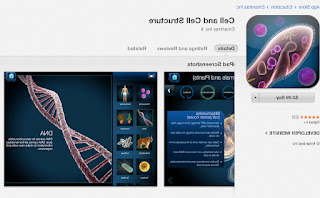
After my recent blog post on DNA double helices that twist the wrong way (inverted helices), a reader (who prefers to remain anonymous) submitted a few examples of apps featuring such mirror-world DNA. Following the example set in that previous post, I'm showing the corrected versions here:

I'm sure you can still read the text to work out who the culprits were ...

Wednesday, March 20, 2013

digging deep

The Deep Carbon Observatory is an international interdisciplinary project studying the hidden carbon fluxes deep within the earth, along with implications for life in the subsurface and on planet formation and development.

I've written a feature about this work which is out in Chemistry & Industry:

Carbon deep

Chemistry & Industry March 2013, pp 32-35

The full text is freely accessible here.

The article is also featured on the cover of the issue:

In the same issue, I also have a review of the book "Synthetic biology: a primer", which appears on page 50.

Tuesday, March 19, 2013

how to design new enzymes

Scientists are now able to design new enzymes to catalyse reactions for which a natural enzyme doesn't exist. I've rounded up some of the first success stories in enzyme design for my latest feature which is out now:

Evolving new types of enzymes

Current Biology, Volume 23, Issue 6, R214-R217, 18 March 2013

doi:10.1016/j.cub.2013.02.054

Free access to

HTML text

PDF

Wednesday, March 13, 2013

Beethoven rondo

Moving on from first movement of the Beethoven Duo no. 1, we're now trying to play the third movement of the same piece, which is actually a little bit easier.

Here's the score:

As of 2021, the Flash view of the score disappeared, but this link is working.

This is mainly adapted from the Kalmus edition for violin and viola. A slightly different version is included in the duets for violin and cello from Editio Musica Budapest.

PS: Note that I added the first bar just to count me in and allow me time to get my hand back to the flute after pressing start.

Thursday, March 07, 2013

the curse of the inverted helix

I've now figured out what to do with DNA double helices of the wrong chirality, which I frequently see in print and online. Earlier I started compiling a hall of shame, but that might reinforce the wrong image (eg by adding to the already considerable proportion of wrong helices that show up in google searches for double helix).

Instead, I'm now going to flip the images that also contain text, such that the DNA will be the right way round and the text will be mirrored. This way, I can signal-boost the correct structure while also exposing the error.

So, for example, a poster I received yesterday now looks like this:

much better, huh?

The same treatment for the historic blunders of Nature and Science yields:

Wednesday, March 06, 2013

oxidation and procrastination

Ooops, now it's March and I haven't done the roundup of the German pieces published in February yet. Time, you're moving too fast.

So in Feb, we had quantum procrastination, reduction and oxidation at the sea floor, and cycloaddition with triple bonds:

Organische Synthese: Drei mal drei
Chemie in unserer Zeit 47, 6
FREE ACCESS (PDF file)

Neuartige Redox-Biochemie im Meeresboden
Nachrichten aus der Chemie 61, 134-135

Proquastination
Nachrichten aus der Chemie 61, 111

And talking of which, a late arrival: a short piece on addiction biochemistry that is nominally in the issue for the 4th quarter of 2012 of the magazine:

Trillium Report 10, 200-201
Die Biochemie der Sucht

Monday, March 04, 2013

hearts and minds

My latest feature in Current Biology juxtaposes a highly acclaimed project to simulate the function of the heart and a somewhat controversial, but well-funded one to do the same for the brain.

Simulating hearts and minds

Current Biology, Volume 23, Issue 5, R177-R180, 4 March 2013

doi:10.1016/j.cub.2013.02.032

Free access to the full text in HTML and in PDF format.

Here is a video about the Alya Red project featured in my article:

Alya Red: A Computational heart

This video recently won Science magazine's prize for science communication.

Monday, February 25, 2013

go further for fairtrade

This year's Fairtrade Fortnight in the UK starts today, details here. In previous years I rounded up all the faitrade products I could find in the household for a group portrait, but that might become difficult as the number keeps growing. Instead, here is a selection of fairtrade chocolates which a family member bought for a science project: