Friday, October 16, 2020

science news 16.10.2020

Today's selection of science news. Links are normally to press releases on EurekAlert (at the bottom end I may also add a couple of newspaper stories). I include quotes from the summary in italics in cases where the title alone doesn't reveal what the story is about. My own thoughts appear without italics if I have any.

evolution

Monkey study suggests that they, like humans, may have 'self-domesticated'
Asif Ghazanfar led a team of scientists who determined that changing an infant monkey's verbal development also changed a physical marker of domesticity: a patch of white fur on its forehead. This is the first study linking the degree of a social trait with the size of a physical sign of domestication, in any species.

ecology

Bark beetle outbreaks benefit wild bee populations, habitat

Cows prefer "live" co-moo-nication, study reveals

light and life

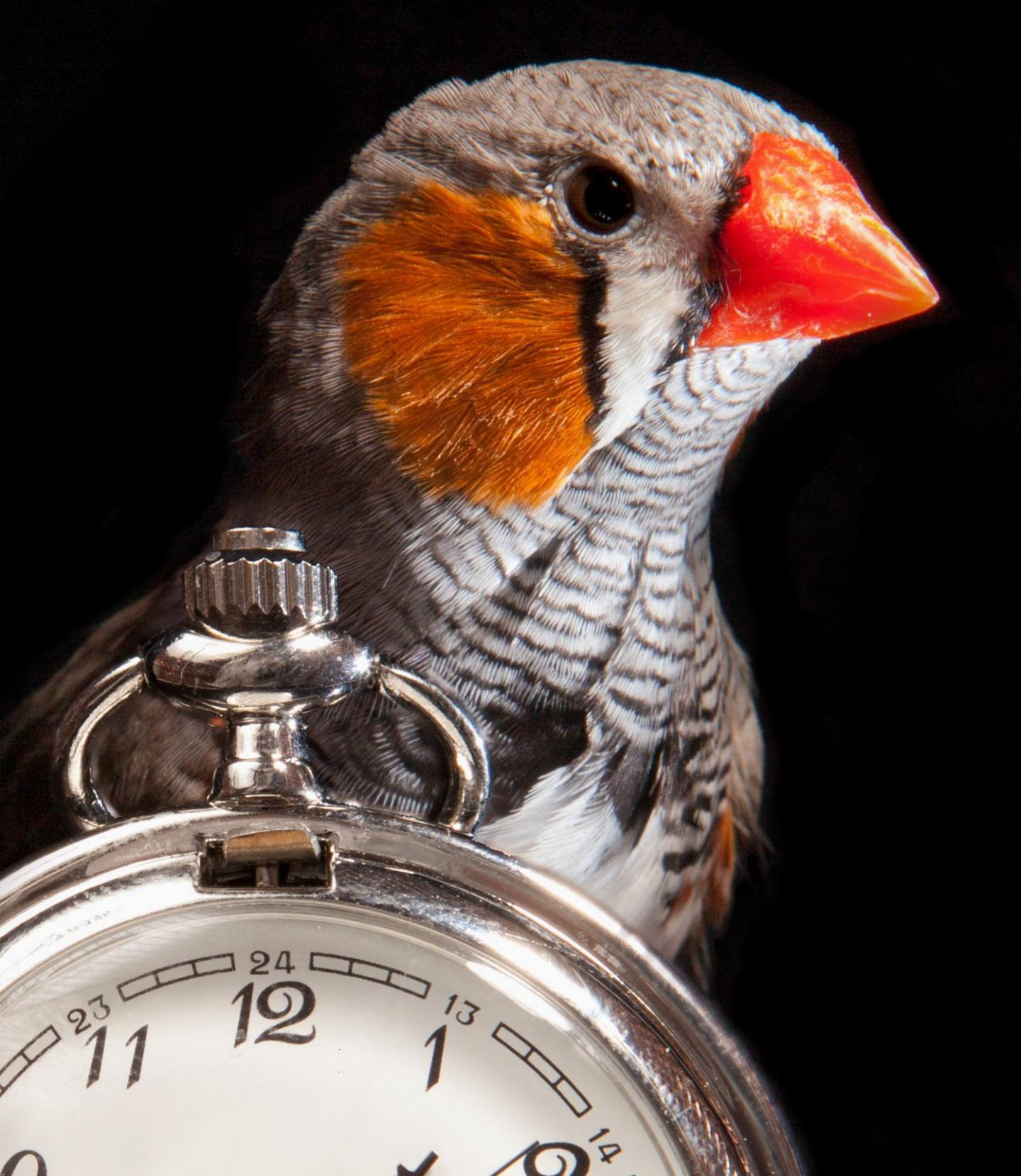
Researchers deconstruct the "biological clock" that regulates birdsong < >

A team of researchers from Penn State and New York University has deconstructed an important "biological clock" in the zebra finch brain and found that the "wires" between neurons, called axons, play a critical role in the precise timing of the birds' courtship song.
Credit: Christopher Auger-Dominguez

biomedical

Bats save energy by reducing energetically costly immune functions during annual migration
relevant for zoonoses including covid, hence biomedical of sorts.

sustainability

Artificial cyanobacterial biofilm can sustain green ethylene production for over a month

dystopian futures

Researchers develop framework to identify health impacts of self-driving vehicles
Loving the use of the word "impacts" in that title.

---------------

From the news media:

Have some blue fluorescent tardigrades

Thursday, October 15, 2020

science news 15.10.2020

Today's selection of science news. Links are normally to press releases on EurekAlert (at the bottom end I may also add a couple of newspaper stories). I include quotes from the summary in italics in cases where the title alone doesn't reveal what the story is about. My own thoughts appear without italics if I have any.

earth

Volcanic eruptions may explain Denmark's giant mystery crystals
Researchers have long been stumped for an explanation of how tens of millions of years-old giant crystals known as glendonites came to be on the Danish islands of Fur and Mors. A recent study from the University of Copenhagen offers a possible explanation to the conundrum: major volcanic eruptions resulted in episodes of much cooler prehistoric climates than once thought.

ecology

'Honey bee, it's me'
Honey bees rely on chemical cues related to their shared gut microbial communities, instead of genetic relatedness, to identify members of their colony. This new work is significant in part because it shows an integral role for the microbiome in the essential, everyday social interactions of honey bees, the Earth's most important pollinators, researchers said.

Mapping out rest stops for migrating birds
A team of researchers have developed a new metric called the stopover-to-passage ratio that can help determine if a majority of birds are flying over a particular site or stopping at the site to refuel or rest. The answer to this question can have important implications for what action is ultimately taken on the ground to help migratory birds.

Whitebark pine declines may unravel the tree's mutualism with Clark's Nutcracker
A new study suggests inequality in the whitebark pine-Clark's Nutcracker mutualism may make this partnership vulnerable when the population of one partner declines. Whitebark populations are declining due to factors including blister rust disease, mountain pine beetle infestations and climate change. The study suggests that nutcrackers leave areas where whitebark is less abundant and seek resources elsewhere, which might mean that declining seed dispersal should be added to the list of current threats to whitebark.

A Clark's Nutcracker perches in a whitebark pine. Photo by Frank D. Lospalluto/Flickr. (CC BY-NC-ND 2.0) Credit: Photo by Frank D. Lospalluto/Flickr. (CC BY-NC-ND 2.0)

conservation

Ivory Coast without ivory? Elephant populations are declining rapidly in Cote d'Ivoire

sustainability

Sweetpotato biodiversity can help increase climate-resilience of small-scale farming

humans

Modern humans took detours on their way to Europe
Climate conditions shaped the geography of settlement by Homo sapiens in the Levant 43,000 years ago / findings of Collaborative Research Centre 806 'Our Way to Europe' published in 'PLOS ONE'

Fossil footprints tell story of prehistoric parent's journey
Hungry giant predators, treacherous mud and a tired, probably cranky toddler -- more than 10,000 years ago, that was the stuff of every parent's nightmare. Evidence of that type of frightening trek was recently uncovered, and at nearly a mile it is the longest known trackway of early-human footprints ever found.

Trash heaps in Israel reveal agricultural shifts during the Roman Imperial Period

Nerves that sense touch may play role in autism
Autism is considered a disorder of the brain. But a new study suggests that the peripheral nervous system, the nerves that control our sense of touch, pain and other sensations, may play a role as well. The exploratory study is published in the October 14, 2020, online issue of Neurology, the medical journal of the American Academy of Neurology.

dystopian futures

Robot swarms follow instructions to create art

---------------

From the news media:
Thursday, October 08, 2020

legos and other building blocks

That awkward moment when I need to cite my own article from five months ago and find I have neither saved the PDF nor referenced it on the blog. So after a trawl through the Wiley Online Library, here are the publications in German I recently forgot to mention:

Von Viren und Tieren
Nachrichten aus der Chemie Volume 68, Issue 5, May 2020, Pages 63-65
Access via Wiley Online Library
related content in English (animal sources of Sars-CoV-2 and other coronaviruses)

Proteomik: Den Urmenschen auf den Zahn gefühlt
Chemie in unserer Zeit Volume 54, Issue 3, June 2020, Page 147
Access via Wiley Online Library
Related content in English (dental proteomics of hominins)

Stammzelltherapien - was ist dran?
Nachrichten aus der Chemie Volume 68, Issue 7/8, July/August 2020, Pages 62-64
Access via Wiley Online Library
related content in English (stem cell therapies)

Insekten-Pheromone: Scheidung auf Chemisch
Chemie in unserer Zeit Volume 54, Issue 4, August 2020, Page 215
Access via Wiley Online Library
Related content in English (coming soon)

Ausgeforscht: Langlebiges Lego
Nachrichten aus der Chemie Volume 68, Issue 9, September 2020, Page 114
Access via Wiley Online Library

So entsteht eine Proteinfabrik
Nachrichten aus der Chemie Volume 68, Issue 10, October 2020, Pages 65-67
Access via Wiley Online Library
related content in English (ribosome asembly and evolution)

Tuesday, October 06, 2020

second wave

As the UK is now steaming into a second Covid wave, I'm getting the opportunity to learn another Bach suite. In mid September, I completed my exploration of the first suite with an approximation to playing the Prelude. Then I had 2 1/2 weeks off in Düsseldorf without a cello (but with my grandmother's piano on which I am still more hopeless than on the cello), and now I am ready for the third suite (which is in C major, one of the three major keys I can almost handle). Of which I have already learned the Bourree 1 and 2, so only 5 movements left to do. Let's start at the tail end again, with the gigue:

I'm starting with Inbal Segev's musings, of course, but then there aren't as many videos to choose from as there were for the first suite. Let's try:
Ophélie Gaillard
Alisa Weilerstein
I'm also adding these videos to my youtube playlist "cello repertoire".

In September, Heinrich's first outing after six months of lockdown led us to the bandstand in Florence Park.

Revision list (newest addition first)

1.1. Prelude
1.2 Allemande
1.3 Courante
1.4 Sarabande
1.6 Gigue
1.5 Minuet I&II
3.5 Bourree I&II


Monday, October 05, 2020

sick of climate change

Today's issue of Current Biology includes a special section "The Microbial World". My contribution to the section looks into the effects of climate change on the ecology of pathogens. Amphibians are the canaries in the coalmine for this one, as they don't control their body temperature and changes in environmental temperature make them vulnerable to fungal infections that are already causing extinctions. But potentially climate-induced human diseases are also being investigated.

Disease in the times of climate change

Current Biology Volume 30, Issue 19, 05 October 2020, Pages R1104-R1106

FREE access to full text and PDF download

Other goodies in the special issue include a primer on the phyllosphere (the above-ground microbiome of plants) by Britt Koskella and a quick guide to giant viruses by Chantal Abergel.

Thursday, September 24, 2020

lichenous liaisons

Blogger no longer allows me to switch back to the "classic" version, so this is my first attempt at writing a blog entry with the new one, and anything could happen. I'll stick to the important info:

My latest feature is about the evolution of lichens. Recent findings suggest they are more recent than thought (which is disappointing from an astrobiology perspective as it means they didn't pioneer the vegetation on dry land), but their evolution was also more complex than thought, with the symbiotic link being made and broken and remade in some lineages, which called for the lovely title (which I nicked from the press release, and amazingly nobody else did that before me):

Lichenous liaisons

Current Biology Volume 30, Issue 18, 21 September 2020, Pages R1009-R1012

FREE access to full text and PDF download


Ophioparma, a lichen formed by a fungus and green algae, growing on rocks in the Alaskan tundra. The red spots are fungal fruiting bodies that release meiotically derived ascospores. (Photo: © Matthew P. Nelsen, Field Museum.)

Monday, September 14, 2020

sharks in the open

Open Archive Day

There has been some exciting shark news in recent week at the biology front (eg about angel sharks or about giant sharks from the Cretaceous), but not so much in conservation issues, as the global slaughter carries on, so the hard work of raising awareness of shark conservation continues. My most recent feature about sharks and how they may end up on your dinner plate appeared a year ago, so it is now in the open archives:

Stop the global slaughter of sharks


The scalloped hammerhead (Sphyrna lewini) is one of the shark species whose fins were identified in a barcoding study of fish products in the UK. It also appears on the EDGE of Existence list of unique and endangered rays and sharks. (Photo: © Simon Rogerson.)

Friday, September 11, 2020

science news 11.9.2020

Today's selection of science news. Links are normally to press releases on EurekAlert (at the bottom end I may also add a couple of newspaper stories). I include quotes from the summary in italics in cases where the title alone doesn't reveal what the story is about. My own thoughts appear without italics if I have any.


earth

66 million years of Earth's climate uncovered from ocean sediments

Understanding the 'deep-carbon cycle'
New geologic findings about the makeup of the Earth's mantle are helping scientists better understand long-term climate stability and even how seismic waves move through the planet's layers.


evolution

Coming up for air: Extinct sea scorpions could breathe out of water, fossil detective unveils


ecology

In the absence of otters, climate warming leads to Aleutian Reef decline
Sea otters prey on urchins and keep their population in check. When otters disappear, urchin populations explode, leading to overgrazing on kelp and a decline in kelp forests.


conservation

The surprising rhythms of Leopards: Females are early birds, males are nocturnal
After 10 months of camera surveillance in the Tanzanian rainforest, researchers from the University of Copenhagen have become the first to conclude that female and male leopards are active at very different times of the day. The discovery contradicts previous assumptions and could be used to help protect the endangered feline, whose populations have dwindled by 85 percent over the past century.


biomedical

Antibody responses in COVID-19 patients could guide vaccine design
The results show that the neutralizing activity of antibodies from recovered patients is typically not strong, and declines sharply within one month after hospital discharge.


environment

Multiphase buffering by ammonia explains wide range of atmospheric aerosol acidity
Anthropogenic ammonia emissions and the water content matter more than dry particle composition for the acidity of atmospheric aerosols in populated regions.


humans

Tel Aviv University study confirms widespread literacy in biblical-period kingdom of Judah
based on the identification of 12 different handwritings? I'm not sure I follow that conclusion. They could have rounded up the only 12 people in the kingdom who were able to write?


Examples of Hebrew ostraca from Arad.
Credit: Michael Cordonsky, TAU and the Israel Antiquities Authority

Addicted to the sun? Research shows it's in your genes
Sun-seeking behaviour is linked to genes involved in addiction, behavioural and personality traits and brain function, according to a study of more than 260,000 people led by King's College London researchers.


dystopian futures

Experiments reveal why human-like robots elicit uncanny feelings

---------------


From the news media:

Thursday, September 10, 2020

science news 10.9.2020

Today's selection of science news. Links are normally to press releases on EurekAlert (at the bottom end I may also add a couple of newspaper stories). I include quotes from the summary in italics in cases where the title alone doesn't reveal what the story is about. My own thoughts appear without italics if I have any.


astrobiology

Where rocks come alive: NASA's OSIRIS-REx observes an asteroid in action

In Ancient Giant Viruses Lies the Truth Behind Evolution of Nucleus in Eukaryotic Cells
An exchange of genetic material that occurred when ancient giant viruses infected ancient eukaryotic cells could have caused the nucleus of the eukaryotic cell--its defining feature--to form. This is what Professor Masaharu Takemura of the Tokyo University of Science, Japan, suggests in his recent review in the journal Frontiers in Microbiology. His novel evolutionary hypothesis opens doors to new discussions on the subject, bringing us one giant step closer to the truth.


earth

New insight on the impacts of Earth's biosphere on air quality
specifically, this is about the distribution of isoprene in the atmosphere.


conservation

At least 28 extinctions prevented by conservation action in recent decades

New tracking technology will help fight rhino poaching in Namibia
Interactive software that 'reads' and analyzes footprints left by black rhinoceroses can be used to monitor the movements of the animals in the wild, giving conservationists a new way to keep watch on the endangered species and help keep it safe from poachers, according to a Duke University-led study.


A black rhino and its calf; new technology that uses software to read unique features of rhino footprints will help protect this endangered species from poachers.
Credit: WildTrack


nanoworld

A chemist from RUDN developed a new type of one-molecule thick water-repellent film
... out of calixarenes, to be specific.


biomedical

More cats might be COVID-19 positive than first believed, study suggests


sustainability

Do as plants do: Novel photocatalysts can perform solar-driven conversion of CO2 into fuel


---------------


From the news media:

Wednesday, September 09, 2020

science news 9.9.2020

Today's selection of science news. Links are normally to press releases on EurekAlert (at the bottom end I may also add a couple of newspaper stories). I include quotes from the summary in italics in cases where the title alone doesn't reveal what the story is about. My own thoughts appear without italics if I have any.


earth

Deep channels link ocean to Antarctic glacier
meaning warm water can lick it away


evolution

New fossil ape is discovered in India
A 13-million-year-old fossil unearthed in northern India comes from a newly discovered ape, the earliest known ancestor of the modern-day gibbon. The discovery fills a major void in the ape fossil record and provides important new evidence about when the ancestors of today's gibbon migrated to Asia from Africa.

Skeletal study suggests at least 11 fish species are capable of walking
See also my feature on evolution of lineages gaining or losing their legs


Thailand's cave angel fish, Cryptotora thamicola, is famous for its ability to walk, using a salamander-like gait. But it may not be alone: At least 10 relatives share its unusual pelvic shape.
Credit: Zachary Randall/Florida Museum


ecology

International study gets at the root of what makes deer migrate
Researchers found that the dynamics of springtime plant growth, specifically whether green-up progresses like a wave or not, explain where deer migration occurs in many ecosystems.

Gulls pay attention to human eyes
Herring gulls notice where approaching humans are looking, and flee sooner when they're being watched, a new study shows.
For a moment I thought the gulls were checking if you're watching your food ...


conservation

Lost frogs rediscovered with environmental DNA
Scientists have detected signs of a frog listed extinct and not seen since 1968, using an innovative technique to locate declining and missing species in two regions of Brazil.


biomedical

High-intensity focused ultrasound _treatment_ for prostate cancer: First US study shows promising outcomes
The title originally didn't make it clear, but this is a new method of treating the cancer, instead of radiation or chemotherapy. It's not about diagnostic ultrasound.

Recharging N95 masks for continued usage
N95 masks achieve 95% efficiency at filtering out 0.3-micron particles, while maintaining reasonable breathability, thanks to a layer of polypropylene fibers incorporating electrical charges to attract particles. Extended usage and decontamination, provoked by severe shortages during the pandemic, can easily remove the charges and degrade filtration efficiency. In Physics of Fluids, researchers share a method to restore the filtration efficiency of N95 masks to out-of-box levels, as long as the mask is not structurally compromised.

Could singing spread COVID-19?
wear a mask, skip the consonants


humans

The oldest Neanderthal DNA of Central-Eastern Europe
A new study reports the oldest mitochondrial genome of a Neanderthal from Central-Eastern Europe. The mitochondrial genome of the tooth, discovered at the site of Stajnia Cave in Poland, is closer to a Neanderthal specimen from the Caucasus than to the contemporaneous Neanderthals of Western Europe. Stone tools found at the site are also analogous to the southern regions suggesting that Neanderthals living in the steppe/taiga environment had a broader foraging radius than previously envisaged.

Ancient hunters stayed in frozen Northern Europe rather than migrating to warmer areas, evidence from Arctic fox bones shows


---------------


From the news media:

Oxford Covid vaccine trial on hold after adverse reaction in one participant.

Tuesday, September 08, 2020

science news 8.9.2020

Today's selection of science news. Links are normally to press releases on EurekAlert (at the bottom end I may also add a couple of newspaper stories). I include quotes from the summary in italics in cases where the title alone doesn't reveal what the story is about. My own thoughts appear without italics if I have any.

Not much going on today, apparently:


evolution

Ancient bony fish forces rethink of how sharks evolved


nanoworld

A new twist on DNA origami


sustainability

Producing leather-like materials from fungi


humans

'Wild West' mentality lingers in modern populations of US mountain regions
Scientists looked at links between the personality profiles of over 3.3m US residents and the "topography" of 37,227 ZIP codes. Distinct psychological mix associated with mountain populations is consistent with theory that harsh frontiers attracted certain personalities. Researchers argue this may be residual from US frontier expansion during the 19th century, as personality pattern is strongest in the West.


---------------


From the news media:

the biggest bang since the Big Bang

and an essay written by a robot. Scary stuff.

Monday, September 07, 2020

value your vultures

Vultures are still suffering from image problems in many cultures, due to their association with death and decay. We should really appreciate them a lot more, however, as their removal of carcasses is an extremely important and valuable ecosystem service. India has lost large parts of its vulture population in recent decades and is already feeling the consequences which include opportunistic mammalian scavengers such as rats and feral dogs spreading diseases that also affect humans, such rabies and the plague. And now Africa is at risk of a similar decline in vulture populations, which could have even worse effects there.

In my latest feature I have looked at the causes and effects of vulture declines around the world, and also marvelled at the different cultural associations we have with various species. The Andean condor, for instance, is also a vulture but doesn't appear to have the same image problem as the other species.

The feature is out now:


Hard times for ecosystem cleaners

Current Biology Volume 30, Issue 17, 7 September 2020, Pages R963-R966

FREE access to full text and PDF download


Vultures are having a hard time in the Lucky Luke comics, too - targeted by jokes if not by bullets ...


If reading the feature is too much work, there is a video about vulture conservation here.