Showing posts with label DNA. Show all posts

Friday, January 13, 2017

aptamer update

I don't do all that many news stories these days, but I did pick up this one from the lab of my old friend and astrobiology co-author Kevin Plaxco, as it is a further step on a path I have followed since the beginnings more than a decade ago.

So the latest news is that electronic aptamer sensors can now work inside a living, moving mammal, as you can read in Chemistry World today:

Personalised medicine boost as cancer drug monitored in real-time

Previous steps on the way:

Chemists crack cocaine detection Chemistry World 2006

MEDIC to kick-start personalised medicine revolution Chemistry World 2013

Biosensors in real time Feature in Chemistry & Industry 2014, No. 4, pp42-45.

Aptamerensoren für kontinuierliche Bluttests Chemie in unserer Zeit 2014,48, 88

Wednesday, October 22, 2014

gene therapy comeback

The idea of treating diseases by fixing faulty genes was big in the late 90s, but then suffered some serious setbacks. Thanks to new vectors and a broader spectrum of disease targets, the approach is now making a comeback and one treatment has already gained official approval in the EU.

Read all about it in my latest feature:

New hopes for gene therapy
Current Biology Volume 24, Issue 20, pR983–R986, 20 October 2014

FREE access to full text and PDF

The book of life - a printout of the human genome on display at the Wellcome Collection, London. Own photo. (I was considering to use this picture with the feature, but didn't have space for it in the end.)

Thursday, October 16, 2014

useful anarchy

Intrinsic disorder in proteins has fascinated me ever since 1997, when Kevin Plaxco asked me to co-author a News & Views piece (1) on what was then an emerging topic. By now it is an established scientific phenomenon feeding a whole research community, so I even had the opportunity to attend a conference about it a few years ago, and write a feature for Chemistry World among other articles.

We now know that intrinsically disordered proteins play an important role in nature. Quite a few of them work in molecular recognition and can achieve specific binding by “folding around” their target. Others are medically relevant. For instance, there are disordered domains (an oxymoron for the protein folding crowd to chuckle or argue about) in virus proteins and in transcription factors that are important targets for cancer drugs.

If nature can find use for disordered sequences, maybe scientists can also use them in molecular design? Kevin’s group at the University of California at Santa Barbara has now demonstrated an intriguing approach in which disordered sequences (of DNA, this time) can make a receptor more cooperative, meaning more likely to bind a second molecule once it has bound the first (2). The best known natural example of molecular cooperativity is the binding of oxygen to haemoglobin in our red blood cells – it can carry up to four molecules, and each position filled increases the affinity of the remaining ones. The attraction, for haemoglobin as for biotechnologists, is that cooperative binding has a much sharper transition, switching from all empty to all full in a narrower range of concentrations than a non-cooperative receptor would.

But how do you force a receptor to be cooperative if it isn’t naturally inclined to do this? What first author Anna Simon and colleagues in the Plaxco lab did was to cut the receptor (a DNA aptamer in this work, but it should in principle be possible with proteins as well) in two halves, then duplicate each half. If you think of a complete working receptor as a pair of robotic hands that can grab a ball, they glued two left hands together and two right hands, but a connected pair of left and right was needed to carry out the desired function. They then connected the ends of the left and right construct with a DNA sequence that prefers to be disordered.

Bringing one pair of robot hands together to grab one ball comes at a cost, as the disordered DNA linker loses entropy (i.e. opportunities to adopt many random conformations) when its two ends are brought closely together. Once the first ball is firmly grabbed, however, and this entropic fee has been paid, the second pair of hands is suitably arranged in close proximity and ready to grab the second ball without having to pay any entropic costs for that. Thus, as in haemoglobin, the second binding event is much more favourable than the first.

Image: Anna Simon / ref. (2)

Simon et al. tried this out with three different DNA receptors, from a primitive one binding mercury ions to a sophisticated aptamers for the molecules cocaine and doxorubicin, and found that all showed some cooperativity, and one receptor, the one for doxorubicine, gave results within the error margins of the values that theory predicts for perfect cooperativity.

Seeing this works with all three DNA receptors tested, it should also work with others and could also be transferred to proteins. In fact, a recent paper suggests that nature also uses this trick in proteins already (3). Then it could be expanded to more than two binding sites, and it would be good to have high-resolution structures of these constructs to analyse their function in detail. The application of disorder in molecular engineering may be a whole new research field that has just been born.

references

(1) K. W. Plaxco and M. Groß, Nature 1997, 386, 657.
(2) A. J. Simon et al, Proc. Natl. Acad. Sci. USA 2014, DOI: 10.1073/pnas.1410796111
(3) A. C. Ferreon et al., Nature 2013, 498, 390.

Thursday, October 02, 2014

viral DNA

Many DNA viruses pack their DNA so tightly inside their capsids (protein shells) that the molecular chain can no longer move and remain frozen in a glassy state. But how does it get out of that freeze when the virus infects a cell? The answer is in my latest news story in Chemistry World:

Viruses melt ‘glassy’ DNA (free access)

source: found floating around on tumblr

Tuesday, April 08, 2014

sense and sensitivity

I've been following the work of Kevin Plaxco's lab on biosensors made from DNA aptamers since the beginnings, and last November there was a new breakthrough to report, the development of a sensor that can monitor the concentration of a target substance in real blood in real time.

I've taken this as an opportunity to write a feature on real time sensors which has now come out:

Biosensors in real time Chemistry & Industry 2014, Nr 4, pp 42-45
restricted access (but drop me a line if you want a pdf file)

In the same issue, I also have a review of the book Bioactives in Fruit:

The good fruit guide Chemistry & Industry 2014, Nr 4, p 51
restricted access (but drop me a line if you want a pdf file)

which is a good excuse to embed one of my foodporn photos:

Thursday, September 12, 2013

DNA balls

My feature on Spherical Nucleic Acids (SNAs) - a kind of assembly in which short nucleic acid strands stick out radially from a nanoparticle core - is out in the September issue of Chemistry & Industry:

DNA plays ball
Chemistry & Industry 2013, No. 9, pp28-31

This is premium content with restricted access to the full text, but I may get pdf reprints.

Image source: Wikipedia - Adapted from Cutler, J. I., et al., Spherical Nucleic Acids. J Am Chem Soc 2012, 134 (3), 1376-1391. Copyright 2012 American Chemical Society.

PS - as punishment for making fun of people for publishing DNA helices the wrong way round, I've been hit by another inverted helix in the illustrations for this article, which I didn't get to check. Fortunately, it's a detailed ball-and sticks model where the chirality is very hard to verify, so it won't mislead anybody who doesn't know already which way the helix is supposed to turn.

Monday, March 25, 2013

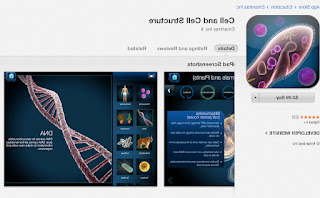
apps with inverted helices

After my recent blog post on DNA double helices that twist the wrong way (inverted helices), a reader (who prefers to remain anonymous) submitted a few examples of apps featuring such mirror-world DNA. Following the example set in that previous post, I'm showing the corrected versions here:

I'm sure you can still read the text to work out who the culprits were ...

Thursday, March 07, 2013

the curse of the inverted helix

I've now figured out what to do with DNA double helices of the wrong chirality, which I frequently see in print and online. Earlier I started compiling a hall of shame, but that might reinforce the wrong image (eg by adding to the already considerable proportion of wrong helices that show up in google searches for double helix).

Instead, I'm now going to flip the images that also contain text, such that the DNA will be the right way round and the text will be mirrored. This way, I can signal-boost the correct structure while also exposing the error.

So, for example, a poster I received yesterday now looks like this:

much better, huh?

The same treatment for the historic blunders of Nature and Science yields:

Monday, February 04, 2013

DNA nanotechnology gets real

DNA nanotech is a field I've followed from its very beginnings, i. e. Nadrian Seeman's DNA cube in the early 90s. Back then, it was playful "misuse" of the tools developed for molecular biology, but increasingly, the methodology has become more versatile and sophisticated, leading us to a point now, where people can design complex and useful things, like nanopores, self-assemble them rapidly and efficiently, and rely on getting the structure they designed. There aren't many molecules you can do that with on a scale of tens of nanometres. So, while it remains an oddity that people misuse an information molecule to build machines, DNA nanotech has grown up into a technology to be taken very seriously.

My latest feature on this field is out in Current Biology today:

DNA nanotechnology gets real

Current Biology, Volume 23, Issue 3, R95-R98, 4 February 2013

doi:10.1016/j.cub.2013.01.049

Free access to

HTML text

PDF file

(Image: with permission from Langecker et al., Science (2012) 338, 932.)

PS: I've also covered the same work in an article in German, published in May 2013:

Spektrum der Wissenschaft 5/2013, S. 16

Materialwissenschaft: DNA-Nanotechnologie vor dem großen Sprung

First para and limited access to PDF

Monday, August 13, 2012

DNA origami

My essay review of the book

Materials Science of DNA

Jung-Il Jin and James Grote, eds., CRC Press 2012, ISBN 978-1439827413

appears in the August issue of Chemistry & Industry on page 51. It is premium content, but here's a little snippet:

All in all the book is accessible enough to serve a broad interdisciplinary field, so it can equally be recommended to biologists who want to branch out into nanotechnology and to materials scientists and nanotechnologists who consider adding DNA to their repertoire of nanoscale building materials. Even for those a bit further remote from it, this area is definitely one to watch.


amazon.co.uk

PS: If you're reading the magazine and have tried to figure out the connection between the picture and the review - there isn't one. Due an error, a completely unrelated (but nice) picture was printed with the review.

Tuesday, February 07, 2012

barcoding biodiversity

DNA barcodes are specific DNA sequences that can be used for convenient species identification. There are now huge projects underway to compile databases of barcodes for many thousands of species, linking in traditional museum collections, but also changing the way ecological field research is done and species protection can be policed. This is a topic I hadn't covered before, so there was a lot to catch up with in this feature, which is out in Current Biology today and freely accessible to all:

Barcoding biodiversity
Current Biology, Volume 22, Issue 3, R73-R76, 7 February 2012
doi:10.1016/j.cub.2012.01.036
HTML text
PDF file


Yes, Nemo has been barcoded too! (Photo: Fourth International Barcode of Life Conference, Adelaide, Australia, Nov-Dec.2011)

Tuesday, November 08, 2011

Neanderthals old and new

Way back in the summer of 2003, Firstborn and I did some volunteer work helping to dig for Neanderthal remains in a cave in the Murcia district, Southern Spain. A single Neanderthal tooth that my daughter spotted was the most exciting thing that the hard work of 15 or so people produced during an entire week. There was also a femur head (the “ball” of the hip joint), but it was impossible to tell whether it was hominid or perhaps from a large mammal such as a deer. See my book The birds, the bees and the platypuses (pp77-80) for a more detailed account of our Neanderthal adventures.

I never went back to the cave and lost contact with the research team in the following years. Imagine my surprise then, as I researched an article on modern (genomic, imaging, etc.) methods of research into Neanderthals and found out that in the years 2005-2008, the very cutting where we had scraped around for a week had yielded skeletons with articulated parts of three Neanderthal individuals, found in an arrangement that suggests they may have been buried ritually (with their hands close to their heads, as has also been observed in other Neanderthal graves).

Given the slow progress of the excavation, which is carried out only during the summer months, we must have been less than a metre away from those skeletons. While there have been similar finds further north in Europe, this burial site is a first for the Mediterranean coast, and it may allow comparative studies re. how Neanderthals lived under different climate conditions. Sadly, however, attempts to retrieve DNA from the Spanish Neanderthals have remained fruitless. It appears that the genetic material doesn’t survive very well in the hot climate of southern Spain.

The discovery and excavation of the three skeletons is described in great detail in

M. J. Walker et al., Quaternary International 2011 (in press), doi:10.1016/j.quaint.2011.03.034

As the cleaning and detailed characterisation of each skeleton proceeds, individual studies will also become available. The first one appeared in September in PNAS:

M. J. Walker et al., Proc. Natl. Acad. Sci. USA 2011, 108, 10087

Oh, and my news feature on how genomics, imaging etc. is revolutionising palaeoanthropology is out in Current Biology today:

Virtual Neanderthals
Current Biology, Volume 21, Issue 21, R871-R873, 8 November 2011
doi:10.1016/j.cub.2011.10.031

Abstract and FREE access to PDF file

Thursday, October 13, 2011

walking with molecules

Among the molecular motors of the cell, there are quite a few that appear to walk on two legs like we do. However, the rules in the nanoworld are very different from our world. Walkers there can't rely on gravity to keep them connected with the track, and they have to muddle through the chaos that is Brownian motion.

Researchers have been able to build synthetic walkers from DNA for a few years now, and recently have also introduced the first small molecule walker that matches the key criteria of the walking molecules in the cell.

I wrote a feature about all this which is out in Chemistry & Industry this week:

Walking in the nanoworld
Chemistry & Industry issue 19, pp 20-22

free access to full text (html)


A couple of macroscale walkers appear on the cover of the issue by coincidence.

Tuesday, June 07, 2011

bees, ETs, ACGTs, and old samples

Among the German articles published in June we have bees, ETs, re-evaluation of Stanley Miller's samples, and third generation genome sequencing:


Rückkehr zum Ursprung des Lebens
Chemie in unserer Zeit Vol 45, No 3, page 158
Article first published online: 6 JUN 2011 | DOI: 10.1002/ciuz.201190041
limited access to PDF file

Genomsequenzierer. Die dritte Generation
Chemie in unserer Zeit Vol 45, No 3, pages 184–187
Article first published online: 6 JUN 2011 | DOI: 10.1002/ciuz.201100553
limited access to PDF file
most recent English article on this topic

Ausgeforscht: Und täglich grüßt E.T.
Nachrichten aus der Chemie Vol 59, No 6, page 605

Biowissenschaften: Keine Ernte ohne Bestäuber
Nachrichten aus der Chemie Vol 59, No 6, pages 629-631
most recent English article on this topic


Summary: Das Sterben ganzer Bienenvölker und der Artenschwund bei Hummeln bedrohen die Landwirtschaft in Europa und Nordamerika. Daran sind vermutlich mehrere Faktoren beteiligt, auch Pflanzenschutzmittel stehen unter Verdacht.


PS: The bees article also features my photo of a Bombus hypnorum (tree bumblebee):

bee 31

(click image to see larger version in flickr)

Tuesday, May 10, 2011

third generation sequencing

I recently posted a blog about third generation genome sequencing, so this is just to add that my latest feature on this topic is out in today's issue of Current Biology:


Genomics in permanent revolution
Current Biology, Volume 21, Issue 9, R294-R297, 10 May 2011
doi:10.1016/j.cub.2011.04.033
full html text and free access to pdf file

Always happy to send pdf "reprints" if anybody wants to read it and can't get access.

Monday, February 21, 2011

the $1000 genome

Back in 2000, when the draft sequence of “the” human genome was announced, hopes were high that a genetic understanding of common diseases would soon follow. This anticipated revolution in genomic medicine hasn’t happened yet. However, a very different kind of revolution has happened, namely the development of fundamentally new and much more efficient methods to sequence huge amounts of DNA. As a consequence, the cost of sequencing a human genome has fallen faster than that of computer hardware. In order-of-magnitude terms, the first human genome (2000) cost around $ 1 billion, James Watson’s (2007) $ 1 million, and this year many individual human genomes will be sequenced for not much more than $1000 per head.

This very real genome revolution has been underreported in the general media. Worse, it hasn’t yet influenced the thinking of many medical professionals, even though it is bound to change the ways in which they will be able to prevent and treat disease. Kevin Davies, who has followed these developments closely as the editor of the magazine BioIT World and has interviewed many of the main protagonists over the years, now aims to popularise the new genome revolution in his book, The $1000 genome (Free Press 2010).

Along with the progress in sequencing technology and personal genomes, Davies also covers the work of direct-to-consumer companies such as 23 and me, and also reports his own experience gained with these services. It emerges, however, that these companies are already at risk of becoming obsolete if they keep looking for simple answers from single base mutations (single nucleotide polymorphisms, or SNPs) although the large-scale view of the complexity of entire genomes is becoming more and more important.

I wrote a long essay review about all this, which is out today in Chemistry & Industry, issue 4, pages 27-28. It appears to be freely accessible as full length html version here.

Thursday, October 28, 2010

Oxford Today relaunch

Oxford Today, the alumni magazine of Oxford University, has a new publisher and a new editor, so the first issue of the academic year was celebrated as a "relaunch" today with champagne, canapees, and speeches. Even the vice chancellor (organic chemist Andrew Hamilton) put in an appearance, and for me it was an opportunity to put faces to email addresses.

I've been writing science features for Oxford Today since 2004, and have now also taken over the science findings page which compiles very short news items on scientific results emerging from research conducted here (open the PDF version of the magazine and scroll down to page 11).

My latest feature, about data sharing in genetics, appears on pages 30 to 32 of the magazine and online here. As punishment for my recent rant on inverted helices I've been served with a wrong helix as well. Intriguingly, the same illustration also contains a correct (but much smaller) image of the double helix, on the 2-pound coin, so it can't be because someone flipped the image. Very pleased however that the spiral staircase appearing in the portrait of HELEX director Jane Kaye has the correct chirality.

We were told that not only the printed magazine has been spruced up, the website is also being relaunched in an improved format, with added content, including even music videos. I'll have to check those out.

PS I have been assured that links to earlier online content of Oxford Today will remain functional, so my previous pieces, such as this one on multiple sclerosis and epigenetics are still accessible via my website and blog.

Tuesday, October 26, 2010

the inverted helix

It is a fact widely ignored by people who design covers for science books and journals, but let me say it loud and clear, the normal version of the DNA double helix is RIGHT-HANDED, i.e. it is like an ordinary screw in that if you look down the axis and follow the ridge clockwise, the movement will lead away from you (see this example from the Ashmolean Museum's collection of glassware).

If, however, you take a picture of a DNA double helix and mirror it, you end up with something blatantly WRONG like the examples below:


PS in order to inject some scientific method into my rant, I've just done a Google image search for "DNA" and checked the first 30 double helix images shown. Giving those where the chirality isn't easy to see the benefit of the doubt, I have spotted three images with left-handed helices, so the error rate seems to be around 10%, even on websites that get high PageRank.


Friday, August 27, 2010

single molecule sequencing

It is ironic and an underappreciated fact that the revolution in genome research started to happen only after "the" human genome was sequenced. While the sequencing of the generic human genome relied on the classic (but, on the genome scale astronomically expensive) Sanger method, new methods developed after 2000 have led to a rapid increase in productivity and drop in costs. Now the third generation is upon us, promising genome sequences from a single copy of the DNA, and even further price drops.

I wrote a feature about these developments for Education in Chemistry, which appears in the September issue, p 144-147 (Single molecule sequencing). Now online on the EiC website (free access).

Tuesday, May 18, 2010

ethics of data sharing

I have recently started to work for the Welcome Trust Centre for Human Genetics (WTCHG) which is based at Oxford University's Old Road Campus. The first feature I wrote for their website is now online:

How to control access to sensitive DNA information

It is about the MalariaGEN project, which works with sensitive DNA data from participants in Africa and therefore had to develop new ways of controlling access to that data.