Showing posts with label photography. Show all posts

Monday, April 04, 2022

eccentric penguins

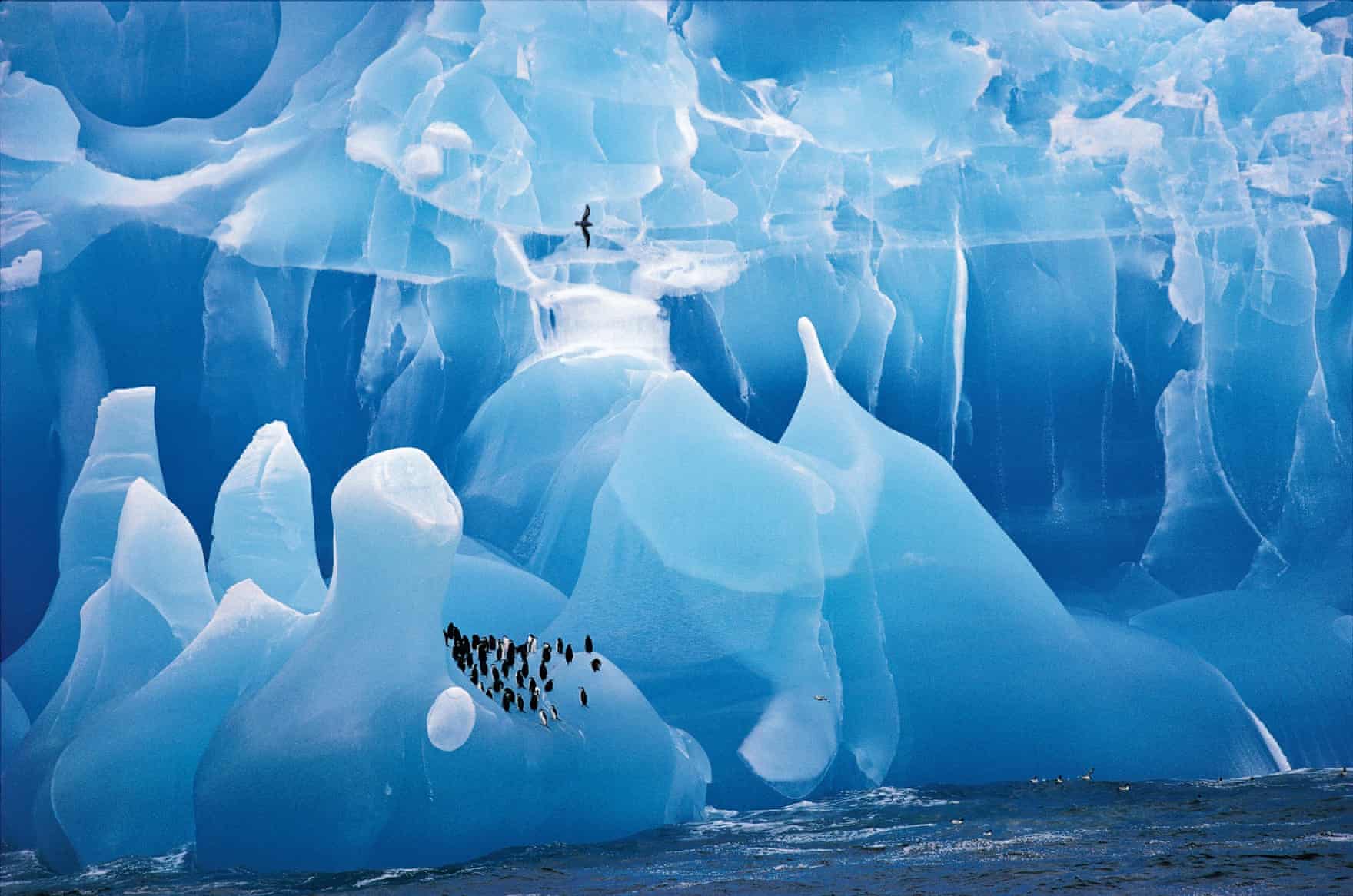
The French edition of my book Life on the Edge, La vie excentrique, was published with a lovely picture of penguins in an Antarctic landscape of blue ice on the cover:

Every once in a while I come across the original photo and then I forget again where I saw it, so this time I am bookmarking it for future reference.

The original is by Cherry Alexander and won the Wildlife Photographer of the Year award in 1995 according to this report.

I'll just hotlink it here:

For the book cover it was flipped such that the penguins can be on the front of the book and the penguin-less right half of the original photo wraps around the back of the book.

NB I also have a new feature out about Antarctica.

Friday, August 01, 2014

three months of street music

My street music blog on tumblr, which is three months old today, is beginning to find an audience. Going slowly, but six times faster than my main blog on tumblr, which was at a comparable stage after 18 months ...

I'm mixing up my own photos and videos of Oxford buskers with reblogs from around the world, which results in a colourful mix of open-air music-making:

So do drop by if you can.

Saturday, June 21, 2014

four years on flickr

as another summer solstice rolls by, it's also another anniversary for my flickr photostream. After four years on the site, I have accumulated 1415 photos, that's just under one per day, which I think is a reasonable rate. I am at no risk of exhausting the 1TB storage space, the site tells me that I'm still under 1% of capacity. So I could carry on for another 400 years.

While I'm not entirely happy with the design changes that flickr has made in the last year, the site still works well for me in terms of finding an audience that will look at my photos and occasionally provide feedback. While I would be perfectly happy to post pictures of architectural details and bumblebees all the time, the audience seems to have a weird preference for photos of human beings, so I'm also providing a few of those. Especially if the humans of Oxford engage in activities I'm interested in such as playing music or reading.

I would embed a few flickr pics here, but they tend to mess up the lovely link within app which crosslinks between my blog posts. So instead I'm offering you a screencap showing the top of my viewing charts as of today:

Visit my flickr photostream here.

Thursday, June 20, 2013

1000 photos

Tomorrow marks the 3rd birthday of my Flickr photostream, and as it happens, I am also celebrating my 1000th picture there. Oh, and I even got used to the new design. Looks kind of cool as long as you don't scratch the shiny surface and it saves me money on the pro membership ...

The most-viewed photos are still the same ones as last year, so instead I'm posting a brand-new one here, photo number 1000:

liege guillemins

This is of course Calatrava's Liege Guillemins station.

Tuesday, November 20, 2012

how the croc got its teeth

Last month, en route to a family visit, I stopped by at the Institut de Genomique Fonctionelle de Lyon (IGFL) and learned lots of exciting things about the research they're doing there, connecting physiology, evolution and development with the help of genomics. Essentially, how does a string of DNA turn into a living breathing animal? How did the leopard get its spots, and the croc its teeth? (Disclaimer: they don't do leopards in Lyon, as far as I know, but they have got answers for the croc question!)

There was too much to mention everything but I tried to make a meaningful story out of this, which is out in today's issue of Current Biology:

How does an animal work?

Current Biology, Volume 22, Issue 22, R933-R935, 20 November 2012
doi:10.1016/j.cub.2012.11.002

For the next two weeks (and then again after a year), the text will be freely accessible:

HTML text

PDF file

Note the lovely species portraits by photographers Vincent & Caroline Moncorgé, commissioned by the institute.

lyon21

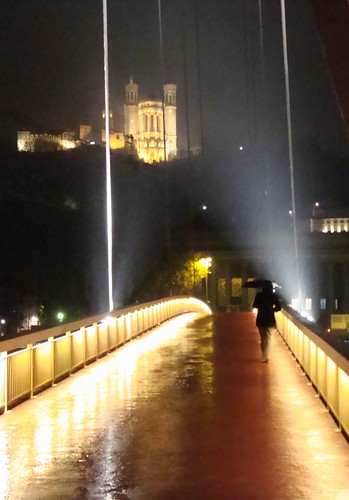
Lyon by night - photo from my previous visit ...

Saturday, October 13, 2012

oxford waterways

In the last few years, I have spent a lot of time on or alongside Oxford's waterways, including the river Cherwell, the Thames (also known as the Isis around here) and the Oxford Canal. With various combinations of children I have crossed, walked along, swum in, navigated with our canoe, and ice-skated on these waterways, so over time a few photos have accumulated.

Accordingly, I have now created a flickr set dedicated to Oxford's waterways, which you can check out on my flickr pages, or watch as a slideshow below.

Having gone through my 800+ flickr photos twice, I've now found 73 waterways pix, but I may still have missed a couple.

Tuesday, September 18, 2012

ecce homo

When I was 18, there was some kind of party involving my dad’s work colleagues in our garden. Observing from the sidelines, I noted that one of the secretaries wasn’t much older than me. She was polished to perfection, all fake smiles, polite phrases, small talk and social graces. As a grumpy teenager who had none of these attributes and gloriously failed to see their point, I probably wondered how much voltage you need to convert a human being into this kind of robot.

Later that night, it fell to me to drive this very same robot home, and during a half-hour drive I was surprised to find that there was a human being behind that robot façade. I don’t recall what we talked about, but I was so impressed I might have fancied her if I hadn’t seen her other side earlier in the evening, the memory of which still scared me. (I wrote a poem about this, called ecce homo, which you’ll find below – in German.)

Now I had a similar revelation from the infamous topless photos of the woman formerly known as Kate Middleton (easy to find on tumblr). I hated the whole wedding shebang with a passion and found every one of the officially approved fake-smile photos revolting, but on seeing those paparazzi shots I got, for the very first time, the impression that there may actually be a human being behind that robotic façade.

As the editor of the Italian magazine Chi said, they show two normal human beings in love. Maybe that’s why we (here in the UK) are not allowed to see them. The monarchists don’t want us to know that there are normal human beings underneath all the fancy clothes. In that case, there actually is a very strong public interest case to be made for publication of the photos, in order to break through the deception we’re getting all the time.

It is also noteworthy that, on the travels during this affair, she put on a headscarf when visiting muslim countries where women are expected to do so, but when visiting Pacific island nations where women go topless, she didn't adopt the native dress code. Very puzzling all this.

Still, why a lively human female in her 20s would choose to live a robot’s life, remains a mystery to me, in both cases.

PS: I tend to agree with Jonathan Jones's recent comment on all this.


I have found a lovely photo I would like to use here, just asked the photographer for permission and am awaiting response. In the meantime, enjoy the cover of Chi magazine and Steve Bell's topless royal family, and please check back tomorrow.

OK, giving up on that photo, here is plan B:

Spare a thought for poor old Kate Topping, she will have a lot of unexplained traffic on her linked-in profile this week! But seriously, while Google Germany categorically refused to censor the autocomplete algorithm just last week, when the ex-president's wife asked them to stop the auto-propagation of rumours, it looks like Google UK has decided to lend the royals a hand. Another scandal within the scandal.


ecce homo

vorgestellt

als funktion
von erwartung
und leistung

als apparat
mit optimalem
wirkungsgrad

als kommunikations
element geölt
mit höflichkeit

doch dann
aus dem
rahmen getrennt

sieh da
ein mensch

Thursday, June 21, 2012

flickr anniversary

Today is the second anniversary of my flickr photostream. Last year I ran a countdown of the most viewed items, but the chart looks still quite similar (viewers still seem to have an insatiable appetite for long-legged homo sapiens females, although these represent only a minority of my photos), so there's no need to repeat it. Suffice it to say that last year's number 4, showing a woman running in the park, has become the front runner by a long stretch ahead of last year's winner, and it keeps accumulating views. I have recently figured out that this is mainly due to people having fitness blogs on tumblr and similar sites, who very enthusiastically blog and reblog photos they find inspirational for their quest to get fit (see for instance one of my photos here).

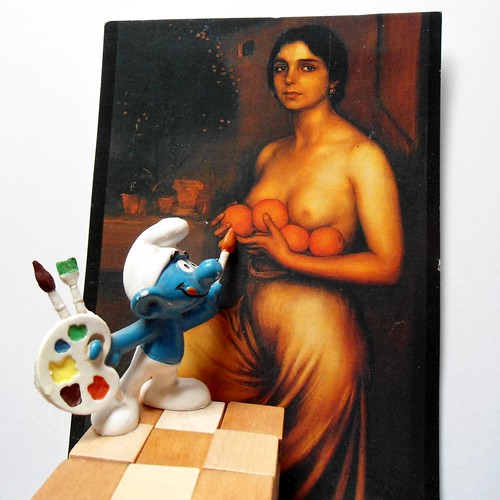
As an alternative birthday celebration, I'm showing the most-commented-upon photo, which, somewhat surprisingly, shows a smurf:

painting smurf

So here's to the third year of sharing photos on flickr - still enjoying the experience very much. Do drop by if you can.

PS: my first upload

Saturday, June 25, 2011

hidden treasures

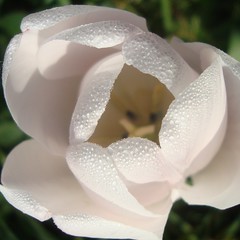
After the most-viewed flickr pix, here now a selection of the least-viewed and underappreciated. There are quite a few flowers, such as this tulip with dew drops:

tulip1102

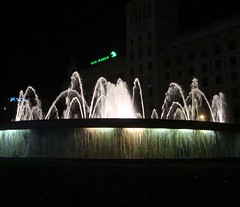
water fountains, like this one at Barcelona:

Plaça de Catalunya by night

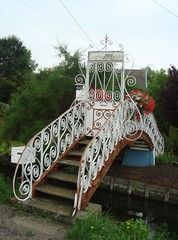
pedestrian bridges, like this one in Amiens:

passerelle02

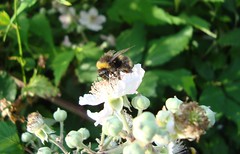
and our local bumblebees, such as this one:

bee10

Some of the other bumblebee pictures are in double figure views only because I posted specific links on twitter - this adds 10-15 views in a minute.

But maybe I just haven't found the right flickr groups yet to promote these types of photos ? Some of the highly specific groups I'm in, specialising on windows, pedestrian bridges, fountains, etc. seem to have little effect.


Anyhow, a set of my hidden treasures is here.

Thursday, June 16, 2011

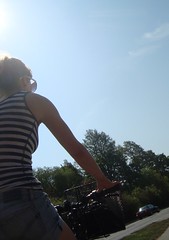
cyclist, abstracted

No. 5 in my flickr chart countdown is a cyclist. There's no shortage of these in Oxford, and I've snapped a few that were unfortunate enough to cycle past my camera, but most of these snaps are a bit boring. In fact this one is the only one I posted on flickr, and I love it because the backlight, the perspective, the stripes, and the crop all work together to make it a bit more abstract and artsy. It also helps that the face and legs are out of sight so viewers (and even men) can focus on the photographic qualities.

cyclist1103

Needless to say that none of the qualities described are down to my planning. This cyclist just brushed past me on the footpath and I instinctively pushed the button.

Tuesday, June 14, 2011

candid portrait

No. 6 in my flickr charts is again untypical, as it is a candid portrait - this person stood right in front of my camera at a pedestrian crossing and I couldn't resist the early morning sun playing with her hair:

candid portrait

Most of my candid shots do not contain a recognisable face though - if only because we tend to have strong opinions on human faces and it is difficult to appreciate the qualities of a photo when we're busy responding to the face.

Although it has attracted more than 100 views, this photo hasn't done particularly well considering that it is in more than 25 groups, so there have been only 4 clicks per group. Anyhow, I do like it, still.

Monday, May 30, 2011

our living earth

Review of

Our living earth
Yann Arthus-Bertrand, Isabelle Delannoy
Thames & Hudson 2008

Yann Arthus-Bertrand is famous for his aerial photographs of our planet and its inhabitants. I understand the photographer typically works from hovering hot-air balloons, so his vantage points are distant enough to reveal patterns that we don’t see from the ground, but close enough to still see the humans and their vehicles that create these patterns.

He has very successfully marketed these photos in coffee-table books with titles like “The Earth from above” and in exhibitions. In this book, his photos are hooked up with facts and figures about the current threats to our environment, and with pleas to save the Earth, which puts the photos to a good use and also gives the reader the warm feeling of doing something useful rather than just looking at pretty pictures.

The text, aimed at young readers, doesn’t delve into scientific depths, and doesn’t cite sources for the numbers given, which is a bit of a shame. If the photos and alarming facts manage to stir readers up to the extent that they want to find out more, they will have to go googling to find more comprehensive accounts.

I found copies of the book at The Works for 99 pence, which is outrageous – but grab one if you can.

Saturday, May 21, 2011

flickr stats

After 11 months on flickr, I have now accumulated enough clicks to do statistics with them, so I'll look into that for the first birthday of my photostream. What's beginning to emerge is that the audience isn't terribly interested in cute bumblebees like this one:

bumblebee 1103

Instead, they seem to have an inexplicable fondness for Homo sapiens females with short shorts and implausibly long legs (beats me). Luckily, Oxford provides plenty of those as well ...

Thursday, February 03, 2011

photo sharing

I’ve reached the magic number of 200 photos on my flickr photostream, which means it is decision time. If I add more photos, the oldest ones will disappear from public view, and only the 200 most recent ones remain visible. Unless, of course, if I upgrade and pay an annual fee for a pro membership.

I’m not sure what to do yet. I love flickr a lot, the groups, the contacts, the easy handling, everything. But the number of clicks I’m getting per photo is a little disappointing in comparison with the sites I have used before, namely fotocommunity and view.

In flickr, only three of my 200 photos have clocked up more than 100 clicks, and the median is 24 clicks. In fotocommunity, where I have only around 40 photos, and am allowed only one upload per week, all of my photos reach more than 100 clicks, six have more than 300, and three have more than my highest-scoring flickr picture. And this without any effort to promote the pictures, and without any active contacts.

In View, it used to be quite slow going, with typical click rates in the teens, but a recent architecture pic got 1300 views within two days, and I still don’t understand why.

Now there may be trivial reasons behind these differences – e.g. in flickr you can get a good impression of the photos from looking at the mid-sized version shown in the user’s photostream, so you don’t necessarily need to click it to appreciate it. But still …

For the time being, I’ll focus on fotocommunity (where I’ll also hit a limit for free uploads soon, I think it’s at 50 photos), while building up a reserve of decent photos, such that if I decide to upgrade flickr, I’ll really have something worthwhile to show there.

So watch this space, and any opinions appreciated …


Here's a blog-exclusive photo for you:


This is in Oxford, seen from the Mill Stream Walk by the river Thames (Lower Fisher Row).

Sunday, August 22, 2010

self-portraits in shiny surfaces

I'm back from a short visit to Northern France, some travel related blog entries to follow soon.

While I was away, I missed World Photography Day (Thu 19.8.), and the Brazilian newspaper Estadão celebrated by publishing a collection of self-portraits from readers and from flickr users. I'm pleased to report that two of my photos were selected, you'll find them on pages 1 and 3 of this site.

In the same spirit, flickr has a group for self-portraits using reflections in shiny surfaces, which is great fun, too. This is my latest contribution to this group, a photo taken in Paris a few days ago:

Wednesday, August 11, 2010

in praise of squares

As cropping is the main (and usually the only) thing I do to my photos, I've been thinking of the merits of various formats, and at the moment I have a thing for squares, especially to capture things that normally aren't square, like petals:


Accordingly, the six photos I've added to my flickr photostream today are all square, and I also started a new set with squares. Obviously, if this 3D craze catches on, I'll have to move up to cubes :)

Friday, October 02, 2009

architecture show

Have just joined fotocommunity.com, and think I quite like the site. One of the perks is that I can create a slide show of my pix and embed it here (I hope):


just one new photo can be uploaded each week, but it will appear in full size ...

Wednesday, September 16, 2009

Every picture tells a story

review of Luna cornata by Elvira Valgañón

Sobrelamesa Ediciones 2007

I discovered this charming little book in an Oxfam shop. It is about two people dreaming up stories inspired by old photos they get from an antiquarian bookshop in Dublin. These days, as the traditional, chemical process of making photos via negatives is disappearing rapidly, it is especially poignant to immerse oneself in the time when monochrome photos were at the cutting edge of technology, and having your family portraits taken at the local photographer’s studio was an obligatory status symbol.

Making up life stories for the people portrayed in such photos opens a window into the social history of Dublin in the early 20th century, and, via migration, also to other parts of Europe. A certain distance is provided by the fact that the storytellers are foreigners in Dublin (she a photographer from Spain, he a visiting professor), looking at the Irish way of life with a degree of naïve admiration.

After reading this book, I noticed that there are in fact lots of old family portraits for sale on our local antiques market. Isn’t it a shame that these have become dissociated from the stories that led to their creation and those that may have followed it? Making up stories is fun, and in this case makes for an inspiring read. Did the author really buy these photos in Dublin, or did she invent them, I wonder.

However, it would be even better if such photos could be re-attached to their real-life stories. For every old photo ending up in a car boot sale, there may be a genealogist who has the matching story and who would be overjoyed to find the photos to go with it. (see for instance, the story of our Winderlich photos)

But I’m digressing. Nice little book. Wonder what the author did next.

Tuesday, June 09, 2009

oxford laid bare

... or almost. The news today is that Oxford students have released a charity calendar with "nude" pictures of, well, Oxford students. Health warning: as always in this country, "nude" means that no specific anatomic details are visible. The rule is that children must not find out that women have nipples, or else civilisation will come to an end. So in this spirit, the students have shown as much as they can in their Oxford Undressed TravelAid Charity Calendar, but a few burning questions remain.

* Did they really take the outdoors pix in the locations shown, or did they shoot the locations and then photoshopped naked students in? I have a horrible suspicion that it may be the latter. Next time I want to be invited to the photoshoot to testify that the pix are for real.

* The woman holding the cello in the string quartett picture is anything but a cellist. I can spot about 10 mistakes in her posture and and the way she holds the instrument and the bow. My daughter's cello teacher would have a heart attack if any of her students sat down with a cello like that, let alone pretended to play it like that. (and believe me, I have seen a naked cellist before!)

* The library shot looks like the library where I often work, I wonder when they took that one ?

I think I'll survive without this calendar, for some better photos I recommend:
VIEW fotocommunity.

Tuesday, April 08, 2008

a dying art ?

The latest issue of "Chemistry & Industry" contains my book review of the tome "Chemistry of Photography". This is mostly about old-fashioned wet chemistry photography, which I enjoyed a a lot in my years in the dark room, but the book left me a bit puzzled as to why one would need a new book about an old, and rapidly disappearing technology.