Showing posts with label sciencenews. Show all posts

Friday, November 27, 2020

science news on the move

I started archiving the science news items here in January 2019 after tumblr started to hide my blog (which is also called proseandpassion), following the change to its censorship approach.

Recently, however, there have been days when blogger wasn't working when I needed it for the science news archive. As I have now started a new tumblr blog, which hasn't been hidden yet (prosepluspassion.tumblr.com), I'm now trying to move the science news back there, i.e. in addition to tweeting each item, I will also share it on tumblr with the tag "science" (plus up to four other tags for specific fields), so it should show up at https://prosepluspassion.tumblr.com/tagged/science.

You can access these pages without having an account with tumblr, just like any other blog. (If you do have an account, you can reblog them like you retweet things on twitter.) Seems to be working fine so far but let me know if there are any problems.

All other content that isn't strictly time sensitive, such as features, book reviews, etc remains here (and may be mirrored on tumblr if I remember to post the link). For these items it doesn't matter too much if the site isn't working one day and I have to post it the next.

Thursday, November 19, 2020

science news 19.11.2020

Today's selection of science news. Links are normally to press releases on EurekAlert (at the bottom end I may also add a couple of newspaper stories). I include quotes from the summary in italics in cases where the title alone doesn't reveal what the story is about. My own thoughts appear without italics if I have any.

evolution

Lurking in genomic shadows: How giant viruses fuel the evolution of algae

Prehistoric shark hid its largest teeth
Some, if not all, early sharks that lived 300 to 400 million years ago not only dropped their lower jaws downward but rotated them outwards when opening their mouths. This enabled them to make the best of their largest, sharpest and inward-facing teeth when catching prey, paleontologists at the Universities of Zurich and Chicago have now shown using CT scanning and 3D printing.

With mouths closed, the older, smaller teeth of the ancestors of today's sharks stood upright on the jaw, while the younger and larger teeth pointed towards the tongue and were thus invisible when the mouth was closed.
Illustration: Christian Klug, UZH

nanoworld

Gold nanoparticles turn the spotlight on drug candidates in cells
A team including researchers from Osaka University has developed a surface-enhanced Raman scattering (SERS) microscopy technique for tracking small molecules in live cells. The technique uses gold nanoparticles to boost the signal from alkyne group tags attached to the molecules. The alkyne group has a minimal effect on the drug molecule behavior and provides a signal that can be easily distinguished from the cell background. Their technique is expected to be useful in drug discovery.

biomedical

Technology lets clinicians objectively detect tinnitus for first time

humans

Lovestruck by oxytocin! Novel roles of the hormone in controlling male sexual function
Hormones are the master regulators of sexual functions in mammals. The hormone oxytocin has a well-established role in social bonding, sexual function, maternal instinct, nursing, and lactation. Researchers from Okayama University have now explored the roles of oxytocin in male sexual function for the first time. Findings from the study suggest that oxytocin-mediated control of male sexual function via the spinal cord may in fact be instrumental in treating erectile dysfunction.

dystopian futures

New test reveals AI still lacks common sense

---------------

From the news media:

Should robots have faces? asks the Guardian. Well, if you ask me, err, no?

Also for some lovely theremin music and explanations in German, check this radio programme celebrating the 100th anniversary of the theremin. With Lydia Kavina and Carolina Eyck.

Tuesday, November 17, 2020

science news 17.11.2020

Today's selection of science news. Links are normally to press releases on EurekAlert (at the bottom end I may also add a couple of newspaper stories). I include quotes from the summary in italics in cases where the title alone doesn't reveal what the story is about. My own thoughts appear without italics if I have any.

astrobiology

SwRI scientists expand space instrument's capabilities
A new study by Southwest Research Institute scientists describes how they have expanded the capabilities of the prototype spaceflight instrument Chemistry Organic and Dating Experiment (CODEX), designed for field-based dating of extraterrestrial materials. CODEX now uses two different dating approaches based on rubidium-strontium and lead-lead geochronology methods. The instrument uses laser ablation resonance ionization mass spectrometry (LARIMS) to obtain dates using these methods.
This is essentially about DATING on MARS - the PR people could have shown a bit more enthusiasm ...

earth

Scientists discover a new mineral
The research team headed by Stanislav Filatov, Professor at the Department of Crystallography at St Petersburg University, has discovered a new mineral species in Kamchatka - petrovite. The scientists named the find in honour of Tomas Petrov, an outstanding crystallographer and Professor at St Petersburg University. He together with his students Arkady Glikin and Sergei Moshkin, was the first in the world to create a technology for growing jewellery malachite.

Petrovit
Credit SPbU

evolution

Henderson island fossils reveal new Polynesian sandpiper species
Fossil bones collected in the early 1990s on Henderson Island, part of the Pitcairn Group, have revealed a new species of Polynesian sandpiper. The Henderson Sandpiper, a small wading bird that has been extinct for centuries, is formally named Prosobonia sauli after Cook Islands-based ornithologist and conservationist Edward K Saul.

ecology

When temperatures rise, dog ticks more likely to choose humans over canines

Fish carcasses deliver toxic mercury pollution to the deepest ocean trenches

conservation

Seafood mislabeling is having negative impacts on the marine environment

sustainability

Biochar from agricultural waste products can adsorb contaminants in wastewater

humans

Making the best decision: Math shows diverse thinkers equal better results

dystopian futures

Could robots for sex, friendship improve our aging society?

---------------

From the news media:

Pet flea treatments poisoning rivers across England, reports the Guardian.

Friday, November 13, 2020

science news 13.11.2020

Today's selection of science news. Links are normally to press releases on EurekAlert (at the bottom end I may also add a couple of newspaper stories). I include quotes from the summary in italics in cases where the title alone doesn't reveal what the story is about. My own thoughts appear without italics if I have any.

astrobiology

Escape from Mars: how water fled the red planet

Cysteine synthesis was a key step in the origin of life
All proteins are built from the same 20 amino acids. One of these, cysteine, was assumed not to have been present at the origin of life. In a new study, published in Science, UCL scientists have recreated how cysteine was formed at the origins of life. Additionally, they have observed how, once formed, cysteine catalyses the fusion of peptides in water - a fundamental step in the path towards protein enzymes.

earth

Possible 1,000-kilometer-long river running deep below Greenland's ice sheet

evolution

San Diego zoo global biobanking advances wildlife conservation and human medicine worldwide
In a study that has unprecedented implications to advance both medicine and biodiversity conservation, researchers have sequenced 131 new placental mammal genomes, bringing the worldwide total to more than 250. The results of the mammal genome project, published in the Nov. 12 issue of the journal Nature, catalog and characterize whole branches of Earth's biodiversity, spanning approximately 110 million years of mammal evolution--the largest and most diverse mammalian comparative genomics project to date.

ecology

In a warming climate, can birds take the heat?

In a new University of Illinois study, tropical birds such as the cocoa woodcreeper (pictured) showed less acute heat stress when exposed to high temperatures than expected.
Credit: Henry Pollock, University of Illinois

nanoworld

Smaller than ever--exploring the unusual properties of quantum-sized materials
Scientists at Tokyo Institute of Technology (Tokyo Tech) synthesize sub-nanometer particles with precisely controlled proportions of indium and tin using specific macromolecular templates called dendrimers. Through a screening process spanning different metallic ratios, they discovered unusual electronic states and optical properties originating from size-miniaturization and elemental-hybridization. Their approach could be a first step in the development of sub-nanoparticles with unique functionalities and characteristics for electronic, magnetic, and catalytic applications.

biomedical

Chemists studied the composition of oils extracted from popular medicinal plants

sustainability

Environmentally friendly method could lower costs to recycle lithium-ion batteries
A new process for restoring spent cathodes to mint condition could make it more economical to recycle lithium-ion batteries. The process, developed by nanoengineers at the University of California San Diego, is more environmentally friendly than today's methods; it uses greener ingredients, consumes 80 to 90% less energy, and emits about 75% less greenhouse gases.

Special issue: Cooling in a Warming World < > In this special issue of Science, Cooling in a Warming World, three Perspectives and three Reviews highlight the wide array of new and improved technologies and solutions that aim to keep us and the materials we rely on cool, in our rapidly warming planet.

---------------

From the news media:


Thursday, November 12, 2020

science news 12.11.2020

Today's selection of science news. Links are normally to press releases on EurekAlert (at the bottom end I may also add a couple of newspaper stories). I include quotes from the summary in italics in cases where the title alone doesn't reveal what the story is about. My own thoughts appear without italics if I have any.

evolution

Scientists release genomes of birds representing nearly all avian families

Rice has many fathers but only two mothers
University of Queensland scientists studied more than 3000 rice genotypes and found diversity was inherited through two maternal genomes identified in all rice varieties.


ecology

Rare deep sea Bigfin Squid sighted in Australian waters for first time

Noise and light alter bird nesting habits and success

The northern cardinal has a relatively low frequency song and delayed breeding in response to noise pollution.
Credit: David Keeling

conservation

Largest set of mammalian genomes reveals species at risk of extinction
An international team of researchers with the Zoonomia Project has released the whole genomes of more than 80 percent of all mammalian families, spanning almost 110 million years of evolution. The dataset, published in Nature, includes genomes from more than 120 species that were not previously sequenced, capturing mammalian diversity at an unprecedented scale. Zoonomia data have already helped researchers in another recent study to assess the risk of infection with SARS-CoV-2 across many species.

nanoworld

How molecular chaperones dissolve protein aggregates linked to Parkinson's disease

biomedical

COVID leads to measurable life expectancy drop in Spain, study finds

humans

The mental state of flow might protect against harmful effects of quarantine < >
In which "flow" refers to being so absorbed in an activity that you froget about your surroundings.

dystopian futures

Robotic AI learns to be spontaneous
Now I'm worried - if only about the endless philosophical discussions about the free will and independent mind of robots and people.

---------------

From the news media:


Friday, October 30, 2020

science news 30.10.2020

Today's selection of science news. Links are normally to press releases on EurekAlert (at the bottom end I may also add a couple of newspaper stories). I include quotes from the summary in italics in cases where the title alone doesn't reveal what the story is about. My own thoughts appear without italics if I have any.

astrobiology

An Earth-sized rogue planet discovered in the Milky Way

evolution

Shining a (UV) light on the glow-in-the-dark platypus
Turns out platypus fur is biofluorescent - astonishing that this hasn't been noticed before.

The Platypus (Ornithorhynchus anatinus) is one of the oddities of nature: a mammal that lays eggs, and is like a mix of several other animals being duck-billed, beaver-tailed, and otter-footed.
Credit: Goddard Photography

Boo! How do mexican cavefish escape predators?

Study of ancient dog DNA traces canine diversity to the Ice Age

ecology

Touch and taste? It's all in the tentacles
Scientists identified a novel family of sensors in the first layer of cells inside the suction cups that have adapted to react and detect molecules that don't dissolve well in water. The research suggests these sensors, called chemotactile receptors, use these molecules to help the animal figure out what it's touching and whether that object is prey.

Male fin whales surprise scientists by swapping songs

conservation

Losing ground in biodiversity hotspots worldwide
Agriculture is eating into areas that are important in protecting some of the most biologically diverse places on the planet. Most of this new agricultural land is being used to grow cattle feed.

nanoworld

Smart bottle brushes
They look like microscopic bottle brushes: Polymers with a backbone and tufts of side arms. This molecular design gives them unusual abilities: For example, they can bind active agents and release them again when the temperature changes. With the help of neutrons, a research team from the Technical University of Munich (TUM) has now succeeded to unveil the changes in the internal structure in course of the process.

sustainability

Advanced facade material for urban heat island mitigation

humans

Two studies expand insights into Denisovan ancestry and population history in East Asia
Lots of PRs from institutes involved have been promoting one study or the other, which got me confused, so I'm using the PR from science magazine which discusses both.

Bison engravings in Spanish caves reveal a common art culture across ancient Europe

---------------

From the news media:

New sensor offers a window into the secret lives of Britain's rarest bats
reports the Guardian

Friday, October 23, 2020

science news 23.10.2020

Today's selection of science news. Links are normally to press releases on EurekAlert (at the bottom end I may also add a couple of newspaper stories). I include quotes from the summary in italics in cases where the title alone doesn't reveal what the story is about. My own thoughts appear without italics if I have any.

astrobiology

OSIRIS-REx TAGs surface of asteroid Bennu

evolution

African crocodiles lived in Spain six million years ago
The crocodiles that inhabited the coasts of North Africa during the late Miocene period embarked on a journey to Europe across what is now the Mediterranean basin. This is confirmed by the analysis of the first fossils of the Crocodylus genus in the Iberian Peninsula, found in the Valencian site of Venta del Moro between 1995 and 2006, and which are now being described for the first time.

Bat-winged dinosaurs that could glide

This illustration shows a reconstruction of Ambopteryx in a glide. Credit: Gabriel Ugueto

conservation

The next generation of biodiversity conservation targets must aim higher than ever
Writing this week in Science, 40 researchers argue for a set of holistic actions for new biodiversity goals that are unambiguously clear, sufficiently ambitious, and based on the best knowledge available. Most importantly, the goals need to aim higher if they are to be successful in the face of worsening trends for the climate and life on Earth.

light and life

Researchers identify how night-shift work causes internal clock confusion

biomedical

Lab-grown mini-lungs mimic the real thing - right down to covid infection

dystopian futures

Comparing the promise and reality of e-scooters

---------------

From the news media:


Friday, October 16, 2020

science news 16.10.2020

Today's selection of science news. Links are normally to press releases on EurekAlert (at the bottom end I may also add a couple of newspaper stories). I include quotes from the summary in italics in cases where the title alone doesn't reveal what the story is about. My own thoughts appear without italics if I have any.

evolution

Monkey study suggests that they, like humans, may have 'self-domesticated'
Asif Ghazanfar led a team of scientists who determined that changing an infant monkey's verbal development also changed a physical marker of domesticity: a patch of white fur on its forehead. This is the first study linking the degree of a social trait with the size of a physical sign of domestication, in any species.

ecology

Bark beetle outbreaks benefit wild bee populations, habitat

Cows prefer "live" co-moo-nication, study reveals

light and life

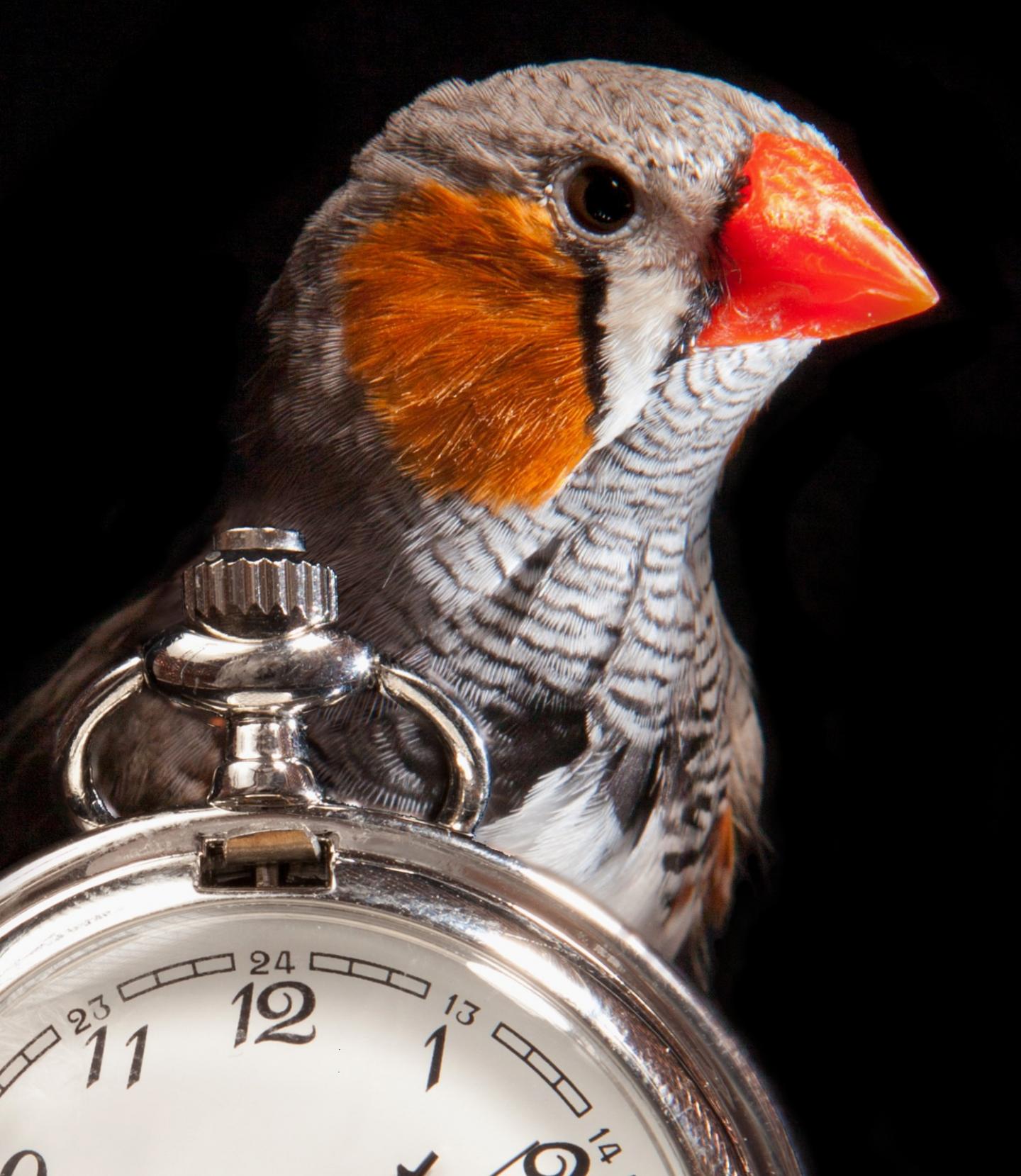
Researchers deconstruct the "biological clock" that regulates birdsong < >

A team of researchers from Penn State and New York University has deconstructed an important "biological clock" in the zebra finch brain and found that the "wires" between neurons, called axons, play a critical role in the precise timing of the birds' courtship song.
Credit: Christopher Auger-Dominguez

biomedical

Bats save energy by reducing energetically costly immune functions during annual migration
relevant for zoonoses including covid, hence biomedical of sorts.

sustainability

Artificial cyanobacterial biofilm can sustain green ethylene production for over a month

dystopian futures

Researchers develop framework to identify health impacts of self-driving vehicles
Loving the use of the word "impacts" in that title.

---------------

From the news media:

Have some blue fluorescent tardigrades

Thursday, October 15, 2020

science news 15.10.2020

Today's selection of science news. Links are normally to press releases on EurekAlert (at the bottom end I may also add a couple of newspaper stories). I include quotes from the summary in italics in cases where the title alone doesn't reveal what the story is about. My own thoughts appear without italics if I have any.

earth

Volcanic eruptions may explain Denmark's giant mystery crystals
Researchers have long been stumped for an explanation of how tens of millions of years-old giant crystals known as glendonites came to be on the Danish islands of Fur and Mors. A recent study from the University of Copenhagen offers a possible explanation to the conundrum: major volcanic eruptions resulted in episodes of much cooler prehistoric climates than once thought.

ecology

'Honey bee, it's me'
Honey bees rely on chemical cues related to their shared gut microbial communities, instead of genetic relatedness, to identify members of their colony. This new work is significant in part because it shows an integral role for the microbiome in the essential, everyday social interactions of honey bees, the Earth's most important pollinators, researchers said.

Mapping out rest stops for migrating birds
A team of researchers have developed a new metric called the stopover-to-passage ratio that can help determine if a majority of birds are flying over a particular site or stopping at the site to refuel or rest. The answer to this question can have important implications for what action is ultimately taken on the ground to help migratory birds.

Whitebark pine declines may unravel the tree's mutualism with Clark's Nutcracker
A new study suggests inequality in the whitebark pine-Clark's Nutcracker mutualism may make this partnership vulnerable when the population of one partner declines. Whitebark populations are declining due to factors including blister rust disease, mountain pine beetle infestations and climate change. The study suggests that nutcrackers leave areas where whitebark is less abundant and seek resources elsewhere, which might mean that declining seed dispersal should be added to the list of current threats to whitebark.

A Clark's Nutcracker perches in a whitebark pine. Photo by Frank D. Lospalluto/Flickr. (CC BY-NC-ND 2.0) Credit: Photo by Frank D. Lospalluto/Flickr. (CC BY-NC-ND 2.0)

conservation

Ivory Coast without ivory? Elephant populations are declining rapidly in Cote d'Ivoire

sustainability

Sweetpotato biodiversity can help increase climate-resilience of small-scale farming

humans

Modern humans took detours on their way to Europe
Climate conditions shaped the geography of settlement by Homo sapiens in the Levant 43,000 years ago / findings of Collaborative Research Centre 806 'Our Way to Europe' published in 'PLOS ONE'

Fossil footprints tell story of prehistoric parent's journey
Hungry giant predators, treacherous mud and a tired, probably cranky toddler -- more than 10,000 years ago, that was the stuff of every parent's nightmare. Evidence of that type of frightening trek was recently uncovered, and at nearly a mile it is the longest known trackway of early-human footprints ever found.

Trash heaps in Israel reveal agricultural shifts during the Roman Imperial Period

Nerves that sense touch may play role in autism
Autism is considered a disorder of the brain. But a new study suggests that the peripheral nervous system, the nerves that control our sense of touch, pain and other sensations, may play a role as well. The exploratory study is published in the October 14, 2020, online issue of Neurology, the medical journal of the American Academy of Neurology.

dystopian futures

Robot swarms follow instructions to create art

---------------

From the news media:

Friday, September 11, 2020

science news 11.9.2020

Today's selection of science news. Links are normally to press releases on EurekAlert (at the bottom end I may also add a couple of newspaper stories). I include quotes from the summary in italics in cases where the title alone doesn't reveal what the story is about. My own thoughts appear without italics if I have any.


earth

66 million years of Earth's climate uncovered from ocean sediments

Understanding the 'deep-carbon cycle'
New geologic findings about the makeup of the Earth's mantle are helping scientists better understand long-term climate stability and even how seismic waves move through the planet's layers.


evolution

Coming up for air: Extinct sea scorpions could breathe out of water, fossil detective unveils


ecology

In the absence of otters, climate warming leads to Aleutian Reef decline
Sea otters prey on urchins and keep their population in check. When otters disappear, urchin populations explode, leading to overgrazing on kelp and a decline in kelp forests.


conservation

The surprising rhythms of Leopards: Females are early birds, males are nocturnal
After 10 months of camera surveillance in the Tanzanian rainforest, researchers from the University of Copenhagen have become the first to conclude that female and male leopards are active at very different times of the day. The discovery contradicts previous assumptions and could be used to help protect the endangered feline, whose populations have dwindled by 85 percent over the past century.


biomedical

Antibody responses in COVID-19 patients could guide vaccine design
The results show that the neutralizing activity of antibodies from recovered patients is typically not strong, and declines sharply within one month after hospital discharge.


environment

Multiphase buffering by ammonia explains wide range of atmospheric aerosol acidity
Anthropogenic ammonia emissions and the water content matter more than dry particle composition for the acidity of atmospheric aerosols in populated regions.


humans

Tel Aviv University study confirms widespread literacy in biblical-period kingdom of Judah
based on the identification of 12 different handwritings? I'm not sure I follow that conclusion. They could have rounded up the only 12 people in the kingdom who were able to write?


Examples of Hebrew ostraca from Arad.
Credit: Michael Cordonsky, TAU and the Israel Antiquities Authority

Addicted to the sun? Research shows it's in your genes
Sun-seeking behaviour is linked to genes involved in addiction, behavioural and personality traits and brain function, according to a study of more than 260,000 people led by King's College London researchers.


dystopian futures

Experiments reveal why human-like robots elicit uncanny feelings

---------------


From the news media:

Thursday, September 10, 2020

science news 10.9.2020

Today's selection of science news. Links are normally to press releases on EurekAlert (at the bottom end I may also add a couple of newspaper stories). I include quotes from the summary in italics in cases where the title alone doesn't reveal what the story is about. My own thoughts appear without italics if I have any.


astrobiology

Where rocks come alive: NASA's OSIRIS-REx observes an asteroid in action

In Ancient Giant Viruses Lies the Truth Behind Evolution of Nucleus in Eukaryotic Cells
An exchange of genetic material that occurred when ancient giant viruses infected ancient eukaryotic cells could have caused the nucleus of the eukaryotic cell--its defining feature--to form. This is what Professor Masaharu Takemura of the Tokyo University of Science, Japan, suggests in his recent review in the journal Frontiers in Microbiology. His novel evolutionary hypothesis opens doors to new discussions on the subject, bringing us one giant step closer to the truth.


earth

New insight on the impacts of Earth's biosphere on air quality
specifically, this is about the distribution of isoprene in the atmosphere.


conservation

At least 28 extinctions prevented by conservation action in recent decades

New tracking technology will help fight rhino poaching in Namibia
Interactive software that 'reads' and analyzes footprints left by black rhinoceroses can be used to monitor the movements of the animals in the wild, giving conservationists a new way to keep watch on the endangered species and help keep it safe from poachers, according to a Duke University-led study.


A black rhino and its calf; new technology that uses software to read unique features of rhino footprints will help protect this endangered species from poachers.
Credit: WildTrack


nanoworld

A chemist from RUDN developed a new type of one-molecule thick water-repellent film
... out of calixarenes, to be specific.


biomedical

More cats might be COVID-19 positive than first believed, study suggests


sustainability

Do as plants do: Novel photocatalysts can perform solar-driven conversion of CO2 into fuel


---------------


From the news media:

Wednesday, September 09, 2020

science news 9.9.2020

Today's selection of science news. Links are normally to press releases on EurekAlert (at the bottom end I may also add a couple of newspaper stories). I include quotes from the summary in italics in cases where the title alone doesn't reveal what the story is about. My own thoughts appear without italics if I have any.


earth

Deep channels link ocean to Antarctic glacier
meaning warm water can lick it away


evolution

New fossil ape is discovered in India
A 13-million-year-old fossil unearthed in northern India comes from a newly discovered ape, the earliest known ancestor of the modern-day gibbon. The discovery fills a major void in the ape fossil record and provides important new evidence about when the ancestors of today's gibbon migrated to Asia from Africa.

Skeletal study suggests at least 11 fish species are capable of walking
See also my feature on evolution of lineages gaining or losing their legs


Thailand's cave angel fish, Cryptotora thamicola, is famous for its ability to walk, using a salamander-like gait. But it may not be alone: At least 10 relatives share its unusual pelvic shape.
Credit: Zachary Randall/Florida Museum


ecology

International study gets at the root of what makes deer migrate
Researchers found that the dynamics of springtime plant growth, specifically whether green-up progresses like a wave or not, explain where deer migration occurs in many ecosystems.

Gulls pay attention to human eyes
Herring gulls notice where approaching humans are looking, and flee sooner when they're being watched, a new study shows.
For a moment I thought the gulls were checking if you're watching your food ...


conservation

Lost frogs rediscovered with environmental DNA
Scientists have detected signs of a frog listed extinct and not seen since 1968, using an innovative technique to locate declining and missing species in two regions of Brazil.


biomedical

High-intensity focused ultrasound _treatment_ for prostate cancer: First US study shows promising outcomes
The title originally didn't make it clear, but this is a new method of treating the cancer, instead of radiation or chemotherapy. It's not about diagnostic ultrasound.

Recharging N95 masks for continued usage
N95 masks achieve 95% efficiency at filtering out 0.3-micron particles, while maintaining reasonable breathability, thanks to a layer of polypropylene fibers incorporating electrical charges to attract particles. Extended usage and decontamination, provoked by severe shortages during the pandemic, can easily remove the charges and degrade filtration efficiency. In Physics of Fluids, researchers share a method to restore the filtration efficiency of N95 masks to out-of-box levels, as long as the mask is not structurally compromised.

Could singing spread COVID-19?
wear a mask, skip the consonants


humans

The oldest Neanderthal DNA of Central-Eastern Europe
A new study reports the oldest mitochondrial genome of a Neanderthal from Central-Eastern Europe. The mitochondrial genome of the tooth, discovered at the site of Stajnia Cave in Poland, is closer to a Neanderthal specimen from the Caucasus than to the contemporaneous Neanderthals of Western Europe. Stone tools found at the site are also analogous to the southern regions suggesting that Neanderthals living in the steppe/taiga environment had a broader foraging radius than previously envisaged.

Ancient hunters stayed in frozen Northern Europe rather than migrating to warmer areas, evidence from Arctic fox bones shows


---------------


From the news media:

Oxford Covid vaccine trial on hold after adverse reaction in one participant.

Tuesday, September 08, 2020

science news 8.9.2020

Today's selection of science news. Links are normally to press releases on EurekAlert (at the bottom end I may also add a couple of newspaper stories). I include quotes from the summary in italics in cases where the title alone doesn't reveal what the story is about. My own thoughts appear without italics if I have any.

Not much going on today, apparently:


evolution

Ancient bony fish forces rethink of how sharks evolved


nanoworld

A new twist on DNA origami


sustainability

Producing leather-like materials from fungi


humans

'Wild West' mentality lingers in modern populations of US mountain regions
Scientists looked at links between the personality profiles of over 3.3m US residents and the "topography" of 37,227 ZIP codes. Distinct psychological mix associated with mountain populations is consistent with theory that harsh frontiers attracted certain personalities. Researchers argue this may be residual from US frontier expansion during the 19th century, as personality pattern is strongest in the West.


---------------


From the news media:

the biggest bang since the Big Bang

and an essay written by a robot. Scary stuff.

Friday, August 21, 2020

science news 21.8.2020

Today's selection of science news. Links are normally to press releases on EurekAlert (at the bottom end I may also add a couple of newspaper stories). I include quotes from the summary in italics in cases where the title alone doesn't reveal what the story is about. My own thoughts appear without italics if I have any.


ancient climate

Past rapid warming levels in the Arctic associated with widespread climate changes
Using Greenland ice cores, new research is the first to confirm the longstanding assumption that climate changes between the tropics and the Arctic were synchronised during the last glacial period.

Fossil leaves show high atmospheric carbon spurred ancient 'global greening'
Scientists studying leaves from a 23-million-year-old forest have for the first time linked high levels of atmospheric carbon dioxide with increased plant growth, and the hot climate off the time.

Anthropogenic CO2 increase is unprecedented
Even in earlier warm periods there were pulse-like releases of CO2 to the atmosphere. Today's anthropogenic CO2 rise, however, is more than six times larger and almost ten times faster than previous jumps in the CO2 concentration.


evolution

Discovery lays blame on supernova for extinction event nearly 360 million years ago
Between a decline in biodiversity and a series of extinction events, the Late Devonian period was not the most hospitable time on Earth. And then came one or more supernovae explosions whose resulting ionizing radiation was the final push that spelled the end for armored fish, most trilobites and other life.

Ichthyosaur's last meal is evidence of triassic megapredation
Some 240 million years ago, a dolphin-like ichthyosaur ripped to pieces and swallowed another marine reptile only a little smaller than itself. Then it almost immediately died and was fossilized, preserving the first evidence of megapredation, or a large animal preying on another large animal.

Dinosaurs' unique bone structure key to carrying weight
A unique collaboration between paleontologists, mechanical engineers and biomedical engineers revealed that the trabecular bone structure of hadrosaurs and several other dinosaurs is uniquely capable of supporting large weights, and different than that of mammals and birds.


biomedical

Coronavirus SARS-CoV-2 spreads more indoors at low humidity

Contact tracing apps unlikely to contain COVID-19 spread
Contract tracing apps used to reduce the spread of COVID-19 are unlikely to be effective without proper uptake and support from concurrent control measures, finds a new study by UCL researchers. The systematic review*, published in Lancet Digital Health, shows that large-scale manual contact tracing alongside other public health control measures - such as physical distancing and closure of indoor spaces such as pubs - is likely to be required in conjunction with automated approaches.

Researchers show children are silent spreaders of virus that causes COVID-19
Is anybody counting how many studies say this and how many the opposite?


humans

Archaeology: X-ray imaging provides unique snapshot of ancient animal mummification
Analysis of three mummified animals - a cat, a bird and a snake - from Ancient Egypt using advanced 3D X-ray imaging is described in a paper published in Scientific Reports. The technique provides insights into the conditions in which the animals were kept, their complex mummification process and their possible causes of death, without causing damage to the specimens.

Australia's wish list of exotic pets
Unsustainable trade of species is the major pathway for the introduction of invasive alien species at distant localities at higher frequencies. It is also a major driver of over-exploitation of wild populations. In a new study, published in the open-access journal Neobiota, scientists estimate the desire of Australians to own non-native and/or illegal pets and the major trends in this practice. In addition, the team suggests ways to improve biosecurity awareness in the country.


A juvenile ball python for sale at Repticon Trading Convention 2018 in Palm Springs, Florida.
Credit: Adam Toomes (CC-BY 4.0)


Genetics: Romantic relationship dynamics may be in our genes
Variations in a gene called CD38, which is involved in attachment behaviour in non-human animals, may be associated with human romantic relationship dynamics in daily life, according to a study published in Scientific Reports.


---------------


From the news media:

Record breaking ice loss from Greenland's glaciers reported for 2019. Your friendly reminder that a total loss of Greenland's ice sheet means six metres sea level rise.

Thursday, August 20, 2020

science news 20.8.2020

Today's selection of science news. Links are normally to press releases on EurekAlert (at the bottom end I may also add a couple of newspaper stories). I include quotes from the summary in italics in cases where the title alone doesn't reveal what the story is about. My own thoughts appear without italics if I have any.


astrobiology

Sustained planetwide storms may have filled lakes, rivers on ancient Mars

Microbes living on air a global phenomenon
UNSW researchers have found their previous discovery of bacteria living on air in Antarctica is likely a process that occurs globally, further supporting the potential existence of microbial life on alien planets.


evolution

Lungfish fins reveal how limbs evolved


ecology

This cuttlefish is flamboyant on special occasions only!


The flamboyant cuttlefish (Metasepia pfefferi) in full flamboyant display, which it only uses on occasion (for male courtship rituals; or when males are fighting over a female; or to flash briefly at a threatening object when it approaches too close, presumably to scare it away).
Credit: Roger Hanlon Laboratory, MBL

Termite-fishing chimpanzees provide clues to the evolution of technology


nanoworld

Quest for quantum Internet gets a boost with new technique for making entanglement


biomedical

COVID-19 cytokine storms may prevent a durable immune response


humans

Partner selection ultimately happens in the woman's reproductive tract

Researchers predict deficits in female birth numbers in India over coming decades
Between 2017 and 2030, an estimated 6.8 million fewer female births will be recorded in India than would be by chance, due to sex-selective abortions, according to a new study published August 19, 2020 in the open-access journal PLOS ONE by Fengqing Chao of King Abdullah University of Science and Technology (KAUST), Saudi Arabia, and colleagues.


dystopian futures

Machine learning, meet human emotions: How to help a computer monitor your mental state
I very emphatically do not want a computer of any description to monitor my mental state.

---------------


From the news media:

Wednesday, August 12, 2020

science news 12.8.2020

Today's selection of science news. Links are normally to press releases on EurekAlert (at the bottom end I may also add a couple of newspaper stories). I include quotes from the summary in italics in cases where the title alone doesn't reveal what the story is about. My own thoughts appear without italics if I have any.


evolution

New species of dinosaur discovered on Isle of Wight
A new study by Palaeontologists at the University of Southampton suggests four bones recently found on the Isle of Wight belong to new species of theropod dinosaur, the group that includes Tyrannosaurus rex and modern-day birds.

Primate voice boxes are evolving at rapid pace


Gorilla skull and larynx
Credit: Copyright Dr Jacob Dunn, Anglia Ruskin University (ARU)


nanoworld

For bacteria, a small genome means some serious decluttering -- even in the ribosome
Researchers have studied the genomes of some 200 strains of bacteria to determine which proteins in the ribosome, part of the key cell machinery, can be safely lost and why. Research showed that frequently lost ribosomal proteins tend to be placed on the ribosome surface, where they usually have fewer contacts to other ribosome components. Yet since ribosomal proteins are in the cell's essential toolkit, they are generally among the last to leave a 'downsizing' bacterial genome.
Funny though that in mitochondria we see the opposite - new proteins being added to a ribosome that has become virtually useless, producing fewer proteins than it needs for its own assembly. See my recent feature here.


biomedical

Malaria discovery could expedite antiviral treatment for COVID-19
New research into malaria suggests targeting enzymes from the human host, rather than from the pathogen itself, could offer effective treatment for a range of infectious diseases, including COVID-19.

COVID-19: Herd immunity in Sweden fails to materialize


food and drink

Gluten in wheat: What has changed during 120 years of breeding?
spoiler: authors find no evidence that breeding has caused rise in gluten sensitivity problems.


humans

What violin synchronization can teach us about better networking in complex times


---------------


From the news media:
Underneath its skin, dwarf planet Ceres is an ocean world
, according to the Dawn results reported in the Guardian.

Friday, August 07, 2020

science news 7.8.2020

Today's selection of science news. Links are normally to press releases on EurekAlert (at the bottom end I may also add a couple of newspaper stories). I include quotes from the summary in italics in cases where the title alone doesn't reveal what the story is about. My own thoughts appear without italics if I have any.


astrobiology

Hubble uses Earth as proxy for identifying oxygen on potentially habitable exoplanets
Taking advantage of a total lunar eclipse, Hubble used the Moon as a mirror to study sunlight that had passed through Earth's atmosphere. As a result, Hubble detected Earth's own brand of sunscreen - ozone - in our atmosphere. The technique simulates how scientists will search for evidence of life on planets around other stars.

New insight into the evolution of complex life on Earth
This is about the proteasome being involved in the cell division of archaea (as well as in eukaryotes).


evolution

Fossil mystery solved: Super-long-necked reptiles lived in the ocean, not on land
By CT scanning crushed fossilized skulls and digitally reassembling them, and by examining the fossils' growth rings, scientists were able to describe a new species of prehistoric sea creature. Tanystropheus hydroides, named after mythology's hydra, was a twenty-foot-long animal with a ten-foot-long neck.


The digitially reconstructed skull of Tanystropheus, using CT scans of the crushed skull pieces.
Credit: Stephan Spiekman et al.


conservation

Researchers hope to save seabirds by calculating the value of their poop


nanoworld

Chemists build natural anti-cancer compound with lean new process


sustainability

New science behind algae-based flip-flops
a bit of seasonal science ...

humans

Completing the set: 'Coupon-collection behavior' reduces sex-ratio variation among families
A new analysis of sibling records from more than 300,000 individuals suggests that some parents continue to reproduce until they have children of both sexes.


---------------


From the news media:

Tanystropheus (see picture above) is also reported in the Guardian.

Thursday, August 06, 2020

science news 6.8.2020

Today's selection of science news. Links are normally to press releases on EurekAlert (at the bottom end I may also add a couple of newspaper stories). I include quotes from the summary in italics in cases where the title alone doesn't reveal what the story is about. My own thoughts appear without italics if I have any.


astrobiology

New study reveals lower energy limit for life on Earth
An international team of researchers led by Queen Mary University of London have discovered that microorganisms buried in sediment beneath the seafloor can survive on less energy than was previously known to support life. The study has implications for understanding the limit of life on Earth and the potential for life elsewhere.


evolution

The curious genome of the tuatara, an ancient reptile in peril


International scientists and Ngātiwai, a Māori tribe, teamed up to sequence the genome of a rare reptile, the tuatara, uncovering some unique aspects of the tuatara's evolution. The genome sequence will enable comparative studies to better understand the evolution of the tuatara and its distant relatives: other reptiles, birds, and mammals. Shedding light on the tuatara's biology will help protect this vulnerable species.
Credit: Bernard Spragg (Flickr, CC0)


ecology

Herbivores, not predators, most at risk of extinction
One million years ago, the extinction of large-bodied plant-eaters changed the trajectory of life on Earth. The disappearance of these large herbivores reshaped plant life, altered fire regimes across Earth's landscapes, and modified biogeochemical cycling in such a way that Earth's climate became slightly colder.

Bird nests attract flying insects and parasites due to higher levels of carbon dioxide

Algal symbiosis could shed light on dark ocean
New research has revealed a surprise twist in the symbiotic relationship between a type of salamander and the alga that lives inside its eggs. A new paper in Frontiers in Microbiology reports that the eggs compete with the algae to assimilate carbon from their surroundings - a finding that could inform similar processes in the dark ocean.

New Guinea has the world's richest island flora


pollution

Drivers from poor cities can be exposed to 80% more air pollution


humans

An iconic Native American stone tool technology discovered in Arabia
A new paper published in the journal PLOS ONE examines fluted projectile points from southern Arabia, detailing production methods and technical aspects that indicate differences in function from the technology of the Americas, despite similarities in form. Findings from experimentation and comparative analysis suggest that highly-skilled, convergent technologies can have varying anthropological implications.

Men scoring higher on 'man box' scale are prone to violence, mental illness


---------------


From the news media:

Wednesday, August 05, 2020

science news 5.8.2020

Today's selection of science news. Links are normally to press releases on EurekAlert (at the bottom end I may also add a couple of newspaper stories). I include quotes from the summary in italics in cases where the title alone doesn't reveal what the story is about. My own thoughts appear without italics if I have any.


astrobiology

Stars rich in phosphorus: Seeds of life in the universe

Surprisingly dense exoplanet challenges planet formation theories
New detailed observations with NSF's NOIRLab facilities reveal a young exoplanet, orbiting a young star in the Hyades cluster, that is unusually dense for its size and age. Weighing in at 25 Earth-masses, and slightly smaller than Neptune, this exoplanet's existence is at odds with the predictions of leading planet formation theories.

VLBA finds planet orbiting small, cool star
Precision measurements made with the VLBA have revealed that a small, cool star 35 light-years from Earth is orbited by a Saturn-sized planet once every 221 days.


evolution

Between shark and ray: The evolutionary advantage of the sea angels


ecology

Studies shed new light on how biodiversity influences plant decay

Small trees offer hope for rainforests
Small trees that grow up in drought conditions could form the basis of more drought-resistant rainforests, new research suggests.

Scientists discover new penguin colonies from space

Are vultures spreaders of microbes that put human health at risk?


A new analysis published in IBIS examines whether bacteria, viruses, and other microorganisms that are present in wild vultures cause disease in the birds, and whether vultures play a role in spreading or preventing infectious diseases to humans and other animal species.
Credit: Jorge de la Cruz


nanoworld

Nanostructures modeled on moth eyes effective for anti-icing
Researchers have been working for decades on improving the anti-icing performance of functional surfaces and work published in AIP Advances investigates a unique nanostructure, modeled on moth eyes, that has anti-icing properties. Moth eyes are of interest because they have a distinct ice-phobic and transparent surface. The researchers fabricated the moth eye nanostructure on a quartz substrate that was covered with a paraffin layer to isolate it from a cold and humid environment.


biomedical

'Price of life' lowest in UK during COVID-19 pandemic, study finds
The price the UK government was prepared to pay to save lives during the COVID-19 pandemic was far lower than in many other developed nations, a study has revealed.
Confirming my suspicion that we have deatheaters in charge.

Easy to overdose on paracetamol if you're selenium deficient, says research


humans

Key brain region was 'recycled' as humans developed the ability to read


dystopian futures

Consumers don't fully trust smart home technologies
Not fully? People shouldn't even buy any of these things. Opening your home to surveillance and hackers is the opposite of smart.

---------------


From the news media:

A remarkably well preserved mammoth skeleton from a Siberian lake.

Oh and the penguin colonies spotted from space are also in the Guardian. Disappointingly, the sattelites only saw vast areas of ice discoloured by guano - not vast huddles of actual penguins.

Tuesday, August 04, 2020

science news 4.8.2020

Today's selection of science news. Links are normally to press releases on EurekAlert (at the bottom end I may also add a couple of newspaper stories). I include quotes from the summary in italics in cases where the title alone doesn't reveal what the story is about. My own thoughts appear without italics if I have any.


astrobiology

ALMA captures stirred-up planet factory
Planet-forming environments can be much more complex and chaotic than previously expected. This is evidenced by a new image of the star RU Lup, made with the Atacama Large Millimeter/submillimeter Array (ALMA).

Iron-rich meteorites show record of core crystallization in system's oldest planetesimals

Early Mars was covered in ice sheets, not flowing rivers


evolution

Malignant cancer diagnosed in a dinosaur for the first time

Study: Oriole hybridization is a dead end
A half-century of controversy over two popular bird species may have finally come to an end. In one corner: the Bullock's Oriole, found in the western half of North America. In the other corner: the Baltimore Oriole, breeding in the eastern half. Where their ranges meet in the Great Plains, the two mix freely and produce apparently healthy hybrid offspring. But according to scientists from the Cornell Lab of Ornithology, hybridization is a dead end and both parent species will remain separate.


Bullock/Baltimore Oriole hybrid.
Credit: Bryan Calk, Macaulay Library, Cornell Lab of Ornithology


ecology

Scientists discover secret behind Earth's biodiversity hotspots

Identifying the blind spots of soil biodiversity

Study calls for urgent plan to manage invasive weed which threatens livelihoods in Africa


neuroscience

Speech processing hierarchy in the dog brain

Humans and flies employ very similar mechanisms for brain development and function

Energy demands limit our brains' information processing capacity


nanoworld

The art of making tiny holes
It sounds like a magic trick: A highly charged ion penetrates several layers of a material. It creates a big hole in the top layer, but travels through the next layer without damaging it. This new technique can be used to modify surfaces with extremely hight precision.


humans

Ancient shell llama offering found in lake Titicaca
< >

dystopian futures

Novel magnetic stirrer speaks to lab equipment
A small device, called "Smart Stirrer", performed a function of a conventional laboratory stir bar, has an integrated microprocessor and various sensors capable of wireless and autonomous report the conversion of properties of a solution. Results are sent to a computer over Bluetooth, and any changes notify the user wirelessly.

---------------


From the news media: