Showing posts with label chem-and-ind. Show all posts

Saturday, May 23, 2026

facts on friction

I'll admit that I've always tended to avoid friction and the awkward equations that come with it, so I learned a lot from this little book about the issue and why it is important in just about everything, from the wrong kind of leaves on the railway tracks to the mouth feel of your favourite dessert:

Friction - a biography
Jennifer R. Vail
The Belknap Press of Harvard University Press 2026
ISBN 978-0-674-29066-2

My review of the book is now out in the May issue of Chemistry & Industry:

Facts on friction

Chemistry & Industry Volume 90, Issue 5, April 2026, Page 35

access via:

Wiley Online Library (paywalled PDF of the whole review section)

SCI (premium content, ie members only)

A snippet:

I was pleased to find a reference to the ancient meme with the flow chart for all engineering problems, indicating that WD40 is the solution if something doesn’t move but should do, whereas duct tape is recommended in the reverse case. This is still very close to what I need to know about stick and slip, but it is reassuring to remember that there are people out there who know so much more about friction.

(edited to remove a word repetition I only spotted when I saw it printed)

Sunday, April 26, 2026

staying alive

In the madness of the UK's Covid response, public health expert Devi Sridhar was a lone voice of reason. Remembering this, I was keen to read her book about the wider application of her thinking to population scale life and death from all causes and found it quite enlightening. Most importantly, she demonstrates how dramatically the political decisions affecting public health differ between countries and how that leads to very different results in avoidable deaths from causes ranging from guns to cars.

How Not to Die (too soon): The Lies We’ve Been Sold and the Policies That Can Save Us
Devi Sridhar
Penguin Viking 2025

My review of the book is now out in the April issue of Chemistry & Industry:

Health accountability

Chemistry & Industry Volume 90, Issue 4, April 2026, Page 34

access via:

Wiley Online Library (paywalled PDF of the whole review section)

SCI (premium content, ie members only)

In the same issue I also have a feature about plant microbiomes. I've covered the field a couple of times in Current Biology (most recently in 2022), but this one is slightly different in emphasis as C&I wanted more about the application side of it than I have previously covered.

Plant probiotics

Chemistry & Industry Volume 90, Issue 4, April 2026, Pages 22-25

access via:

Wiley Online Library (preview of the first page and link to paywalled PDF)

SCI (premium content, ie members only)

Wednesday, March 25, 2026

how trees rule the world

I keep writing about trees, all the wonderful things they do for us, and why we should stop deforestation. I never joined the dots quite like Harriet Rix does in her amazing book

The genius of trees:
How trees mastered the elements and shaped the world
Bodley Head 2025

which shows that our whole environment is basically the product of trees controlling earth, water, air, and fire, the classical elements referenced in the title.

So I should have written this book, but it was more relaxing just reading and enjoying it.

My review of the book is now out in the March issue of Chemistry & Industry:

A world shaped by trees

Chemistry & Industry Volume 90, Issue 3, March 2026, Page 34

access via:

Wiley Online Library (paywalled PDF of the whole review section)

SCI (premium content, ie members only)

As always, I can send a PDF on request.

PS I believe the book is now available as a paperback too - saves some trees!

Friday, February 20, 2026

not understanding quantum mechanics

As a chemist, I have of course used quantum mechanics in various ways and learned the essential textbook equations, but like everybody else on the planet I don't really understand it. I find comfort in the wise words of Richard Feynman that went something like "If you think you understand quantum mechanics, you don't understand quantum mechanics."

After a few decades of not using my non-understanding of quantum mechanics on a regular basis any more, I found the book Why Nobody Understands Quantum Physics by Frank Verstraete and Céline Broeckaert a welcome refreshment of nearly lost memories.

My review of the book is now out in the February issue of Chemistry & Industry:

Quantum understanding

Chemistry & Industry Volume 90, Issue 2, February 2026, Page 34

access via:

Wiley Online Library (paywalled PDF of the whole review section)

SCI (premium content, ie members only)

As always, I can send a PDF on request.

To sell books about quantum mechanics, you have to have Schrödinger's cat on the cover. It's the law.

Wednesday, January 28, 2026

nature's chemistry

In the long list of potential books that I didn't quite get to the printers, there's one that I wanted to call Nature's chemistry - essentially a collection of snappy stories from the chemistry/biology interface. I think this idea came up just at the wrong time, namely at the point when my German publishers, Wiley-VCH gave up on such collections of stories. Previously they had been quite happy to publish them in their series Erlebnis Wissenschaft, probably based on the success of John Emsley's work in German translation, not so much on the success of my books.

Anyhow, Nature's chemistry never happened, and it never occurred to me to add the word amazing to the title. Now Michael Freemantle did just that , and with that magic ingredient he managed to get it published with the Royal Society of Chemistry, so well done to him. I was grateful to learn from his book about the chemistry of snowdrops (on the cover) and beaver excrements, but predictably more critical when reading about fields I have also covered. Overall, I guess it will face the same amount of disinterest from the general public as my books, so I suspect I should be supportive in solidarity.

My review of the book is now out in the January issue of Chemistry & Industry:

Made better by nature

Chemistry & Industry Volume 90, Issue 1, January 2026, Page 35

access via:

Wiley Online Library (paywalled PDF of the whole review section)

SCI (premium content, ie members only)

As always, I can send a PDF on request.

cover of the book Nature's chemistry by Michael Freemantle showing a photo of snowdrops

Thursday, November 27, 2025

thinking about AI

I'm torn between thinking that generative AI (in the shape of ChatGTP and such like) is a fundamentally bad idea that will accelerate our demise and, alternatively, that it is just a silly hype that will pass. It was therefore really instructive to read this book which offers background on the history of AI and a balanced view of the present overhyped situation. Turns out that the author, with decades of experience in this field, is also unsure as to whether AI will be our ruin. Oh well. Still worth reading though.

How to think about AI - a guide for the perplexed
Richard Susskind
OUP 2025
ISBN: 9780198941927

Alternatively, read my long essay review of the book which is out now in the November issue of C&I:

AI for the perplexed

Chemistry & Industry Volume 89, Issue 11, November 2025, Page 35

access via:

Wiley Online Library (paywalled PDF of the whole review section)

SCI (premium content, ie members only)

As always, I can send a PDF on request.

OUP

Update 2.1.2025 I only got access to the published version and found out that the word "enshittification" has been edited out without my knowledge. Must have been one of those enshittifying AI bots at work ... For the record, the relevant sentence (near the middle of the text) reads in my manuscript:

In addition to all these concerns, I am also seeing many programming and computer professionals (eg on Mastodon) worrying about the degradation of the world wide web and human interactions in general, a trend often described by the (almost) technical term “enshittification”.

Friday, October 24, 2025

where our waste ends up

We do like to think that the stuff we put into recycling bins or return to shops will be neatly disassembled and reconfigured into new products. Unfortunately, a lot of it ends up creating an unsavoury mess in less fortunate countries like Turkey, Ghana or Indonesia, as Alexander Clapp reports in harrowing detail here. Many of the things going wrong with the global waste flows have also been reported elsewhere, but it is shocking to see them all in one place:

Waste wars: Dirty Deals, International Rivalries and the Scandalous Afterlife of Rubbish
Alexander Clapp
John Murray 2025

For a first impression, read my long essay review of the book which is out now in the October issue of C&I:

What a waste

Chemistry & Industry Volume 89, Issue 10, October 2025, Page 36

access via:

Wiley Online Library (paywalled PDF of the whole review section)

SCI (premium content, ie members only)

As always, I can send a PDF on request.

Blackwell's

Tuesday, September 23, 2025

planet aqua

It's strange that we are calling our planet "Earth" as there isn't all that much earth around here. There's a metal core, some rocky stuff around it, and just a very thin layer of earth covering less than a third of the surface. So, looking at it from the outside, it makes sense to call it Planet Aqua instead, and to write a book about how the history of civilisations is really about managing the flow of all that water, and how due to the climate catastrophe which we have caused, we are now losing that control over the hydrosphere. Which Jeremy Rifkin has done:

Planet Aqua: Rethinking our home in the Universe
by Jeremy Rifkin
Polity Press 2024
My long essay review of the book is now out in the September issue of C&I:

Go with the flow

Chemistry & Industry Volume 89, Issue 9, September 2025, Page 34

access via:

Wiley Online Library (paywalled PDF of the whole review section)

SCI (premium content, ie members only)

As always, I can send a PDF on request.

Friday, July 18, 2025

a radiant legacy

I quite enjoyed learning about all the alumnae of Marie Curie's lab by reading:

The elements of Marie Curie
Dava Sobel
Fourth Estate 2024

It was also a good excuse to brush up on her life more generally, as it's been a fair few years since I read the biographies by Eve Curie and by Susan Quinn (long before I started to trouble the world with my reviews). My review is out now:

A radiant legacy

Chemistry & Industry Volume 89, Issue 7-8, July-August 2025, Page 31

access via:

Wiley Online Library (paywalled PDF of the whole review section)

SCI (premium content, ie members only)

Tuesday, May 20, 2025

three book reviews

I managed to lose track of my book reviews published in C&I, so here's three of them in a row. Chronologically backwards, because the more recent ones are more interesting than the one from March (which probably put me off blogging about it).

1)

The Green Ages: Medieval Innovations in Sustainability
Annette Kehnel
Profile Books 2024

Annette Kehnel, a historian specialising in Medieval finance, describes various areas where Medieval Europe had sustainable economic solutions, many of which were later replaced with something allegedly more efficient, but actually less sustainable. (I read the German original which is called "Wir konnten auch anders", roughly: There was another way.)

cover of the book The green ages by Annette Kehnel

Medieval sustainability

Chemistry & Industry Volume 89, Issue 5, May 2025, Page 31

access via:

Wiley Online Library (paywalled PDF of the whole review section)

SCI (premium content, ie members only)

2)

Becoming Earth
Ferris Jabr
Picador 2024

Science writer Ferris Jabr divides the Earth systems into the three realms: rock, water and air, using enlightening examples to show how each of them has been shaped by life far more than we are generally aware. Each section starts in the deep past and ends with current threats, including soil loss, plastic pollution in the oceans, and climate change. 

Build your own planet

Chemistry & Industry Volume 89, Issue 4, April 2025, Page 33

access via:

Wiley Online Library (paywalled PDF of the whole review section)

SCI (premium content, ie members only)

3)

Natural biopolymers in drug delivery and tissue engineering
Rangasamy Jayakumar and Vishnu Priya Murali, eds.
Elsevier 2024

This hefty monograph offers an overview of where that medically-motivated use of biopolymers has led. It consists of two separate sections, with nearly 400 pages dedicated to the use of biopolymers in drug delivery, and then 250 on their use in tissue engineering. The editors have helpfully provided a detailed introduction for each of the two sections.

Biopolymers in medicine

Chemistry & Industry Volume 89, Issue 3, March 2025, Page 30

access via:

Wiley Online Library (paywalled PDF of the whole review section)

SCI (premium content, ie members only)

As always, I'm happy to send PDF files on request.

Monday, December 23, 2024

in vino veritas

If you've ever drunkenly looked at the label on a wine bottle and wondered why it doesn't list the ingredients, you'll find the sober answer in the first half of this book:

Understanding wine chemistry
Andrew Waterhouse, Gavin Sacks, David Jeffery
Wiley 2024

which systematically discusses all the molecules you may find in the bottle, from H2O and ethanol to the more complex ones. And then their reactions. The second half is about how wine is made, so essentially first part is chemistry for winemakers (and -lovers) and the second is winemaking for chemists.

All in all 560 pages, but for a more concise coverage read all about it in my latest essay review:

Wine science

Chemistry & Industry Volume 88, Issue 12, December 2024, Page 35

access via:

Wiley Online Library (paywalled PDF of the whole review section)

SCI (premium content, ie members only)

As always, I'm happy to send a PDF on request.

Tuesday, October 22, 2024

star struck

History of astronomy typically begins with the ancient civilisations and the ways stargazing changed their view of the world. The book "Starborn" by Roberto Trotta goes back further. The author explores the question how humans evolved under a starry sky and whether we would have turned out different under a permanent cloud cover. Some of the answers are mindboggling yet convincing.

Read all about it in my latest essay review:

Stars in their eyes

Chemistry & Industry Volume 88, Issue 10, October 2024, Page 35

access via:

Wiley Online Library (paywalled PDF of the whole review section)

SCI (premium content, ie members only)

As always, I'm happy to send a PDF on request.

Here's a snippet:

More intriguing still, Trotta recounts a hypothesis that argues in favour of a shared human experience of observing the stars dating back more than 70,000 years ago. The Pleiades, as we know them today, are six stars, but many cultures from Ancient Greeks through to Australian Aborigines associate these stars with a legend of seven sisters, and one of them disappearing. With modern telescopes, astronomers can see the seventh sister, too close to one of the others to be distinguishable by the naked eye. They also see a few more, so there is no explanation for the number seven. Calculating back the movements, however, they have found that around 100,000 years ago, an average human eye would have seen seven Pleiades. Thus the myth of the seventh sister lost could be the oldest evidence of human observation of the night sky, as well as just about the only thing that humanity has preserved from the time before the expansion out of Africa.

I don't think the title captures the content of the book very well - it makes me think of how our very atoms have come from stardust, whereas the main gist of the book is how our minds have been shaped by the sight of the firmament. Hence the title of this entry.

Friday, July 19, 2024

oceans on the brink

In the last 12,000 years, while humans were busy replacing the terrestrial ecosystems with agriculture and infrastructure, the oceans had a reprieve due to their inaccessibility. Only since the 19th century did the oceans begin to suffer the consequences of humanity's world domination, beginning with industrial scale whaling and not ending with climate change killing off coral reefs and the rush towards deep-sea mining endangering even the remoter parts of the sea floor.

This could make for a rather depressing story of a paradise lost, but with their book At every depths, Tessa Hill and Eric Simons manage to make it more interesting by emphasising the things we are only beginning to understand and also the traditional knowledge of coastal and seafaring populations that has been ignored by modern science and almost been forgotten. This angle, covering things like the clam gardens of Hawaii and the long-distance journeys of the polynesian voyagers who settled everything from New Zealand to Hawaii, makes for the most surprising and fascinating stories here.

More about all this in my essay review which is out now:

Exploration vs exploitation

Chemistry & Industry Volume 88, Issue 7-8, July/August 2024, Page 34

access via:

Wiley Online Library (paywalled PDF of the whole review section)

SCI (premium content, ie members only)

As always, I'm happy to send a PDF on request.

Tuesday, June 25, 2024

a potted history

Ceramics are amazing in that they record human history more comprehensively and more deeply than any other human-made artifacts, and yet they are still at the cutting edge of technology, being used as advanced materials in many of today's marvels.

So a book about the uses of ceramics eg in catalysis could be really exciting - which is why I agreed to review one such that was suggested to me. Sadly, it is one of the many monographs published these days with zero editorial effort. Thus, there is no general introduction to the field, and it is left to the authors of each of the chapters separately to tell the readers (again) why ceramics are both culturally fundamental and technologically important.

I do wonder why these books are still published at all - the papers could have very well been published as an online collection, a special issue of a journal or some such. If there's no effort to tie them together editorially to produce something that you might want to read in sequence, why tie them together with cardboard and glue?

Anyhow, after sampling too many of the chapters, I pulled together my own potted history of ceramics, as it were, and this is now out in the June issue of C&I:

Ceramic history

Chemistry & Industry Volume 88, Issue 6, June 2024, Page 34

access via:

Wiley Online Library (paywalled PDF of the whole review section)

SCI (premium content, ie members only)

As always, I'm happy to send a PDF on request.

Corded-Ware culture pottery from 2500 BC Source: Wikipedia

Wednesday, June 05, 2024

some very old molecules

Belated horn-tooting for my latest feature on molecular paleontology which is out in the May issue of C&I:

Molecules of lost time

Chemistry & Industry Volume 88, Issue 5, May 2024, Pages 22-25

access via:

Wiley Online Library (paywalled PDF)

SCI SCI members only.

As always, I'm happy to send a PDF on request.

Mammoths are only a small part of the story but I am loving the one that fills the first page of the article:

Friday, April 19, 2024

the art of alchemy

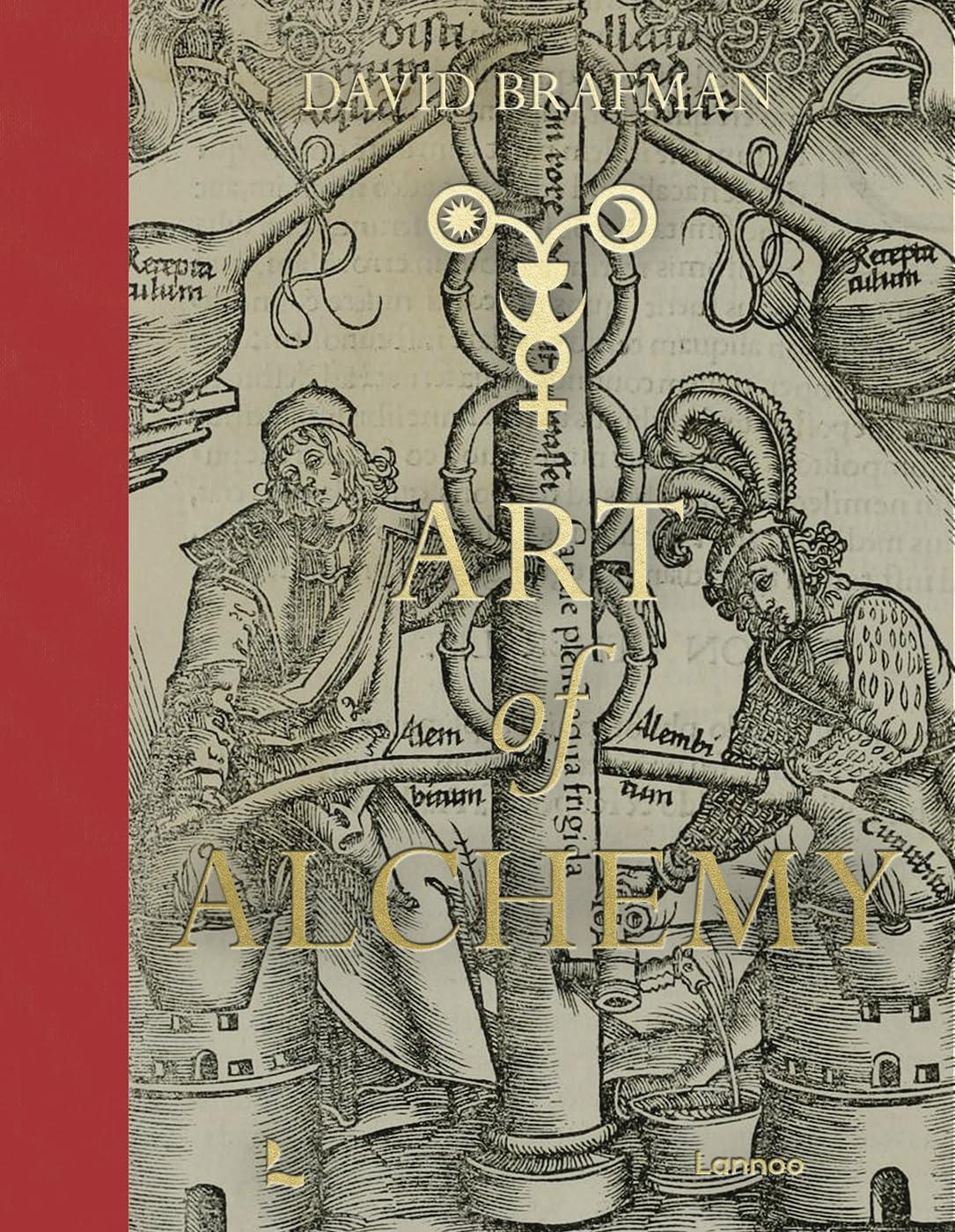
Alchemy is of course a fascinating subject but also a frustrating one, and I always end up dazed and confused when I try to get into the mindset of the old alchemists. The medieval imagery connected with it, showing alchemists at work, their lab glassware, or their allegorical concepts of the world, may be somewhat more accessible, so I took the opportunity to read and review the book

Art of Alchemy: From the Middle Ages to Modern Times (Wunderkammer)
by David Brafman

which contains equal amounts of glorious images and almost comprehensible text. Now I'm still confused, but at least I have another beautiful book on my shelf.

More about my struggles with alchemy in my long essay review now out:

Alchemy in pictures

Chemistry & Industry Volume 88, Issue 4, April 2024, Page 35

access via:

Wiley Online Library (paywalled PDF of the whole review section)

SCI (premium content, ie members only)

As always, I'm happy to send a PDF on request.

Blackwells

Monday, January 29, 2024

imagining extraterrestrial life

For somebody writing about astrobiology, I haven't read much science fiction, even though there are obvious parallels and connections. Thus the book

The possibility of life

by Jaime Green

came in handy to fill me in on some of the relevant books that I should have read. As in astrobiology, the author ponders the deep questions of how to find, recognise and deal with extraterrestrial life, but mostly from the perspective of the imaginary encounters of the sci-fi world.

More about it in my long essay review now out:

Imaginary aliens

Chemistry & Industry Volume 88, Issue 1, January 2024, Page 34

access via:

Wiley Online Library (paywalled PDF of the whole review section)

SCI (premium content, ie members only)

As always, I'm happy to send a PDF on request.

Blackwells

Tuesday, December 19, 2023

fountains of youth

Promises of eternal youth and immortality have united quacks, frauds and gullible paymasters since ancient times. To this day, ageing research is haunted by dubious efforts. The intense interest also means, however, that we can learn interesting things about how and why we age, and maybe even how to stay healthy for a little bit longer. Which is why I agreed to do a feature on this field even though I am very sceptical about it. Here's my original (mildly sceptical) intro which was edited out:

The fountain of youth, as depicted by the Renaissance artist Lukas Cranach the Elder in 1546 (see below), has a very simple operation mode. Frail, elderly women enter the rejuvenating pool from the left of the painting, and after a refreshing bath they emerge on the right hand side as young ladies, eagerly awaited by noble knights.

Scientific research in the centuries since hasn’t quite succeeded in making this imaginary treatment happen in the real world, but the task has attracted a lot of research effort from alchemists through to modern scientists, and an inordinate amount of media coverage.

A recent, widely reported effort, the idea that the kinetic isotope effect could slow down deleterious reaction if only our food and drink was spiced up with deuterium, the heavier isotope of hydrogen, may serve to illustrate the fundamental problem of most such ideas. Even if this anti-ageing diet works, it will be prohibitively expensive, so the net effect will be to give billionaires even more time to count their assets, while most of the world population will continue to die prematurely of avoidable causes.

Thus, in the real world, Cranach’s fountain is poisoned by the narcissism of those who think they can buy a ticket to escape mortality, and the scientists who are willing to serve them. Nevertheless, there is a lot of interesting biology to be explored in the question of why and how we age, and a better understanding of the whole complex process, if applied fairly, might just help to enable more people to live healthier lives for a bit longer.

The Fountain of Youth, an oil-on-panel painting produced in 1546 by Lucas Cranach the Elder.
Source: Wikipedia (they have a huge file if you want to zoom in - I used a smaller size.

Happily, the rest of the feature is now available here:

Forever young

Chemistry & Industry Volume 87, Issue 12, December 2023, Pages 30-33

access via:

Wiley Online Library (paywalled PDF)

SCI OPEN ACCESS and also includes additional media not shown in the print version.

As always, I'm happy to send a PDF on request.

Saturday, November 18, 2023

in praise of old technology

I was keen to read and review this book

Reimagining Alternative Technology for Design in the 21st Century
by Brook S. Kennedy

as I'm really interested in the idea of using and modernising the sustainable technologies that we have had for a long time, rather than inventing new ones that turn out to be unsustainable. It was an interesting read but also a bit frustrating as written purely from an American perspective and thus telling the reader about allegedly extinct alternatives that many of us in Europe still have been using all the time, such as bikes, trams and clotheslines, shutters on windows, etc. Anyhow, a slim volume and thus a quick read with some interesting insights into the history of technology and how it took wrong turns in the 20th century, as well as some smart ideas on how to do better in this one. (Incidentally, this week's crop of EurekAlert press releases included one called: Sticking with old technology can be a strategic move).

More about it in my long essay review now out:

Back to the future

Chemistry & Industry Volume 87, Issue 11, November 2023, Page 38

access via:

Wiley Online Library (paywalled PDF of the whole review section)

SCI (premium content, ie members only)

As always, I'm happy to send a PDF on request.

Blackwells

Saturday, October 21, 2023

three horsemen of distrust

One of the many worrying developments of our time is the growing lack of trust in objective rationally testable (and falsifiable) facts of science. I am on the lookout for explanations what went wrong with our science-based civilisation and how we can fix it, so was happy to review

Gary Smitn
Distrust: big data. data torturing and the assault on science
OUP 2023

Smith is an economist and maybe a bit more interested in the idiocies of bitcoin than I am, but otherwise he is very convincing in his analysis of three leading horsemen of the distrust apocalypse, namely disinformation, data torturing, and data mining. Ironically, all three are riding on the advances of the technological revolution that were supposed to make us smarter. Read all about it in the October issue of C & I:

What went wrong?

Chemistry & Industry Volume 87, Issue 10, October 2023, Page 34

access via:

Wiley Online Library (paywalled PDF of the whole review section)

SCI (premium content, ie members only)

As always, I'm happy to send a PDF on request.

OUP

I have no idea what the cover image is showing, but I like it.