Showing posts with label lablit. Show all posts

Wednesday, July 27, 2022

kitchen chemistry and quirky impacts

I've reviewed two very different books for C&I in recent months, and as it happens the two reviews appear side by side in the July/August issue, pp34-35.

Firstly, the very lovely science-in-fiction or lablit novel:

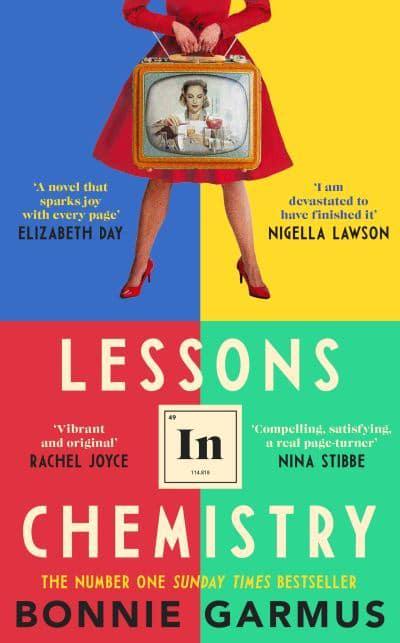
Lessons in chemistry
Bonnie Garmus
Doubleday, 2022
ISBN 978-0-8575-2812-4

Which I am pleased to see has found a lot of attention elsewhere too, so you may already have heard about it or even read it. If not, do.

And secondly, an account on how meteorites impact life on Earth and especially humanity:

Impact: How rocks from space led to life, culture and Donkey Kong
Greg Brennecka
William Morrow 2022
ISBN 978-0-06-307892-5

Meteorite impacts are of course hugely important for astrobiology, while some of the pop culture things that the author obsesses about are not, so for a more sober account of the actual science of meteorites, I might turn to Colliding worlds by Simone Marchi instead, which I reviewed recently, too. Impact might attract some who are intereted in the quirkiness though.

Paywalled PDF containing both reviews

See also my twitter thread listing books I read in 2022.

Monday, November 08, 2010

Two cultures and counting

Review of
The Honest Look by Jennifer L. Rohn
Cold Spring Harbor Laboratory Press 2010
(out on November 30th)


The cultural divide between the worlds of science and arts has stirred much debate since CP Snow diagnosed it in the 1950s. How much specialisation is good for society, and how much general knowledge from the sciences should extend to the other side of the divide? The idea has inspired several generations of science popularisers, but we rarely read about its effect on people who straddle both sides or are unsure which side they should be on.

The protagonist of “The Honest Look”, Claire Cyrus (no relation of Miley I hope), is one of the straddlers. She has just completed a PhD in biology, but is more passionate about writing and reading poetry than about her science, which involves a monstrous proteomic analysis instrument, a machine with the size, complexity, and neediness of the Beckman model E ultracentrifuge from the 1960s (no, I’m not that old, but my PhD supervisor still used two of these in the 90s).

Adding to the culture shock is the fact that her first post-doctoral appointment, taking care of the first commercial specimen of that machine, is in a biotech start-up, where we have the corporate culture conflicting with her hitherto purely academic upbringing. A third cultural divide opens up as the company in question is based in the Netherlands, but most of the scientific staff members are Brits who migrated there with the scientific founders. Oh, and our heroine is bilingual, the child of a Spanish mother and British father.

Unlike Rohn’s first lablit novel, Experimental Heart, which had a thriller plot, this one is essentially a romance, so as a fifth binary we have two contrasting male specimens competing for the attention of our heroine, and naturally each has different views on the cultural conflicts listed above, so love also pulls her in different directions on these other issues of cultural identity.

With all those conflicting forces tearing her apart and cultural canyons to fall into, not to mention a serious moral dilemma arising from an unexpected scientific result, one does worry about Dr Cyrus a lot, which keeps the pages turning just as fast as a thriller plot. Rohn pulls out all the writerly stops to make the poetic sensibility of her heroine believable, and succeeds as far as I can discern from my vantage point between cultures (English poetry buffs may have their own opinions).

She is also very good at bringing the expat perspective on Amsterdam (where she lived herself for several years) and the surrounding lowlands to life. With my rather vague and informal knowledge of Dutch I loved the paragraph where one of the characters translates mundane everyday Dutch into Shakespearean English to illustrate the similarities. (I might have used this as a running gag, actually, for comic relief when the story gets tense.)

What I found less convincing was everything involving the use of Spanish – firstly, I don’t understand why Claire, with Spanish and English and a love of words, doesn’t really extend her love to Spanish, which in my ears is the more interesting and poetic language of the two. Then, the character called “Ramon” (rather than Ramón) lost his accent in more than one way – the dialogues reported to have been held in Spanish don’t sound like something translated from Spanish to me. Even some of the Spanish interjections (querida, Dios mío, por favor,) sound as though they had been translated from English, not glimpsed from a Spanish dialogue. I think with a language used so widely in popular culture (CSI Miami through to latin pop music) one can actually get away with longer snippets giving a more authentic impression.

Having said that, it’s still a wonderful novel, and it addresses cultural conflicts that are very important to me and should be to a wider readership as well. So I hope it does find readers on all sides of these cultural divides, and thereby helps to bridge the gap between Snow’s Two Cultures (and a few more).
Friday, September 17, 2010

Jules Verne at Amiens

On my recent visit to Amiens, I also looked up the monuments to the writer Jules Verne, who lived there for the last three decades of his life and served on the city council. His wife came from this city, and he also found its location convenient, being half way between Paris and the port of Le Crotoy where his boat was based.

Since my last visit, his residence has been turned into a museum:


It opened in March 2006, which looks suspiciously as though someone aimed at the centenary of his death (March 2005) but missed the deadline. It's easy to find as the street is now named after him:


His statue is also nearby:


Note the avid young readers surrounding him. I also read a large number of his novels as a youngster. Later in life, I re-read 20,000 lieues sous les mers when finishing my PhD thesis, as it fitted the subject (life under high hydrostatic pressure) and in fact yielded a nice motto for the introduction. I also read the re-discovered work Paris au XXeme ciecle, first published in 1993 when it came out, and Le rayon vert after watching the eponymous movie by Eric Rohmer. So while I wouldn't call myself a fan, I feel sufficiently connected to his work to look in on the old man when I come to a town linked to his biography.

Wednesday, June 30, 2010

science drives the plot

review of:

Experimental heart
By Jennifer L. Rohn
Cold Spring Harbor Laboratory Press 2009


Jennifer Rohn is famous for promoting the idea that we need more fiction with realistic scientists in leading roles, via her website lablit.com, and other outlets including Nature. In an effort to practice what she preaches, she has written a couple of “lablit” novels herself, of which Experimental heart is the debut effort.

As the “lablit” label suggests, the lab, located in an academic research centre in London, and the science conducted there (and in a small biotech company next door) play very important parts in the novel. It’s not just that the ambitions of a slightly mad scientist drive the plot, the scientific agenda also shapes the encounters of the characters, and science metaphors colour their speech and indeed the voice of the narrator.

I was wondering in the beginning why the author has chosen to slip into the skin of a male narrator, post-doc Andy O’Hara, but it soon becomes clear that he is the central atom entirely surrounded by a coordination sphere of intriguing females, including five scientists and his mother. I’m beginning to suspect that the name of the local pub where some of the events unfold, King Henry VIII., may have something to do with this bouquet of six women.

Not surprisingly, hard-working Andy is quite confused by the various attractive forces acting in this coordination sphere and it takes him 360 pages to figure it out and get all the bond lengths and angles right. In comparison, the thriller sub-plot with the mad scientist comes relatively easy to him, as he can use scientific methods and straightforward experiments to work out what is going on there.

To me, as someone who has grown up, lived, and worked in the science culture that this story is set in, the whole thing feels completely like home – sometimes even too close for comfort. The lab part aside, the lit part is also very nicely done, written fluently and convincingly, though not letting the style get in the way of the science.

Whether it works equally well for people who have never heard of Taq polymerase or transcription factors is another matter, and I wouldn’t be able to tell. I would imagine that avid readers of crime novels, who like to exercise their grey matter while reading, may be up to the task of following the science plot, while others may find it too much work. My guess would be that most of the readers who enjoy and finish the novel will be scientists (which is also the case for my books, so no criticism), but hey, if it gives us the feeling that we could be the heroes of fictional (but realistic) adventures, that’s a good thing, too.

I am certainly looking forward to the second novel, due out this autumn.


PS,the single lit window, as shown on the cover, is a recurring motif ...

Friday, June 04, 2010

lablit up and coming?

Jennifer Rohn writes in the current issue of Nature that lablit (i.e. realistic novels with scientists as central characters shown to engage in scientific research) appears to experience a boom, with an increasing number of lablit novels being published every year since around 1990.

Come to think of it, I haven't read all that many books that fit her definition. Off the cuff, I can remember:

Carl Djerassi: Cantor's Dilemma (which also got Rohn interested in this)
Carl Sagan: Contact
Daniel Kehlmann: Measuring the world


Missing from the LabLit list is German author Karl Aloys Schenzinger who is a pioneer of the genre:

Anilin. Roman eines Farbstoffes (1936)
Metall (1939)
Atom (1950)
Schnelldampfer (1951)
Bei I.G. Farben (1951)


but who is somewhat discredited by being also the author of Hitlerjunge Quex (1932), a novel glorifying the Nazi youth organisation.


An Austrian refugee working in Canada, Charles Wassermann (1924-78) novelised the discovery of insulin in the book:

Insulin (1966)


Also missing is Jules Verne. Looking up by topics, one can find loads of novels about scientists, eg about Kepler the German wikipedia entry lists:
Rosemarie Schuder: Der Sohn der Hexe – In der Mühle des Teufels. Berlin: Rütten & Loening 1968
Wilhelm und Helga Strube: Kepler und der General. Berlin: Neues Leben 1985
Johannes Tralow: Kepler und der Kaiser. Berlin: Verlag der Nation 1961


As for the reasons for the increase over the last 20 years, I reckon that Djerassi's success with Cantor's dilemma may have triggered something like a chain reaction.

On second thoughts, the graph shown in Nature would also be compatible with the interpretation that lablit novels decay with a half life of 10 years.

PS Many years ago I read a book that comprehensively analyses the image of scientists in literature - I vaguely remember I found it quite inspiring at the time (need to read it again at some point). That's "From Faust to Strangelove" by Roslynn Haynes, Johns Hopkins University Press 1994 (Paperback 1995)