Showing posts with label france. Show all posts

Monday, December 29, 2025

music making for all

Some thoughts on

Divertimento
Marie-Castille Mention-Schaar
starring Lina El Arabi, Oulaya Amamra
France 2022
showing on TV5monde
trailer

I had this film on my films not shown wishlist for a while, and now managed to catch it on TV5 monde. The TV5 blurb only gave first names for the characters and made it look like fiction, so I only found out from the end credits that this is based on real events.

Twin sisters Zahia and Fettouma Ziouani grow up in the 1990s studying music and wanting to become professionals as conductor and cellist, respectively. Coming from an Algerian family in the Parisian social housing suburbs of Seine St. Denis, they face prejudice and open hostility at Paris conservatoires but manage to bridge the cultures, setting up an orchestra called Divertimento among other things.

I love the way the film reflects the single-mindedness of Zahia in particular. There is absolutely nothing in it that isn't related to playing music, either as a help or as a hindrance. Fettouma gets about two seconds of dreaming of quiet conversation with a potential love interest, but Zahia rather counts that as a hindrance too. After that it's music for all and all for the music again.

A musical cliché that the film should have avoided is the young cellist starting her practice with the first movement of the first cello suite. As youtuber Alexis Descharmes has pointed out in his series about cellists in movies many years ago, these bars account for the majority of cinematic cello-playing. Play the Bach suites by all means but there are so many other movements to choose from. I fear the flashmob orchestra performing Ravel's Bolero is also at risk of becoming too widely used, but in defence of this film, it was made before the other recent film that uses it, namely The Marching Band (En fanfare). Which covers a similar subject matter in an interestingly different way.

More interesting music to discover through the film includes Bacchanale by Saint-Saens, which incidentally you can see on YouTube performed by Divertimento, conducted by Zahia Ziouani.

PS Interestingly I had seen each of the two lead actresses separately in their previous films, Lina El Arabi in Les Meilleures, and Oulaya Amambra in Fragile, both dating from 2021. Which is why I had Divertimento on my list.

Update 8.1.2026 I just discovered a TV documentary / interview with Zahia Ziouani from 2016 on YouTube.

Friday, July 18, 2025

a radiant legacy

I quite enjoyed learning about all the alumnae of Marie Curie's lab by reading:

The elements of Marie Curie
Dava Sobel
Fourth Estate 2024

It was also a good excuse to brush up on her life more generally, as it's been a fair few years since I read the biographies by Eve Curie and by Susan Quinn (long before I started to trouble the world with my reviews). My review is out now:

A radiant legacy

Chemistry & Industry Volume 89, Issue 7-8, July-August 2025, Page 31

access via:

Wiley Online Library (paywalled PDF of the whole review section)

SCI (premium content, ie members only)

Thursday, November 14, 2024

cycling with cellos

Some thoughts on
Highway cello
by Kenneth Wilson
City Village Books 2023

This book found me because I am known for cycling around Oxford with a cello on my back, and this author cycled from Hadrian's Wall to Rome with a cello on the back of his bike, which he used for busking in various places along the way. I haven't done that yet, but yes we do seem to have a lot in common in the cycling and cello departments:

  • Once upon a time I cycled a similar distance in a similar time (3500 km in 35 days), from Germany around five of the six sides of France's hexagon, and back into Germany, carrying camping equipment but no cello. In my defence, I was learning to play the double bass back then, and Heinrich, our family cello, hadn't been restored yet.
  • Since ca. 2004, I have been cycling with cellos around Oxford on a regular basis, first carrying them for the young cellist in the family, and more recently for my own musical adventures. I reckon that those short journeys taken roughly once a week over 20 years must add up to a similar distance as Hadrian's Wall to Rome.
  • I have played a very similar kind of repertoire on the cello, including obviously the easier ones of the Bach suites, as well as the Swan and some folk tunes such as Sally gardens. Haven't done busking as such but played some of that outdoors eg in Florence Park during the Plague years.
  • I was travelling in France at the same time as he was, but sadly missed him. I went to Nimes and then to the Drome region (see my photos here), must have crossed his route travelling by train from Avignon to Strasbourg.

However, these aren't necessary qualifications for reading the book. As far as I can tell (despite being too close to the subject matter) it is a really charming travelogue and manages to convey aspects of cello and cycling cultures to a lay audience, with other bits like old churches thrown in as well. The author used to be a vicar before he lost his faith, so there are bits about religion and philosophy too. I am surprised that it is self published (with the publisher's name obviously made up for the occasion), as I would have thought that there are quite a few travel publishers out there that would have happily taken it on.

I was pleased to learn about things like warmshowers, crazyguyonabike, and the street performance festival at Chalon sur Saone, which happens annually in July (Chalon dans la rue). Although I had been aware of carbon fibre cellos, it was interesting to read the background story of how they were invented.

Given my parallel experience, there are bound to be things I disagree with. I would never put the cello directly on the bike. I like to think that using my soft body as a shock absorber, the instrument is quite safe on my back, and it's not nearly as heavy as it looks. I also like the fact that it makes me look like a giant on the bike, so hopefully drivers will stay clear of me. And the contraption the author used looks downright dangerous to me.

Also, being a lazy kind of person, I would have avoided all those mountains he's so keen on climbing. I would find myself a nice river and follow its course - there are suitable cycle paths along the Rhine and the Danube, for instance. I find it much more civilised to go with the flow than to sweat on the serpentines. On that note, if he had stayed with the river Saone beyond Chalon and then followed the Rhone, I might have seen him busking in Avignon. (Considering his interest in church history, he really should have gone via Avignon.) Too bad.

PS here's my little library of cello-related memoirs and biographies (listed alphabetically by the last name of the relevant cellist):

UPDATE 9.6.2025 Here's another carbon fibre cello going places, this time to the Arctic pack ice, with cellist Sarah Smout.

Saturday, June 15, 2024

films not shown - part 3

My first list of films we're not allowed to see in UK cinemas included films released until 2012, the second one from 2012 to 2020, and I was tempted to let matters rest, but in the post-pandemic harvest of films there were a couple of no-shows that shocked me into launching a third instalment, and a trawl through my tumblr "french cinema" tag brought up enough material to launch a new, post-plague list.

As in the second instalment, there will be just one list of films running chronologically forward, so starting with the earliest ones. I’ll start with films produced in 2021. Within each year, the films that I actually managed to see are listed first. Oh, and female directors are now also highlighted in bold font.

So, here we go again:

Les meilleures (Besties) - France 2021, Marion Desseigne-Ravel, starring Lina El Arabi and lots of unknown young talents. A bit like Westside Story in the Paris banlieue, oh and the rival gangs are all girls. Much as I object to the gang stupidity turbocharged by smartphones, the forbidden love story is really engaging.

Ma nuit (My night) - France 2021, Antoinette Boulat, starring Lou Lampros. A random night-time walk through the city, what's not to like. Don't go looking for a plot though. Caught this one on TV5 Monde

Une histoire d'amour et de désir - France 2021, Leyla Bouzid, starring Sami Outalbali, Zbeida Belhajamor - lovely little boy meets girl story driven by the very energetic girl, although the boy's hangups and tribulations are arguably the main topic. I was lucky to catch it on TV5 Monde. It was also shown at the BFI London Film Festival, apparently.

Fragile - France 2021, Emma Benestan, starring Yasin Houicha and Oulaya Amamra. Again, like in the previous one, a pretty but hopeless boy has to be rescued by an energetic girl, this time on the Mediterranean coast (Sete) rather than in Paris. A cute fairytale with a lot of dancing.

Ils sont vivants - France 2021, Jérémie Elkaïm, starring Marina Foïs. Funny while the UK political system is self-destructing over the arrivals of refugees in small boats, which is basically a problem caused by Brexit, film makers on the other side are still aware that this is about human beings, and they're not afraid of telling stories of people risking their livelihoods to help refugees (see also: Damien veut changer le monde, 2019, hence in this entry). This one is based on a real story apparently, following the learning curve of a widow who accidentally gets in contact with the refugees "jungle" of Calais and entangled with an Iranian man. Shown on TV5 Monde September 2025.

Vous ne désirez que moi (I want to talk about Duras) - France 2021, Claire Simon, starring Emmanuelle Devos. Film about the writer Marguerite Duras.
Une jeune fille qui va bien (A radiant girl) - France 2021, Sandrine Kiberlain, starring Rebecca Marder.

La grande magie (The great magic) - France 2022, Noémie Lvovsky. Nice as an absurd fairy tale from the Belle Epoque. I wouldn't normally approve of the musical bits, but as it's all absurd anyway, people breaking into song at random times just goes with the spirit. For a film coming from a female writer/director, it's a shame that the female cast (other than herself as the magician's wife) are rather marginalised, specifically Judith Chemla and Rebecca Marder whose characters disappear in different ways. Ultimately, this boils down to a film about two blokes, of which there are too many already.

Stella est amoureuse - France 2022, Sylvie Verheyde, starring Flavie Delangle. After Stella, a second film based on Verheyde's own youth, now covering the year when Stella turns 18 in the mid-80s (almost contemporary to my growing up as Verheyde was born in 1967). Delangle is suitably gloomy and enigmatic filling almost every screen and smoking way too much. Not very convincing as a hetero lover though, I kept thinking she should try one of her gang of "copines". And that was before I found out what she did before ...

Wunderschön - Germany 2022, Karoline Herfurth starring Emilia Schüle, Nora Tschirner. Exploring the lives and tribulations of several interconnected women, this could be read as a feminist manifesto. I caught this after the premiere of its sequel (Wunderschöner, listed under 2025, below),

I love Greece - France 2022, Nafsika Guerry-Karamaounas, starring Stacy Martin. I caught this on TV5 monde by accident and quite enjoyed it. Beautiful humans caught in their own bubbles while pretending to be sociable, all in very photogenic Greek settings with hints of financial crises. Starring nobody I ever heard of before.

Annie Colère (Angry Annie) - France 2022, Blandine Lenoir, starring Laure Calamy, Zita Hanrot, India Hair. A very warm and supportive portrait of women in the MLAC (Mouvement pour la liberté de l'avortement et de la contraception) movement in the early 1970s, which provided safe abortions and contraception at a time when abortion was still illegal but the drive towards legalisation was so powerful that there was little risk of prosecution. The story ends with the law championed by Simone Veil, which passed on 17.1.1975. Shown on TV5 Monde in August 2025 - looks like they missed the 50th anniversary of the Loi Veil.

Metronom - Romania 2022, Alexandru Belc, starring Mara Bugarin. Teenagers in Bucharest, 1972, as the state cracks down on their attempts to connect with Western culture (note the very good use of The Doors in the soundtrack). Available on YouTube in the UK. I discovered this in a youtube rabbit hole that opened up after I watched "Je suis Femen" (because of the Oxana film listed below, under 2025).

Habib, la grande aventure - Belgium/France/Switzerland 2022. Young Habib wants to be an actor. Or maybe he just wants to be Franciscus of Assisi. Or maybe both. Watch out for Catherine Deneuve playing herself.

Amore mio - France 2022, Guillaume Gouix, starring Alysson Paradis and Elodie Bouchez. Lovely sisterhood vibes but maybe not a commendable instruction on how to deal with trauma? Alysson, younger sister of Vanessa Paradis, is a revelation. Shown on TV5 monde in October 2025.

Kone Taevast (Call of God/Зов Бога) - Estonia 2022, Kim Ki-duk, starring Zhanel Sergazina. Posthumous work from the Korean director filmed in Kyrgyzstan. Dialogue in very easy Russian with English subs available on YouTube. Interestingly weird depiction of a dream interrupted by phone calls from God, mostly in black and white. The dreamy love story turns dark very quickly, but it's only a dream, right?

Une histoire d'amour (A love story) - France 2022, Alexis Michalik, starring Juliette Delacroix and Marica Soyer - the title and the first half hour seem to be promising an all-female update on the classic film Love Story, but it turns out the main story is really between the dying woman's brother and her daughter - a past and a future writer. Works for me too, but the fact that the uncle is played by the director leaves me with the impression that he used the two women (played by actresses I hadn't seen before) as a bait for the story he was really interested in - about a writer's redemption catalysed by a literary-minded girl. Shown on TV5 monde in December 2025.

Divertimento - France 2022, Marie-Castille Mention-Schaar, starring Lina El Arabi, Oulaya Amamra. Based on the real lives of conductor Zahia Ziouani, her cellist sister Fettouma, and their community orchestra Divertimento, this is an amazingly single-minded biopic putting their musical ambitions above everything. Read my review here.

Les survivants - France 2022, Guillaume Renusson, starring Zar Amir Ebrahimi. Billed as a "Western" set in the snowy Alps, this is another French film about the good people helping refugees. Funny we don't get to see any such films here in the UK.

Le monde d'hier - France 2022, Diastème, starring Lea Drucker. Political thriller sailing scarily close to recent events and the general rise of fascism. I had this on while fixing fiddles so may have missed some clues.

Un beau matin (one fine morning) - France 2022, Mia Hansen-Love starring Lea Seydoux.

Coup de chance - France 2023, Woody Allen, starring Lou de Laage - managed to catch this in Dusseldorf in a (rare for Germany) subtitled screening. May yet write up some thoughts about it.

La fille de son père (No love lost) - France 2023, Erwan Le Duc, shown at the Maison Francaise d'Oxford. Much like in the director's first feature film, Perdrix (2019), I am loving the sense for the absurdity of life here.

La fille d'Albino Rodrigue - France 2023, Christine Dory, starring Emilie Dequenne and Galatéa Bellugi as her daughter. Shown on TV5monde after the untimely death of Dequenne, this is a crime drama based on real events. Scary stuff but Galatéa Bellugi is impressive and very convincing - reminiscent of Dequenne's debut in Rosetta. Have also added her more recent film Gloria to the list (2024).

Avant l'effondrement (Before the collapse) - France 2023, Benoît Volnais and Alice Zeniter. Shown on TV5 monde January 2026. Young people trying to save the world but being thrown off course by a stray pregnancy test.

Le théorème de Marguerite - France 2023, Anna Novion, starring Ella Rumpf.
Le ravissement (The rapture) - France 2023, Iris Kaltenbäck starring Hafsia Herzi.
Je verrai toujours vos visages (All your faces) - France 2023, Jeanne Herry, starring Leila Bekhti.
A la joie (Cheers to joy) - France 2023, Jérôme Bonnell. A lockdown chamber piece on love in the times of Covid, apparently. Now available on DVD eg in Germany.
Bonnard, Pierre et Marthe - France 2023, Martin Provost, starring Cécile de France. I'm not a huge fan of Bonnard's art (after seeing an underwhelming exhibition of it at the Tate Modern) but I do want to see Cécile de France as his companion.
Stella - ein Leben - Germany 2023, Kilian Riedhof starring Paula Beer - inspired by the story of of Stella Goldschlag, a Jewish woman in Nazi Germany who worked for the Gestapo denouncing many hundreds of Jews living undercover.
Luise - France 2023, starring Christa Theret. Available on YouTube.

En fanfare (The marching band) - France 2024, Emmanuel Courcol. A very interesting culture clash happening in the de-industrialised northern tip of France involving a local wind band and a high-flying conductor of symphony orchestras. Read my review here. Shown in German cinemas as: "Die leisen und die großen Töne".

Vingt dieux (Holy cow) - France 2024, Louise Courvoisier. Charming and raw coming-of-age story set in the dairy-farming villages of the French Jura. I wouldn't survive a week there, but I guess for 90 minutes on the silver screen it's safe. Shown in German cinemas as Könige des Sommers.Actually getting released in UK cinemas on April 11, 2025, according to this Guardian article singing its praise. My guess is that a strong focus on specifically French food improves the chances of French movies of getting released here.

Münter & Kandinsky - Germany 2024, Marcus O. Rosenmüller, starring Vanessa Loibl. A biopic of the star artists of the Blauer Reiter. Managed to catch this in the cinema in Germany, read my review here.

In Liebe, Eure Hilde (From Hilde, with love) - Germany 2024, Andreas Dresen, starring Liv Lisa Fries. Managed to catch this in the cinema in Germany, and it left me rather stirred and shaken. Read my review here. Might still get a UK release, seeing that films with Nazis are inexplicably popular in the UK.

Drømmer (Dreams) - Norway 2024, Dag Johan Haugerud, starring Ella Øverbye. I caught the middle one of the Love / Dreams / Sex trilogy on its release in Germany, where it won the main prize at the Berlinale and seems to be making a bit of a splash.

Les barbares - France 2024, Julie Delpy, starring Sandrine Kiberlain, Julie Delpy, and a very lovely family of Syrian refugees washed up in a small village in Britanny. Very heartwarming stuff that needs to be spread widely in this day and age. The story is set after the start of the war in Ukraine, as the village had signed up to host Ukrainian refugees and got the Syrians instead, but before the fall of Assad.

Hiver a Sokcho - France, South Korea 2024, Koya Kamura

La mer au loin France 2024, Saïd Hamich. Life and loves of a young Moroccan immigrant in Marseille. Nothing new but I enjoyed the intercultural vibes here.

Die Herrlichkeit des Lebens - Germany 2024, Judith Kaufmann, starring Henriette Konfurius. Released in Germany ahead of the centenary of Kafka's death, this film covers the last year of his life and his relationship with Dora Diamant.
Langue Étrangère - France 2024, Claire Burger - supposedly released in Germany on October 24, but haven't been able to find it ... German title: Tandem - In welcher Sprache träumst du? It had a 5/5 review in epd-film, so not sure why it disappeared without a trace within two weeks.
Pauline grandeur nature - Switzerland 2024, Nadège de Benoit-Luthy, starring Déborah François. I've decided I want to see more of Déborah François, so adding her work systematically.
Everybody loves Touda - Morocco 2024, Nabil Ayouch, starring Nisrin Erradi. Released in German cinemas 31.5.2025.
L'amour ouf - France 2024, Gilles Lellouch, starring Adèle Exarchopoulos
Gloria - Italy 2024, Margherita Vicario starring Galatéa Bellugi
Monsieur Aznavour - France 2024, Mehdi Idir, starring Tahar Rahim. Biopic of Charles Aznavour focusing on his early years and migration background.
L'attachement - France 2024, Carine Tardieu, starring Valeria Bruni Tedeschi.
A son image - France 2024, Thierry de Peretti starring Clara-Maria Laredo

Wunderschöner - Germany 2025, Karoline Herfurth starring Emilia Schüle, Nora Tschirner. Exploring the lives and tribulations of several interconnected women, this could be read as a feminist manifesto. I caught this on its premiere day but missed part 1 (now listed under 2022) Luckily, the cinema where I saw the sequel also showed the first part a couple of days later. Obviously, the grammatical structure of the titles (lovely, lovelier ...) suggests there is a loveliest part 3 in the pipeline as well.

Oxana - France/Ukraine/Hungary 2025, Charlène Favier. A moving biopic of Femen cofounder Oksana Shatchko (1987-2018), released in Germany 24.7.2025. See my review here.

La venue de l'avenir (Colours of Time) - France 2025, Cedric Klapisch, starring Suzanne Lindon, Cecile de France. Klapisch mixes time travel with family and art history to a very colourful impression, see my review here. Update: this one did actually get a UK release on 17.4.2026, and I did watch it again to celebrate.

Franz K. - Czech Republic 2025, Agnieszka Holland. A wild postmodern ride reflecting the cultural phenomenon Kafka as much as the person. See my review.

Rote Sterne überm Feld - Germany 2025, Laura Laabs, starring Hannah Ehrlichmann. After a spectacular action on the Reichstag building in Berlin, an anarchist / anticapitalist militant tries (and fails) to keep a low profile in the Mecklenburg countryside of her childhood. A rather turbulent story dredging up several chapters of German history as well as a dead body from the local peat bog.

C'était mieux demain - France 2025, Vinciane Millereau, starring Elsa Zylberstein

A world gone mad: The war diaries of Astrid Lindgren - Germany, Sweden 2025, Wilfried Hauke. Lovely documentary featuring the writer's descendants as well as the places where she lived, with an actor reading from her war diaries.

Romería - Spain 2025, Carla Simón starring Llúcia Garcia. Lovely film of self and family discovery in Catalan, Spanish, French and Galician. Set in Galicia in the 00s looking back to the 80s. Actually shown in Oxford cinemas in May 2026 - I didn't expect that to happen.

8 - Spain 2025, Julio Medem
Différente - France 2025, Lola Doillon, starring Jehnny Beth. Trailer here.
Mädchen Mädchen - Germany 2025, Martina Plura -a gen Z remake of the eponymous 2001 feminist teen comedy, which I quite liked at the time. Der Spiegel compared old and new at length and had warm words for both. And they even remade the famous bike szene, which most humans must have seen by now.
La chambre de Mariana - France 2025, Emmanuel Finkiel, starring Mélanie Thierry
Des preuves d'amour - (Love letters) France 2025, Alice Douard, starring Ella Rumpf, Monia Chokri, Noémie Lvovsky. In cinemas in Germany in December 2025
Le rendez-vous de l'été (That summer in Paris) - France 2025, Valentine Cadic, starring Blandine Madec. The summer in question is that of the Olympics 2024. Released in Germany 4.6.2025.
Les Musiciens - France 2025, Grégory Magne. Somebody inherits a quartet of stradivarius instruments but struggles to get four players to play them harmoniously. Trailer.
Rondallas - Spain 2025, Danile Sanchez Arevalo. A village band in Galicia trying to make a comeback after a disaster. Released in cinemas in Germany on 16.7.2026. I'm hoping for some Galician music and dialogue here, but am worried as the review in epd film mentions a piece by Coldplay.

Rose - Germany 2026, Markus Schleinzer, starring Sandra Hüller. Impressive black and white drama set in the aftermath of the Thirty Years War, as a woman who fought the war in men's clothes claims inheritance of a deserted farm.

Pour le plaisir - France 2026, Reem Kherici. Comedy inspired by the real-life story of the invention of the vibrator "Womanizer". For a film that's all about orgasms, it isn't particularly sexy and doesn't dare to approach the subject as closely as, for instance, the Beautiful Agony videos. There are bathroom doors closing, duvets drawn, orgasmic responses ridiculed in cartoonish versions - every method in the book is used to not show an orgasm. Essentially, just another French family comedy where the storyline happens to be the invention of a sex toy. Also, shockingly heteronormative. I watched the only undubbed showing that was still available a few weeks after its release in Germany and was all on my own. Maybe word has spread.

LOL 2.0 - France 2026, Lisa Azuelos, starring Sophie Marceau. After 17 years, a sequel to the lovely LOL (featured in my original films not shown entry under 2008), but now without Christa Theret who played the daughter back then. Apparently it's about a different, younger daughter now who moves back in with mum. Released in Germany 18.6.2026. Just to add to my frustration, I've just watched the trailer.
Etwas ganz Besonderes - Germany 2026, Eva Trobisch.
Ingeborg Bachmann - Jemand, der einmal ich war - Germany 2026. The ubiquitous Sandra Hüller acts out a day in the life of the German poet.


to be continued ... - last updated 11.8.2026


One of our lovely independent cinemas here, not their fault that they're not getting all these films. (Own photo) I used this photo in the second instalment already, so will replace it here as soon as I have a better idea.

Sunday, October 09, 2022

from Alsace to Morocco

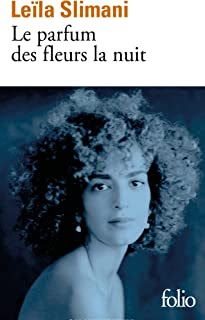
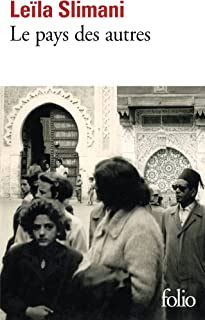
Leïla Slimani

Le parfum des fleurs la nuit

Le pays des autres

This June was the first time in too many years that I got to spend some time in France, so I had some catching up to do. In a bookshop at Nimes, I spotted a pair of paperbacks by Leila Slimani lying around on a table where they didn't belong, and as I loved her first novel, Dans le jardin de l'ogre (published in English as Adele), and generally have a soft spot for her, I read this as a sign and bought the pair unseen.

I read the slimmer one first, and it turned out to be an autobiographical sketch about an occasion when she agreed to spend a night locked into a museum in Venice and write about it. I mainly learned from this that she smokes too much, doesn't care much about visual arts, and had a grandmother from Alsace. As I had two grandparents from Alsace/Lorraine, I was intrigued and wanted to know more.

Luckily, the other book told me all about the Alsatian grandmother, albeit in fictionalised form. In the novel she's called Matilde and married a Moroccan soldier stationed near her home during the second world war, and followed him to his native country then still under French rule, but with calls for independence getting louder. Very much the type of book I want to read right now, making sense of our recent past and migration stories in an appealing format.

Ooh, and I hear there is a sequel too, called Regardez-nous danser. will have to get my hands on that (as soon as it comes out in paperback).

See also my twitter thread listing books I read in 2022.

PS Wikipedia names the real-life grandmother as Anne Ruetsch. My Alsatian grandparents were the son of Heinrich and Maria who fell in love in Stasbourg but then were forced to move to Dieuze (Lorraine), and the granddaughter of the stationmaster of Adamsweiler. Both lineages only came to the region after 1871, but Maria also had a much earlier Alsatian ancestor from Sainte-Marie-aux-Mines, unfortunately called Paul Simon, which must be the most useless name for online searches one can imagine. Considering all of this, I'm now creating a tag for all things Alsatian.

Saturday, June 19, 2021

sous le kiosque a musique

Ce qu'on peut rigoler
Par les beaux soirs d'été
Sous le kiosque à musique
On entend l'orphéon
Les tambours les clairons
La fanfare et la clique

I'm regularly using Oxford's only bandstand this plague year summer, both for chamber music and for folk sessions, so I am often reminded of one of my favourite French songs, an ancient one from the 1930s, which gently mocks the culture of widespread amateur / semi-professional music making for which these structures were built. I'm loving all the attention-grabbing flourishes and fanfares in the melody which are obviously a parody of the type of light music you might have heard at a bandstand on a summer evening in the early 20th century. Now that this culture has gone the way of the dinosaurs (along with the ophicleide mentioned in the text) and bandstands are mostly silent, I wonder what the authors of the song might have to say about it.

I've known the song since forever in the version performed by Georges Brassens (1921-1981) in a radio programme dedicated to the popular music of his youth: Georges Brassens chante les chansons de sa jeunesse (also available as CD).

Looking it up right now, there seems to be a general block in place forbidding users in the UK to access this recording. If you're outside the UK, you may be lucky to be able to listen to it on Soundcloud here.

I never knew the original version, only now I unearthed this one from jazz band leader Ray Ventura (1908-1979) which I'm assuming must be the version Brassens heard in his youth.

The only modern cover I've found is this one, which looks like a music teacher made it for kids, but it does have rolling lyrics, so if you want to learn the song it's a good resource (there are also chords provided here). According to this video, the composer is Marc Lanjean, and the lyrics are by Maurice Vandair.

Lyrics are also here (wrongly attributed to Brassens).

I've poked the very amazing Pomplamoose via twitter, I think they should definitely cover this.

Not our local bandstand, but one I saw at Romsey on a day trip earlier this year.

There is also a lovely flickr group called Bandstands Worldwide where you'll find some amazing structures (loving this one in Hove) as well as the occasional contribution from me.

Wednesday, May 05, 2021

fragile fates

Some thoughts (with spoilers) on

House of Glass
The Story and Secrets of a Twentieth-Century Jewish Family

Hadley Freeman

4th estate paperback, 2021

I have one or two book projects in my pipeline that are inspired by family history (eg this one), so I am naturally curious about other people’s efforts in this field. Our household has been reading Hadley Freeman’s contributions in the Guardian since forever (in my case since she moved from the fashion desk to become a columnist), which means I already knew some intriguing glimpses of her story, including the fact that her grandmother lived in Paris and never got over having to flee the city in WW2, and this loss of place is also something I can relate to (and Paris too, of course).

House of Glass is the story of this grandmother and her three brothers. The Glass siblings were a Jewish family from a town in today’s Poland. One of the many insane ironies in this story is that the first pogrom in (20th century) Poland happened in their town and saved their lives. This was before the end of WW1, so modern Poland didn’t even exist yet, but it became clear to them that the relative safety they had enjoyed under Habsburg rule was over. Their father came back from the war in poor health, and after he died the siblings and their mother followed in the footsteps of their cousins to move to Paris in the early 1920s, when France was still happy to accommodate Jewish immigrants. Their hometown was near Auschwitz, and among the Jewish families who stayed there, virtually nobody survived the Holocaust. So the statement that a pogrom saved their lives is not even an exaggeration.

When antisemitism and then the Nazis caught up with them in Paris, the four siblings responded in very different ways. One did as he was told by authorities, registered as a Jew, came forward when called up for internment, and ended up being murdered in Auschwitz. The other three did not and miraculously survived. The youngest of the brothers, the fashion designer (later turned art dealer) Alex Maguy tricked the sister into marrying an American, leading her to a life in safety in Long Island. To save his own life, he juggled personal friendships with resistance members and Vichy officials, and cheated death more than once. He even managed to save his 100% un-assimilated mother, which strikes me as the most surprising achievement in a life story that has plenty of others. The oldest of the brothers survived in less eye-catching style, but survive he did.

So, for a Holocaust memoir, this one has a 3/4 happy ending and manages to be uplifting. It uniquely encapsulates the history of the 20th century – the oldest sibling was born in 1901, the last survivor died in 1999 - while also raising issues that are again troubling us today. As it was researched and written after all of the siblings had died, it has plenty of detective work and sleuthing to keep up the suspense. And as a warning to aspiring memoir writers like myself, it is becoming obvious that this kind of investigation requires a lot of hard work (and travel, so I am excused for now, but I have a list of places I need to visit for this purpose).

PS: While reading this, I felt inspired to dig my own tiny bit of Jewish ancestry again, and thinking about it I suspect there may be more that has been swept under the rug.

Sunday, March 28, 2021

greetings from Adamsweiler

As I've been obsessing about old postcards for my #lostcities recently, I remembered this little treasure which isn't really from a city, but a village in Alsace, but it has the bonus feature of showing seven members of my family.

If you look at the picture of the railway station on the right:

you see from left to right, my great-great-grandparents, their five daughters - my great-grandmother being the youngest of the quintet, she's probably the last one in the line, followed by the station staff. The photo dates from 1900, which is the year the first of the daughters married.

So that is
Christoph Gottlieb Kauer (1845-1909)(see the brand new Kauer clan entry for his extended family)
Margaretha Imig (1847-1930) (see the Imig Clan entry for her extended family including dates and descendants for her daughters)
Johanna
Auguste
Anna
Kätha
Helene

I have a half-finished book about the station master's family in the drawer, one day I'll have to dig that up and make it presentable. Among the interesting issues to be discussed in this oontext is how the dramatic expansion of the railways brought both social mobility and geographic movements. The parents in this family both hailed from small town Simmern, both from modest craftsmen families, and CG Kauer would normally have become a cobbler like his dad. As a young recruit, he was severely injured in the war of 1870 and the railway career was kind of the consolation prize he got for that.

PS The village is now called Adamswiller, and has a population of just under 400 (in 1900 it was 313 including the 7 people named above). I can't find any other postcards from that time online, if anybody has any I'd be interested to see them.

The station was still standing when I visited in the 1990s, and here is a picture of it that looks more recent. Hoping it does survive still.

STOP PRESS: I've now created a new flickr album for all things family history related.

New series: Every picture tells a story

Update 15.10.2021: The railway families master post is now online.

Update 27.9.2022: A new book on the history of Alsace-Lorraine railways has come out last November:
Jean Buchmann / Jean-Marc Dupuy / Andreas Knipping / Hans-Jürgen Wenzel
Eisenbahngeschichte Elsass-Lothringen
264 Seiten mit 417 Abbildungen
210 x 297 mm
ISBN: 978-3-8446-6429-4
Artikel-Nr.:6429 [2021]
I've had a look at it when I saw it at a railway station - it covers the entire history both under German and French administration, so there is only a limited amount of detail on the early days and its small stations. There are a few photos of small stations, including, I think, Bitsch, but sadly not Adamsweiler.

Tuesday, March 16, 2021

father and son

some thoughts on

Pierre-Auguste Renoir, mon père
by Jean Renoir
Hachette 1962 / Gallimard 1981
an English translation from 2001 is also available

Back in 2013, the film Renoir was one of the few French movies that still made it to our local independent cinema, and I was lucky to catch it there, and then watched it again when it came out on DVD. It is about the last years in the life of the painter, after the death of his wife, Aline Charigot, in 1915. Auguste Renoir (1841-1919) is stuck in a wheelchair and barely able to move his hands, two of his sons get injured in the war, but he creates some of his most vibrant and life-affirming art.

By the time I started looking at paintings, the impressionists had become mainstream to the point of commercial overload, so I’ve never been a huge fan these works although I don’t mind seeing them every once in a while. The film, however, made me appreciate Renoir a bit more and as a result I picked up a few books about him at various charity shops and antiques fairs, including the memoir by his middle son, the film director Jean Renoir (1894-1979). The idea of the changing of the guard in visual arts, one of the first great film makers writing about one of the last impressionists to remain active in the 20th century, intrigued me so I actually read the book, assisted by the other volumes to look up paintings mentioned and consult timelines.

The biography is based on conversations Jean Renoir had with his father in the last year of his life, as well as with his long-serving model Gabrielle Renard (1878-1959) and other surviving witnesses. As the age gap between father and son is more than half a century, his own recollections only become useful towards the end of the story.

It is organised broadly chronologically, although the author tends to digress on thematic excursions, and covers a staggering range of historical change. From his childhood in the 1840s, Renoir remembered an old man who visited his parents regularly and happily shared memories of how he helped operating the guillotines in the French Revolution. Renoir’s family moved to Paris before it was completely reshaped by Haussmann in the 1850s, he experienced the restored monarchy and as he lived in the Tuileries, he played under the windows of the actual queen. Like some of the other impressionists, he lived and worked in Montmartre when it was still a village with wooden shacks, long before Sacré Coeur was built.

The complete rejection of the impressionists by critics, public and art officialdom in the 1870s is a well-trodden story but always fun to read. Apart from having fun with quoting from the hilarious reviews of the first exhibitions (one of which gave us the word “impressionists” for the artists who had called themselves “les intransigeants” initially), he highlights the occasions when French institutions like the Louvre wouldn’t even take the paintings for free, resulting in many of them winding up in North America. For instance, the painter and collector Gustave Caillebotte died in 1894 leaving his vast collection to the state and installing Renoir to execute his will. Initially the Louvre (as the official repository of the state’s art collection) didn’t want to be bothered with any of it. Three years later, they saw sense and accepted a part of the collection. Not sure if anybody has calculated what the Caillebotte collection would be worth today – I suspect you’d have to be very good in calculating with trillions and such like.

Renoir, who famously identified as a craftsman rather than an artist and considered the word intellectual an insult, comes across as an interestingly complex mixture of old-fashioned and revolutionary, which is part of the force field that keeps this book interesting, even though it isn’t the most organised biography ever written. That and the chance to meet the people you already know from those famous paintings. In another very famous French movie, Amélie, there’s the painter who copies Renoir’s Déjeuner des canotiers (1881) over and over again. Jean Renoir describes the setting and can identify most of the participants, mostly faithful friends of the painter. The woman at the front left, playing with a little dog, is Aline, the author’s mother. When we see these pictures in museums or on countless wall calendars, they are just paintings – but for Jean Renoir and the rest of the family they were life.

Oh, and I'll just have to watch the movie a third time, now I know the family so much better.

Sunday, July 19, 2020

les chansons de mon enfance

In my pre-teens, i.e. before I began to control what music I wanted to expose myself to, I spent a lot of time in France and got accidentally exposed to a lot of French popular music, much of which I then never heard again for decades. And some of that buried stuff comes back now, as musicians famous in the sixties die, as youtube recommends videos to me, or by some other random coincidence.

So here and in a new playlist on youtube I'm collecting French songs that I haven't heard in decades between my early childhood and say the last ten years. Obviously, that rules out the French music that I have consciously explored and chosen to listen to in the interim, such as the works of Brassens, Brel, Moustaki, Piaf, etc.

Work in progress, as I'm sure other musical memories will resurface.

So, here goes, in chronological order (some of the songs are older than me):


1962

Richard Anthony, J’entends siffler le train
(French version of 500 miles written by Hedy West)
A video made with the original sound recording.

Françoise Hardy (1944-2024), Tous les garçons et les filles de mon age
Rediscovered when Pomme recorded a cover. In this case I can't rule out that I may have heard it being used in some film - at least I was aware of the title and knew it was by Françoise Hardy.


1964

Charles Aznavour (1924-2018), Hier encore
A poignant performance from 2016, in Armenia.

1965

Charles Aznavour, La Boheme

Christophe (1945-2020), Aline
When he died I saw the newsclip on TV5 Monde and I was so sure I had never heard of him, and then they played Aline ...

Hervé Vilard, Capri c’est fini

Les feuilles mortes, the version sung by Françoise Hardy

1966

Françoise Hardy, La maison ou j'ai grandi

Nicole Croisille (1936-2025) and Pierre Barouh (1934-2016), Un homme et une femme. Also known as chabadabada song - a description which I recognised immediately. I don't think I've ever seen the eponymous film by Claude Lelouch, which made this song famous, so I guess I haven't heard this since it was a hit in the sixties. I rediscovered it after Croisille died on June 4, 2025. None of the other songs mentioned in this context rang any bells.

1968

Françoise Hardy, Comment te dire adieu
I'm following the very amazing Pomplamoose on YouTube and they did a stunning cover of this song, which I am positively sure I haven't heard since 1973.

As I got obsessed with playing Those were the days on the fiddle, I looked it up and found that there was a French version: Le temps des fleurs, by Dalida, released in 1968. I recognise bits of that which pull at my heartstrings, so that is definitely a positive test.

1969

Michel Legrand (1932-2019), Les moulins de mon coeur
Windmills of your mind was composed by Michel Legrand for the soundtrack of the film The Thomas Crown Affair, then recorded by him in a French version. The very catchy circular part of the tune comes from Mozart's Sinfonia concertante, K 364.
I think what happened was that I had watched couple of videos from the French/Arabic cultural interface and the YouTube bots concluded that I should watch the clip of Hiba Tawaji singing this on the French edition of The Voice, starting in French and switching to Arabic in the middle of the first verse (watch out for Mika's reaction which is priceless). If you prefer proper concert performance of the Arabic version without the Voice nonsense, click here. Legrand died last year too, but I think the YouTube bots found me before that.


1973

Michel Sardou, La maladie d'amour
In the movie La famille Belier, music by Sardou was featured prominently. I recognised a few songs, of which this was the earliest.

Update 4.12.2021

Just re-discovered Les feuilles mortes, the version sung by Françoise Hardy in 1965.

Update 22.1.2022

I've ignored everything by Charles Trenet so far as it's typically earlier than my memories, but his "Que reste-t-il de nos amours?" covered recently by Pomplamoose rang a bell (specifically the piano tinkling starting at 1:54) and I found out it was used extensively in Truffaut's film Baisers volés (1968), which might explain how I could have heard it on the radio in the late 60s.

Update 6.5.2023

These updates are getting messy, I am now filing them under the year when the song was released and only leave a note here. Today's update is Le temps des fleurs sung by Dalida in 1968.

Update 14.6.2024 - Revisited this entry after the passing of Francoise Hardy and added a link to her video of Comment te dire adieu. And unearthed another song of hers, La maison ou j'ai grandi.

UPDATE 11.6.2025 - added the chabadabada song (1966) after I rediscovered it due to the recent death of Nicole Croisille.

Saturday, May 16, 2020

the great deception

Madame Mills, une voisine si parfaite
(France 2018, dir: Sophie Marceau)

This movie is currently showing on TV5Monde, possibly as part of a series on Sophie Marceau (they showed Arrêtez moi last week, which was interesting as well). I wouldn’t normally watch a comedy with Pierre Richard, but since seeing La Boum when we were both a few decades younger, I have watched quite a few films with Sophie Marceau and I was keen to expand my collection, especially as she’s directed this one as well.

So, for people who know about this kind of comedy, it would probably be easy to dismiss this as a Pierre-Richard-does-Tootsie kind of dinosaur. My angle, however, is: Aren’t we all inventing our own reality? So here’s what I think the film is about.

The naming of Mrs. Mills character is of course a reference to Mills & Boon. Sophie Marceau plays Hélène, who has inherited a publishing house that used to be successful in romantic novels, but is struggling to adapt to the 21st century, as an investor based in Toronto is breathing down her neck. (It’s on the checklist for French movies being made these days: you have to have a few sentences in English in the dialogue, and at least one city outside the Francophonie.)

Pierre Richard moves in next door to her in the disguise of Mrs. Mills. The charming old lady starts invading Hélène’s life, claiming she’s a superfan of the romantic novels her house produces. Hélène has a eureka moment and hires Mrs. Mills as the Instagram-friendly, relatable, public face of her outmoded brand of escapism.

But who is really deluding whom, apart from everybody deluding themselves? Most will agree that romantic novels, comedians and conmen are deceiving us, but how about publishing in general, social media, modern art? And the whole globalisation thing? Perhaps we’re all being deceived all the time, it’s just that some deceptions, like Pierre Richard in drag (what big hands you have!), are more obvious than others.


According to IMDB, it was released in Germany on July 4, 2019 as well as in Greece. No other cinematic releases outside of France.


PS Looking up filmographies to work out how many of her films I've seen (current estimate: 19/46) it struck me that she regularly works with female directors. Since 2000 she starred in 21 films, of which 11 were directed by women. That includes 2 she directed herself but still a very impressive record.

Saturday, July 13, 2019

fleur de tonnerre

A year ago I got the impression that the situation was perhaps improving re the showing of films in more interesting languages than English in UK cinemas, but this seems to have been a blip. This year has been a bit of a disaster in this respect, so I am left to catch up with my DVD collection and to watch out for movies shown on TV5Monde (no longer on Sky in the UK, but free on the Internet here).

This week I watched Fleur de Tonnerre, a biopic of Hélène Jégado who was executed for five murders but is alleged to have killed dozens and may have been the most prolific serial killer ever. The weapon of choice being arsenic, this counts as history of chemistry as well as history of crime.

Her life unfolded in rural Brittany, with the folk belief in Ankou as an impersonation of death, combined with her psychiatric problems, appear to have led Jégado to believe she had to obey Ankou's orders and kill people. The film handles this somewhat disturbing story with subtlety. Rural Britanny in the first half of the 19th century comes across as a dark place -we also meet people who operate a moving lighthouse in order to lure ships onto rocks and then scavenge the wrecks. Tellingly, the move into the city of Rennes spells the end of Jégado's killing career as her new employer discovers her phiol of arsenic and sends it off for analysis.

Déborah François is impressive in this - it took me a while to realise that I had seen her in three other films before, including Mes cheres etudes, Female agents, and the page turner. She made her debut with the Dardenne brothers. She also appears as the artist's wife in Cezanne et moi which I haven't seen yet, see above.


There also is an English title (Poisoning Angel) for the film and a poster in English, but IMDB doesn't list any release date for the UK.

Monday, December 10, 2018

reading the riots

Open Archive Day

As I usually watch the news on the French international channel TV5monde (now broadcasting online in the UK), I've seen a lot more rioting in the last few weeks than I would ever want to, and I'm none the wiser as to what it actually wants to achieve. Time to reflect and re-read the feature I wrote after the August 2011 riots in London:

Why do people riot?


Champs Elysees, 24.11.2018

Image source: Wikipedia

Saturday, September 08, 2018

Madame Robinson

Leïla Slimani
Dans le jardin de l’ogre


When Leïla Slimani won the Prix Goncourt in 2016 for Chanson douce (English title: Lullaby), I really wanted to read her book but shied away from it because of the subject matter (as a parent, I am a bit squeamish about children being murdered). Then on my recent travel I stumbled across some kind of literary programme on TV5 Monde, where Slimani spoke about her most recent book (Sexe et mensonges : La vie sexuelle au Maroc), discussing the sex lives of Moroccan women with a panel of three blokes and looking as relaxed as if that was the most ordinary thing in the world to do.

So, looking up her oeuvre, I discovered her first novel, Dans le jardin de l’ogre, which looked less scary than the prize-winning one, so I read that. It’s in a way a Madame Bovary for the post-Catherine M. times. Which means, we have our medical doctor and his bored wife, but things get rather more out of hand than what I remember from Flaubert’s novel, and the move to rural Normandy (also the setting of Madame Bovary) comes as an attempt to fix things.

Slimani applies a cold psychiatric eye to report a case study of sex addiction – a condition only recognised as a mental health problem by the WHO last month, i.e. several years after her novel was published. She doesn’t spend much time on describing the external settings (Paris, Normandy, Boulogne sur Mer), and I kind of filled in from own memories what I missed there. But the internal landscapes are quite impressive and match the places. Hers, a city bustling with anonymous figures and existential angst, his, the yawning countryside and longing for steady normality, her parents’ the provincial small town of Boulogne (at some point, Napoleon planned to invade England from there, but I think he got side-tracked or something).

All of which reveals Slimani as a sharp and fearless writer, and one day I’ll even drum up the courage to read her other books.

An English translation of this book is scheduled to appear in February 2019 under the title of Adèle.


Available as a very lovely Collection Folio paperback, although I am not happy with the font they are now using for the author's name, which is the main difference between the current design and my collection of folios from the last century.

Monday, November 23, 2015

more Huguenots

When I reported on the suspected Huguenot connection of my ancestor Jean Bonnedame (* 1699 at Billigheim) , I didn’t know the last name of his wife, Maria Sara, whom he married in 1724. We now know that she was called Maria Sara Bouquet, (*1699 Minfeld).

Correction 9.7.2026: I corrected the birth year of Jean B. to 1699. There seems to have been a confusion with his father, also called Jean, who was born 1666 at Mörlheim. See eg here.)

It turns out that her family appears to be of Huguenot origin as well. Specifically, her father Philipp Bouquet was probably born around 1655 in the pays de l'Alloeu, a small patch of land just west of Lille (today in north of France) which originally was one of the provinces of the Spanish Netherlands. He came to the town of Billigheim (in the Palatinate, just south of Landau), which had a significant population of Huguenot refugees, with his father Laurent Bouquet (Boquai) in 1664. We don’t know anything about his mother. In 1685 he married Christina (last name unknown) at Archenweyer near Billigheim. Their son Isaac Bouquet was born in Archenweyer in the same year.

Like many other Huguenots, the Bouquets followed the invitation from the Duke of Prussia and moved on to the East, to the Uckermark area around Prenzlau in 1686, and were still there in 1690. (A list of residents confirms there were no Bouquets left behind in Billigheim by 1692.) However, there are no family events recorded in the Uckermark and by 1699 they were back in the Palatinate, where Philipp was administrator (Hofbeständer) at Minfeld. Sara Bouquet was born there in December 1699. Philipp Bouquet died on the Baltic island of Rügen, which must have been in Swedish possession at that time. We have no idea how or why he got there, so any clues appreciated. Christina died at Mörlheim in 1733.

There are a few Bouquet (Bocquet, Boquai, etc.) families documented in the area that is now the region Nord/Pas de Calais, but most are catholics, so ours are the black sheep. If anybody knows anything about protestant Bouquet families in that space and time, all hints would be much appreciated.

A couple of generations down the line this means that the couple that emigrated to the Black Sea, Johannes Klundt and Eva Maria Hust, may both have had quite a lot of “migration background”. Johannes Klundt has three grandparents of suspected French or Swiss origin. The odd one out is Anna Apollonia Schmitt. And the name Hust may also be of French, ultimately of Hungarian origin.

Sailly sur la Lys - one of the four towns of the pays de l'Alloeu.

« Prevote » par Médard — Travail personnel. Sous licence CC BY-SA 3.0 via Wikimedia Commons - https://commons.wikimedia.org/wiki/File:Prevote.jpg#/media/File:Prevote.jpg

Tuesday, October 27, 2015

writing history

Asterix: Le papyrus de César

The 36th Asterix album – the second from the new team, Jean-Yves Ferri and Didier Conrad – addresses a question of utmost importance for the historical consistency of the whole oeuvre: Why on earth did Caesar not mention the indomitable Gauls and their numerous victories against his legions in his famous De Bello Gallico? Did he falsify the historical record by omission? Are all the zillions of schoolchildren who start their Latin reading with “Gallia est omnis divisa …” fed a pack of lies?

The issue is addressed with a very satisfying story, resulting in an album worthy to be read alongside the Golden Era ones written in the years before Goscinny died. On the basis of this story, there are deep discussions to be had about how history is written, the contribution of reportage, the value of oral tradition, and the philosophy of truth. Oh, and the vanity of writers and the publishing industry. And Assurancetourix the bard (Cacofonix / Troubadix) plays an early example of a Stroh cello, so what’s not to love?

Intriguingly, this arrived on my doorstep just after I started reading another recently published book featuring the origins of Caesar’s famous opus. In the third volume of his fictionalised biography of Cicero, Robert Harris imagines Cicero’s secretary Tiro visiting Caesar in Gaul and reading the beginning of his 12th chapter: “Flumen est Arar quod per fines Haeduorum et Sequanorum in Rhodanum influit, incredibili lenitate ita ut oculis in utram partem fluat iudicari non possit.” Seeing that Tiro is believed to have written a biography of Cicero which is lost, while Caesar’s book is so ubiquitous that it would survive the apocalypse, this encounter between two authors is also an interesting reflection on the vagaries of history writing.

looks like a fragment of the lost scroll survived in the font of the word "papyrus" - maybe the authors should reveal that in full ...

PS: here's an interview with the creators, from the Guardian.

Friday, October 02, 2015

more films we're not allowed to see

UPDATE 16.6.2024 - the new list for films from 2021 onwards is here: films not shown - part 3

Back in 2010 I started a blog entry listing interesting (mostly European) movies that did not get a cinematic release in the UK. Many updates later, this entry has become just a little bit unwieldy, with two lists running in opposite directions, so I suspect I’m the only one who still finds anything in that entry (although it has been viewed more than 2500 times and is among the five most-viewed entries of all time).

Thus, I decided to start from scratch with a clean slate and just one list of films running chronologically forward, so starting with the earliest ones. I’ll start with films produced in 2012, because that’s where the old review/appreciation list fizzles out (unlike the watch list, which also included films that were more recent and those that I hadn’t seen yet). Within each year, the films that I actually managed to see are listed first. Oh, and female directors are now also highlighted in bold font (work in progress).


So, without further ado, off we go:

Camille redouble (Camille rewinds) - France 2012, Noémie Lvovsky - Charming if slightly illogical time travel story featuring the director in the lead role. It was - released in around a dozen countries but no UK date in sight.

La fille de nulle part - France 2012, Jean-Claude Brisseau - this low-budget ghost story looks like poor old Brisseau is now reduced to filming in his own flat and playing the lead himself, but it is still interesting.

Mapa para conversar (A map for love) - Chile 2012, Constanza Fernandez, starring Andrea Moro, Mariana Prat, Francisca Bernardi - three women in a cute little chamber piece mostly set on a small boat. Restrictions clear the mind, as one of the characters says. Available on DVD from the lovely peccadillo pictures.

Des morceaux de moi (Pieces of me) - France 2012, Nolwenn Lemesle, starring Adele Exarchopoulos (before she became famous in that other role) - growing up in a dysfunctional family in the middle of nowhere (in this case Picardie, northern France) can be hell, as the contrast between Adele Exarchopoulos' character, Erell, and everything around her demonstrates. Erell tries to cope by recording a video diary of her daily life, thus locking up her teenage trauma in a little box which she can eventually leave behind.

La vie d'une autre (Another woman's life) - France 2012, Sylvie Testud, starring Juliette Binoche, see my review here.

El amigo aleman (The German friend) - Germany, Argentina 2012, Jeanine Meerapfel, starring Celeste Cid - a slightly confused story of confused identities as the the daughter of Jewish refugees from Nazi Germany gets entangled with the son of Nazi refugees from postwar Germany, with both protagonists moving back and forth between Argentina and Germany.The fact that in both families the parents talk German to their children who answer back in Spanish reflects the mix-up. I do have a soft spot for Sulamith though, played by Celeste Cid.

Una pistola en cada mano - Spain 2012, Cesc Gay - Shown in Germany (Ein Freitag in Barcelona), and at the London Spanish Film Festival 2013.
Die Vermessung der Welt (Measuring the world) Germany 2012, Detlev Buck. Adaptation of Daniel Kehlmann's bestselling novel.
Klip (Clip) - Serbia 2012, Maja Milos
Weil ich schöner bin - Germany 2012, Frieder Schlaich
3 - Uruguay, Argentina, Germany 2012 - Pablo Stoll - oops, there are too many movies called 3, I was looking for this one and first found the one below, and got all confused.
Tres - Ecuador, Argentina, Germany 2012
3 Zimmer/Küche/Bad (Move) - Germany 2012
Baad el Mawkeaa (After the Battle) - France / Egypt 2012
Después de Lucía - Mexico / France 2012
A perdre la raison - Belgium 2012, Joachim Lafosse, starring Emilie Dequenne
Buscando a Eimish - Spain 2012, Ana Rodríguez Rosell, starring Manuela Vellés, Emma Suárez - shown at the London Spanish Film Festival 2012
Joven y alocada - Chile 2012, Marialy Rivas
Goltzius and the Pelican Pelican Company - UK 2012, Peter Greenaway


Angélique (I) - France 2013, Ariel Zeitoun - A fresh-looking new adaptation of the bestselling history romances by Anne and Serge Golon. I admit I watched part of it during travels in a hotel room and kind of liked it, so I ordered the DVD. Review to follow.

Landes - France 2013, François-Xavier Vives, starring Marie Gillain - gloomy reflections on life, boredom and social problems in the vast pine forests near Bordeaux set in the early 20th century. Compare and contrast with Therese Desqueyroux, starring Audrey Tautou, which did get a UK release.

Jack et la mécanique du coeur (Jack and the Cuckoo-Clock Heart) - France 2013, Stéphane Berla, Mathias Malzieu - interesting CGI-fairy tale in a surreal steampunk-style setting. One could spend hours unpicking cultural references from Jules Verne through to modern ones.

Las brujas de Zugarramurdi (Witching and bitching) - Spain 2013, Alex de la Iglesia, starring Carolina Bang, Carmen Maura. Shown at various festivals in the US and UK. Too much horror and buddy movie for my tastes, so I won't even attempt to review it, but here's the New York Times' take on it.

Arrêtez-moi - France 2013, Jean-Paul Lilienfeld, starring Sophie Marceau, Miou-Miou. Powerful and disturbing chamber drama about lives destroyed by domestic violence.

Chez nous, c'est trois! - France 2013, Claude Duty, starring Noémie Lvovsky. Very cute little film with a funny sideplot relating to the age-old question of how many kisses people in France exchange for greetings, hence the title. The main plot is about a struggling film director played by Noémie Lvovsky, who in real life directed the equally charming Camille redouble just the year before (listed above) so it could also be read as a reflection on the lack of global success of that work.

Flores raras (Reaching for the Moon) - Brazil 2013, Bruno Barreto
Ayer no termina nunca (Yesterday never ends) - Spain 2013, Isabel Coixet - shown at the Berlin International Film Festival 2013, and at the London Spanish Film Festival 2013
La marche - France 2013, Nabil Ben Yadir, starring Hafsia Herzi - I only know about this film because the trailer is on a DVD I own, probably one I bought in France.


Todos estan muertos - Spain/Germany/Mexico 2014, Beatriz Sanchis, starring Elena Anaya - the first full-length feature from Sanchis is a nice little film on a former pop singer traumatised by the accidental death of her brother and bandmate. Mecano may have been a musical inspiration. Only released in Spain and Mexico, and shown at a few festivals.

Les yeux jaunes des crocodiles - France 2014, Cécile Telerman, starring Emmanuelle Béart - a spirited defense of authors' rights, in a way. Based on the best-selling novel by Katherine Pancol.

Die geliebten Schwestern (Beloved sisters) - Germany 2014, Dominik Graf, starring Hannah Herzsprung. Young poet Friedrich Schiller's love life - it's complicated.

On a faillie être amies (Almost friends) - France 2014, Anne Le Ny, starring Karin Viard, Emmanuelle Devos, Roschdy Zem. Some nice scheming going on in this female-led comedy where the male chef serves as a trophy husband.

Arrête ou je continue (If you don't, I will) - France 2014, Sophie Fillières, starring Emmanuelle Devos, who gets lost in the woods and finds herself. Otherwise somewhat depressing relationship breakdown.

Respire (Breathe) - France 2014, Mélanie Laurent - shown at lots of festivals around the world, released in half a dozen countries. Managed to catch it on TV5 at some point but memories are evaporating fast. Felt kind of ethereal.

Ocho apellidos vascos (Spanish affair) - Spain 2014, Emilio Martínez Lázaro - only shown at the London Film Festival 2014.
Sous les jupes des filles - France 2014, Audrey Dana
Marie Heurtin (Marie's story) - France 2014, Jean-Pierre Améris, starring Isabelle Carré
Week-ends - France 2014, Anne Villacèque - released in Germany as "Wochenenden in der Normandie"
Au fil d'Ariane (Ariane's thread) - France 2014, Robert Guédiguian - released in Germany in Dec 2014 as "Café Olympique - Ein Geburtstag in Marseille"
Las insoladas (Sunstrokes) - Argentina 2014, Gustavo Taretto - released in Germany in August 2015.
Qui vive (Insecure) - France 2014, Marianne Tardieu, starring Adele Exarchopoulos
Une rencontre (A chance encounter) - France 2014, Lisa Azuelos, starring Sophie Marceau.
Tu veux ... ou tu veux pas? (Sex love and therapy) - France 2014, Tonie Marshall, starring Sophie Marceau (I'm on a roll adding all of Sophie Marceau's movies since 2012, as none of them have been shown in the UK.)


Jamais contente - France 2015, Emilie Deleuze - starring nobody I've ever seen before, this is a 21st century version of La Boum where the girl gets to sing in a band rather than going to a party. I wanted her band to be more punk though.

Qui c'est les plus forts? (You'll never walk alone) - France 2015, Charlotte de Turckheim, starring Alice Pol, Audrey Lamy. Charming comedy ticking off all the social issues of our time, maybe too obvious in its box ticking, but extra kudos to the director for casting herself in an unlikable role.

Je suis a vous tout de suite (I'm all yours) France 2015, Baya Kasmi, starring Vimala Pons. Billed as a comedy about a woman who can't say no, it has some rather dark undertones too, but overall manages to keep a warm tone and feelgood vibe. I didn't know Vimala Pons before, will have to watch out for other work. Intriguingly, she did an earlier short film with Baya Kasmi, called "J'aurais pu être une pute" which could almost be connected to this film.

Journal d'une femme de chambre (Diary of a chambermaid) - France 2015, starring Léa Seydoux, shown at the Berlinale, all of which is sadly no guarantee that we will get to see it here (except in the French Film Festival UK showing in a small number of cities.)
Mi gran noche (My great night) - Spain 2015, Alex de la Iglesia, starring Carolina Bang.
Le gout des merveilles - France 2015, Eric Besnard.
Go home - France 2015, Jihane Chouaib
Je suis un soldat - France 2015, Laurent Larivière
La taularde (Jailbirds) - France 2015, Audrey Estrougo, starring Sophie Marceau.


Corps étranger (Foreign body) - France/Tunisia 2016, Raja Amari, starring Sarra Hannachi. Very intimate portrait of one refugee's story.

À tous les vents du ciel (Twisting fate) - France 2016, starring Noémie Merlant. Yes, she may be a bit of a manic pixie dream girl stereotype, but the film is amazing in the extent to which it focuses on her and lets all male characters drop by the wayside. (Update April 2022: just spotted the name of Noémie Merlant here, who later shot to fame with portrait d'une jeune femme en feu, I hadn't made the connection at all, and she plays a character much younger than her real age here)

Rupture pour tous (Love is dead) - France/Belgium 2016. Charming and timely little comedy involving nobody I've ever heard of before.

Fleur de tonnerre (Poisoning angel) - France 2016, Stéphanie Pillonca, starring Déborah François - brilliant and quite a bit scary, see my review. IMDB lists no foreign releases at all - not the image of Brittany and of French women that people want to project ...

Maman a tort (Trainee day) - France 2016, starring Emilie Dequenne - bookended by fleeting party scenes reminiscent of La boum, a 14-year-old girl has her moral compass comprehensively crushed by a week-long work-experience at her mum's insurance company. Bottom line: yes capitalism is evil but just play along and find somebody weaker who can suffer so you don't have to. I might have to channel that anger into a separate blog entry.

O Perfume da Memória - Brazil 2016, Oswaldo Montenegro - amazingly stylish chamber piece in the spirit of Room in Rome and En la cama. Montenegro appears to have made it with his own resources and released it free on YouTube. See my review here.

Sex cowboys - Italy 2016, Adriano Giotti. Mildly interesting little no-budget movie made with people who don't even have a profile picture on IMDB. Selling out your sex life on only fans or whatever the 2016 precursor was comes with unintended consequences. Note that the girl gets a complex character, while the boy is mainly there as the love interest.

Egon Schiele: Tod und Mädchen (Death and the maiden) - Austria / Luxembourg 2016
Paula - Germany 2016, Christian Schwochow. A biopic of painter Paula Modersohn-Becker.
Marie Curie - France 2016, Marie Noelle.
Vor der Morgenröte - Stefan Zweig in Amerika (Stefan Zweig: Farewell to Europe) - Germany 2016
Orpheline - France 2016 - starring Adele Exarchopoulos, Adele Haenel, Gemma Arterton.


Luna - France 2017, Elsa Diringer, starring Laëtitia Clément - A male victim of a gang assault and a female member of the assaulting gang meet again, a love story as an almost-thriller due to the dark secret lurking in the past. Impressive work from unknown young actors.

Aus dem Nichts (In the fade) - Germany 2017, Fatih Akin - UK release June 2018!!! - on time for the end of the court case against the neo-nazi terror group NSU, the real-life inspiration behind the story.

Plonger (Diving) - France 2017, Mélanie Laurent, starring Maria Valverde. Ignore the trailer, the film is much more interesting than the trailer suggests.

La belle et la meute (Beauty and the dogs)- France 2017, Kaouther Ben Hania, starring Mariam Al Ferjani. Haunting depiction of the aftermath of a rape not shown - it's all to be read from the face of Mariam Al Ferjani.

Prendre le large (Catch the wind) - France 2017, Gaël Morel, starring Sandrine Bonnaire and Lubna Azabal. A textile company moves production from France to Morocco - one of the workers takes up the insincere offer to keep the job and move along. I'm sure I've seen another French film with a small group of workers moving after their jobs ... ah, found it, it's actually from the same year but I had forgotten to include it in this list after I watched it, so adding it now below:

Crash Test Aglaé - France 2017, Eric Gravel, starring India Hair, Yolande Moreau, Julie Depardieu. In this case it's a car factory relocating to India, and the heroines take a car to follow their jobs in easterly direction.

Djam - France 2017, Toni Gatlif, starring Daphne Patakia. Kind of a road movie without transport, and the title character trying to get from Lesbos to Istambul and back. A lot of spontaneous and informal music making happens on the journey otherwise marked by troubles and tribulations. Also dealing with the issue that many refugees have been risking their lives in the attempt to get from Turkey to Lesbos. Some similarities with Tony Gatlif's 2004 movie Exils, which is also set on the EU's southern border, namely between Spain and Morocco.

La mélodie - France 2017, Rachid Hami. This one is based on an earlier Brazilian movie called The violin teacher. Said teacher leads a bunch of kids in a disadvantaged suburb of Paris from zero to a performance at the Phiharmonie. Unlike the treatment such stories get in Hollywood, we don't have a love story thrown in and get only the bare bones of biographical background on the protagonists, which I think is a deliberate choice to show that once they caught the music bug, the project became the most important thing to them, so everything else has to fade into the background.

La lengua del sol (the tongue of the Sun) - Mexico 2017, José Luis Gutiérrez Arias. Lovely little film about the end of the world, so very topical in this day and age, also a nice chamber play in the style of Room in Rome and En la cama. See my review here.

Rodin - France 2017, Jacques Doillon, starring Vincent Lindon and Izïa Higelin
Le Semeur (The sower) - France 2017, Marine Francen - a 19th century man-sharing plot in a village where only women survived the war.


El arbol de la sangre
- Spain 2018, Julio Medem. See my review here. Medem returns to his Basque roots, which are probably too obscure for UK distributors.

Madame Mills, une voisine si parfaite - France 2018, starring and directed by Sophie Marceau. Wouldn't normally consider watching a comedy with Pierre Richard, but loved this one, see my review here.

Ma mère est folle (My mother is crazy) - France 2018, Diane Kurys, starring Fanny Ardant. Charming and stylish, even though maybe a bit too close to home ...

Joueurs (Treat me like fire) - France 2018, Marie Monge, starring Stacy Martin. Dark stuff from the world of underground gambling, with a compelling lead.

La belle et la belle (When Margaux meets Margaux) - France 2018, Sophie Fillières, starring Sandrine Kiberlain. The 20 and the 45-year-old version of Margaux cross paths and the older tries to be helpful. It is never revealed which rip in the space-time continuum supposedly made this possible, but the encounter is fun to watch.

Sofia - France/Morocco 2018, Meryem Benm'Barek-Aloïsi. Life is complicated for an unmarried woman giving birth in Casablanca, Morocco. There is no good solution, but the female family members stick together and muddle through somehow, which is more disturbing than uplifting, but I found the grumpy young mother in denial (Maha Alemi) very watchable.

Victor et Célia - France 2018, Pierre Jolivet, starring Arthur Dupont, Alice Belaïdi. Given that I have no interest in hair and beauty salons, there is an amazing number of French films set in this environment that I actually like, and this one joins the ranks of Venus Beaute and Caramel. Alice Belaïdi is a revelation, she also had a smaller role in Les tribulations d'une caissière, 2011.

La dernière folie de Claire Darling - France 2018, Julie Bertuccelli, starring Catherine Deneuve and her daughter, Chiara Mastroianni. Charming and surreal drama about letting go, kind of fits my age now.

Normandie nue (Naked Normandie) - France 2018, Philippe Le Guay
Amoureux de ma femme - France 2018, Daniel Auteuil, starring Adriana Ugarte. Released in Germany in October 2018.
Sin rodeos (Empowered) - Spain 2018. Shown at the London Spanish Film Festival in September 2018, but no release date scheduled at that time.
Un homme pressé - France 2018, starring Fabrice Luchini, Leïla Bekhti.
L'amour est une fête - France 2018, Cédric Anger
LikeMeBack - Italy/Croatia 2018, Leonardo Guerra Seràgnoli


Damien veut changer le monde - France 2019, Xavier de Choudens. Charming comedy on illegal ways to help migrant kids stay. Outside France it has been released only in Turkey, Lebanon, Morocco.

Tambour battant - Switzerland 2019, François-Christophe Marzal - with a bunch of unknown actors, this is a musical fable about the incursion of modernity into a Swiss mountain village. Women get the vote (it's 1970!) and the rebel faction of the village band uses modern contraptions like saxophones and tambourines.

Une fille facile - France 2019, Rebecca Zlotowski. Coming of age story set in the obscene wealth of Cannes marina. Not quite sure what to make of this.

Poissonsexe - France 2019, Olivier Babinet, starring India Hair. I got the impression that this was a very strange film, set in a near future where marine life faces extinction and humans may also struggle keeping reproduction going? I only gave it half my attention while doing something else though, so I may have missed some of the subtle clues.

Fabuleuses (Fabulous) - Canada 2019, Mélanie Charbonneau. Fabulous film about three young women, one is a successful influencer, one wants to be her, and one wants to be a professional cellist and objects to the whole influencer nonsense. I was very grateful that the young cellist plays the prelude of the fourth suite, not the one of the first which you'll hear in every other movie that has ever included a cello. I only understood 10% of the dialogues in français québécois (some characters were more understandable than others), so may have to watch it again to see if I can decipher a bit more. I think part of the problem is that it is both heavily coloured by English and invaded by English vocab, but as both the English and the French part of the speech sound the same to me I struggle to keep up with the switches.

Le mystère Henri Pick - France 2019, Rémi Bezançon, starring Fabrice Luchini, Camille Cottin, Alice Isaaz. Lovely and very bookish film, see my review here.

J'irai où tu iras - France 2019, Géraldine Nakache, starring Leila Bekhti. I'd watch Leila Bekhti in anything, and she does a good job here as the alien recently landed on her sister's planet of Celine Dion superfans (the title is from a Dion song too). I resented the talking cars and the attempts at comedy on the back of disability.

Curiosa - France 2019, Lou Jeunet, starring Noemi Merlant. Interesting reflections on the early adoption of photography as a medium torn between poetry and pornography. For that alone I would not mind watching it several times. People more interested in the human stories may find the characters a bit cold and aloof perhaps.

Tu mérites un amour (You deserve a lover) - France 2019, starring, written and directed by Hafsia Herzi


In corpore - Australia 2020, Sarah Jayne and Ivan Malekin, starring Clara Francesca. Available on Youtube. Four couples around the globe (Melbourne, Malta, Berlin, New York) are having very loving physical intimacy, but trouble elsewhere in their relationships. Just stay in bed, I would say. Also, possibly the first time I have been exposed to spoken Maltese, which is a very intriguing language as it is a mixture of Romance and Arabic heritage.

Cigare au miel - France 2020, Kamir Aïnouz starring Zoe Adjani. Coming of age story of Selma who faces slightly mixed expectations from her professional parents of Algerian background (somewhat autobiographical from writer/director Kamir Aïnouz). Zoe Adjani (Isabelle's niece) is a revelation, shame that this film didn't spark a breakthrough for her.

Jumbo - France 2020, Zoé Wittock, starring Noémie Merlant, shown at Sundance 2021.


last updated 20.8.2026


One of our lovely independent cinemas here, not their fault that they're not getting all these films. (Own photo)