Showing posts with label psychology. Show all posts

Monday, August 07, 2023

musical minds

Obsessing about all things musical is normally very much an amateur and hobby kind of thing for me, but every once in a while I find an excuse to feed it into a feature (eg the one on how whales learn their tunes). This time I came across a special issue on music and development of the journal Developmental Science, which underlines the importance of music for studies of the mind. From the abundance of material provided in the issue, I picked out the papers on music and language and had a closer look at those. The resulting feature is out now:

Music on our minds

Music is widely believed to be beneficial for children’s development, but the systematic study of cross-domain effects, for instance between music and language learning, is still an emerging field with many questions left to investigate.

Current Biology Volume 33, Issue 15, 7. August 2023, Pages R781-R783

FREE access to full text and PDF download

See also my Mastodon thread where I highlighted all CB features of 2023.

I'm not on Instagram myself, but I believe if you follow CurrentBiology there, you'll find my features highlighted there as well.

Exposure to music in early childhood is thought to be beneficial for other domains including language learning, but much more research into the details of its effects is still needed. (Photo: Getty Images.)

PS returning to the playful side of things, one of the editors of the special issue runs citizen science projects to study music perception and psychology through interactive games and quizzes. You can take part here.

Update 26.1.2025 New book that is related to this: Music as Medicine, by Daniel Levitin. Here's a Guardian feature about the author and his work. And here's a review of the book.

Monday, January 11, 2021

post-truth is pre-fascism

Four years ago, ahead of the inauguration of a certain US president, I warned of the dangers of a post-truth world. After the November 2020 election that voted him out I wondered what we have to do to get some sense of truth back, after the world has become used to being flooded with toxic lies. Conspiracy theories not only disturb political process, they may also jeopardise the response to the Covid crisis.

I wrote a feature about this in the first week of December, writing about the strange beliefs of Republicans in the past tense, half hoping they might get bored of crazy conspiracies by the time the article comes out. Unfortunately, the opposite has happened and they decided it might be a good idea to storm the Capitol and try to prevent the completion of the official election process. A very good analysis of what happened, with just the right amount of references to Weimar Germany, is in this essay by Yale historian Timothy Snyder - from which I borrowed the title of this blogpost. Snyder makes the point that, on top of all the small and medium sized lies, the big lie that Trump won the 2020 election and had the presidency stolen from him could continue to bind his fanbase in their perceived victimhood and serve a future fascist coup like the Dolchstoss-Legende about the end of worldwar I served the Nazis. Trump might be too incompetent to lead that coup himself, but somebody else now patiently waiting in the wings could take over his devoted fanbase and use it for a successful putsch.

Now I'm somewhat less optimistic that the problem can still be fixed in the US, and if it can't the fallout will be catastrophic for the rest of the world as well, if only because raving lunatics around the world will feel encouraged to try the same. But to feed the small hopes we still have here are some thoughts on how to bring back a bit of reason.

Recovering a sense of reality

Current Biology Volume 31, Issue 1, 11 January 2021, Pages R1-R3

FREE access to full text and PDF download

The denialists in the photos we had available in December looked comparatively sane compared to the photos from last week! Demonstration of denialists protesting against Covid restrictions in Leipzig, Germany. (Photo: Roy Zuo/Wikimedia Commons (CC BY-SA 4.0).)

service announcement: starting a new twitter thread with the features of 2021, adding them as they convert to open access.

Monday, November 02, 2020

on the origins of numbers

When I saw the news story about the fraction signs of Linear A, the cuneiform writing system of ancient Minoans, I felt inspired to go looking for the origins of mathematics. I.e., I was asksing myself: where was the transition when natural abilities that you might also find in other animals led to calculating, book keeping, and the whole culture of mathematics that we have today.? I didn't really find that magic spark moment, but I still learned lots of interesting things about different cultures deal with numbers, and how scientists are debating the numerical (or just quantical) skills found in some animals.

The feature is out now:

Are numbers in our nature?

Current Biology Volume 30, Issue 21, 2 November 2020, Pages R1283-R1285

FREE access to full text and PDF download

Animals from insects to primates can distinguish quantities, but their processing is different from the arithmetic we learn in school. (Photo: Luca Ambrosi/Unsplash.)

Monday, October 21, 2019

collectives at Konstanz

It's been a while since I last covered Iain Couzin's amazing work on collective behaviour (in humans and other animals) so it was great to catch up with all these things for a new feature. Since the last one, Iain has moved to the lovely city of Konstanz on the shores of the eponymous lake. Which is on my shortlist of places to move to when Brexit actually happens. Iain went there to lead a Max Planck department, out of which a new institute of ethology has now been born, which is a bit ironic, as the Max Planck society earlier abandoned the ethology tag to turn the institute founded by Konrad Lorenz into one for ornithology.

Anyhow, there are so many exciting things going on at Konstanz (I really should move there!) that I basically did a feature rounding up examples of the work from the three departments of the new institute, studying the collective behaviour of fishes, baboons, and storks. Oh, and then I threw in some humans, too:


Reading the hive mind

Current Biology Volume 29, issue 20, pages R1055-R1058, October 21, 2019


FREE access to full text and PDF download


A recent example of collective behaviour in humans (Fridays for future, Düsseldorf, Sept 2019). I'm wondering, by the way, when collective biologists have conferences, do they go all meta and analyse the collective behaviour of their colleagues?


Monday, June 03, 2019

cooperation and conflict

Today's issue of Current Biology includes a special theme section on cooperation and conflict. In my contribution to the section, I looked at a phenomenon that has the remarkable ability to cause both cooperation and conflict on a massive scale, namely religion. Starting from a recent investigation into the timing of the origins of religions with moralising high gods, and also going deeper into the past, where religious beliefs were somewhat less intrusive, I've tried to explore when, how and why humans started to evolve religions.

The resulting feature is out now:

Uncovering the roots of religion

Current Biology Volume 29, issue 11, pages R426-R429, June 03, 2019

FREE access to full text and PDF download


Sheikh Zayed Grand Mosque: Colonade and Reflecting Pool (photo: Andrew Moore)

UPDATE 8.8.2023: The Nature paper on Big Gods which I discussed in the feature (Whitehouse et al. 2019) was eventually retracted and republished in an improved version as a "Retake": H. Whitehouse et al.: Religion, Brain & Behavior (2023) 13, 124-166

Saturday, December 15, 2018

the naked ape

As tumblr is probably going the way of MySpace after Monday's purge, I am thinking of ways of transfering some of my activities there to blogspot. The easiest part will be the "old books" tag, as I already have the "antiquarian" tag here, so expect to find photos of old books (from my shelves or observed in the wild) here more often.

To begin with, here are some reflections on naked apes:

I’ve had the German copy of Desmond Morris’s classic pop science book for decades (print run dated 1978), but just this October I discovered the English paperback with a similar but different design (printed 1969):


Assuming that the English cover design was there first, it is interesting to look at what the German publishers changed. They kept most of the chimp and the general idea, but swapped the chimp’s head and the humans, who were replaced with blonder versions. Note also the only skin contact in the English cover is man to chimp, while the German version allows skin contact between humans.

I could marvel at this pair forever … come to think of it, I’ll go looking for other language editions using a similar picture, watch this space.

Update: here we go - first, from Wikipedia, a picture of the author with a 1969 Dutch edition using the same photo as my German edition (but more than one ape):


And here are four editions I found with similar pictures, in Dutch, Finnish, French and Italian:


Monday, October 29, 2018

testing times

Open Archive Day

A year ago, reflecting the rise of certain politicians and movements aiming to reinstate old-fashioned prejudice against anybody who is different from their definition of normal, I wrote a feature on the psychology of prejudice and the implicit association test (IAT) developed by Anthony Greenwald and Mahzarin Banaji.

As things are going right now, considering recent events in the US and election results from Italy, Germany, Brazil, a test for hidden bias like this will soon become obsolete, because our real problem will be with the outspoken bias marching down the street and assaulting people. But just to be extra sure you've no common ground with the prejudiced people coming out of their caves, you could take the IAT online, and/or read my feature about bias, which is on open access now:

Can we change our biased minds?

Saturday, August 11, 2018

16,000 words

In a review of the book “vox” by Christina Dalcher I read the claim that people – men and women alike – speak an average of 16,000 words a day. The research, published in Science in 2007, was designed to debunk the myth that women talk three times as much as men, and it duly found that both talk the same amount within error.

Still, as somebody who prefers writing to talking, this strikes me as a huge amount. That must be around two hours of solid monologue, or four hours of conversation, if you allow the other person half the time. Longer, if you take time to reflect between your exchanges. Just to get a measure of how much text that is that people talk on average, consider this:

I typically write around 1000 words a day (I read a lot more, and I’d reckon I speak fewer). Just imagine I could come up with 16,000 meaningful words a day – which of course I would not dream of wasting on the fickle oscillations of air, but would rather write down for publication. At a fairly typical rate of 40p per word, these could theoretically earn £ 6400 in a day, or two million in a year.

Well the bug in that calculation is that I can’t come up with 16,000 words worth of meaningful content every day, nor can anybody else, which is why people tend to talk about the weather and repeat themselves all the time. Yes I do realise that all that small talk serves a social function, but why can’t people just rub each other’s backs instead? In that respect, chimps and bonobos are more civilised than we are. Failing that, playing music with people works for me. A way of communication as well, but with fewer words.

I appreciate that the 100-word limit imposed on women in Dalcher’s dystopian novel amounts to torture (the lowest word counts reported in the science paper were closer to 500), but 1000 words is probably a daily budget I could get along with. Add to that 1000 written words, and I’ll swap the rest of the 16,000 for wrong notes played at the wrong time. This blog entry contains 373 words, by the way.


PS: The Guardian reviewer doesn't like the book ...

Monday, May 07, 2018

two faces of facebook

Cambridge Analytica has now thrown in the towel, but the important questions of the recent facebook crisis remain unresolved. The network connecting and observing more than two billion people is a typical dual use technology, it can do a lot of good and also help psychological studies, but the possibilities of manipulation and misuse for political or financial gain are also endless.

My feature on this weighs both uses and asks how science should handle this dangerous tool in the future:


Watching two billion people


Current Biology Volume 28, Issue 9, 7 May 2018, Pages R527–R530


FREE access to full text and PDF download


Monday, April 02, 2018

mind Africa's genomes

Africa has been left behind by much of modern biomedical science and biotechnology, so it is always good to see when new initiatives aim to spread the benefits to this continent, as the newly launched NeuroGAP and NeuroDEV programmes for psychiatric genetics do. However, one also has to watch out very carefully, not to create the impression that Western scientists extract samples and scientific insights from the continent in a one-way system. Empowering local scientists and building capacity in situ have to be important parts of any such projects.

I've tried to gain a balanced perspective of all this in my latest feature, which is out now:

Mind the genome diversity gap

Current Biology Volume 28, Issue 7, 2 April 2018, Pages R293–R295

FREE access to full text and PDF download


Sites in South Africa, Ethiopia, Kenya and Uganda are involved in the projects.
Credit : Susanna M. Hamilton, Broad Communications


Monday, October 23, 2017

hidden bias

Of course people aren't racist, if you ask them. In the last decades, openly acknowledged prejudice has lost ground in western society, and only a small minority would admit to it. But are people still biased deep down, maybe without realising it?

Anthony Greenwald and Mahzarin Banaji have developed a very clever way of testing for such hidden bias, the implicit association test (IAT), which you can try out for yourself here. The test has now been widely used and many people report that they discovered implicit bias they were unaware of previously.

All this isn't quite new any more, but given that some remarkably prejudiced people are now in positions of power in some countries I could think of, and given the horrendous number of black people killed by police in the US, it is more important than it may have been in the more optimistic times when the test first went online. So I've read the book Blindspot by Greenwald and Banaji (shown below) and written up a feature about the remarkable story of the IAT and what it means for us today.

Oh, and I took two versions of the IAT, and I am pleased to report that:

1) Your data suggests:
Little or no association between Female and Male with Science and Liberal Arts.

2)Your data suggests:
Moderate automatic preference for Black people compared to White people.

So I am now moderately biased in favour of the IAT, as it gave me the results I hoped for.


Anyhow, here's my feature:

Can we change our biased minds?

Current Biology Volume 27, Issue 20, pR1089–R1091, 23 October 2017


FREE access to full text and PDF download


Monday, February 20, 2017

caring about victims

Lives lost are met with dramatically different responses in the media and in the general public. One child abducted and killed in a wealthy country can keep the front pages for weeks, while tens of thousands of children perish in humanitarian crises without much notice. Many of the political conflicts dramatically enhanced by the recent US elections boil down to which lives people care more about and which ones less. The unborn vs. the already born, the black youth vs the white policeman, the European native vs the Syrian refugee.

Racism fuelled by vicious scapegoating favoured by certain politicians and media outlets is one obvious reason for distributing empathy inequally. However, there are also some other, more surprising mechanisms at work, like the identified victim effect, which is measurable in that people donate more money to help a single identified victim of crisis than they would if there are several in the same situation. This effect is also one of the reasons why empathy is not always a good guide to sensible political decisions.

I have looked into these issues for my latest feature which is out now:

Caring about humanitarian crises
Current Biology Volume 27, Issue 4, pR123–R125, 20 February 2017

Restricted access to full text and PDF download
(will become open access one year after publication)

Magic link for free access
(first seven weeks only)


Research shows that empathy responds better to images of a single identified, or at least identifiable, person. While groups of victims may need more support, their numbers rather subtract from our empathy. Charities and political organizations have long used this effect, with ads and posters of individuals, like in this charity campaign from 1918. (Image: United States Government/Wikimedia Commons.)


Monday, September 22, 2014

melancholic minds

Today's issue of Current Biology has a special section on applied neuroscience, and my contribution to that is a feature on depression:

Silver linings for patients with depression?
Current Biology Volume 24, Issue 18, pR851–R854, 22 September 2014
DOI: http://dx.doi.org/10.1016/j.cub.2014.08.059

Free access to full text and PDF file.
(May be withdrawn after two weeks, but will come back in a year.)

The artist Edvard Munch (1863–1944) suffered from severe anxiety and has in his work depicted various states of emotional distress, including depression. This work is called Evening. Melancholy I. (1896). (Image: Wikipedia.)

Monday, September 08, 2014

deviant desires

My latest feature in Current Biology, partially inspired by the recent book Perv – the sexual deviant in all of us, by Jesse Bering, covers the biological diversity of sexual orientations in humans (and some animals) and our society's inability to deal with this serious problem in a rational manner.

Paraphilia or perversion?

Current Biology Volume 24, Issue 17, pR777–R780, 8 September 2014
DOI: http://dx.doi.org/10.1016/j.cub.2014.07.047

OPEN access to full text and PDF

Leda and the Swan, a 16th-century copy by Peter Paul Rubens, after a lost painting by Michelangelo (National Gallery, London)

Friday, July 04, 2014

perverted policy

Perv – the sexual deviant in all of us, by Jesse Bering

review

Author Jesse Bering grew up as an insecure gay boy during the AIDS crisis of the 80s and knows a thing or two about what it feels like to have a sexual orientation that the “silent majority” very loudly disapproves of. Although things in the US and most western countries have changed dramatically since then, he has kept a healthy dose of anger and mistrust against similar moral panics.

He puts his scepticism and scientific expertise to good use in analysing the problems around the people who are as ostracised today as he was in the 1980s, including paedophiles and all those with other kinds of “abnormal” sexual orientations, technically described as paraphilias.

Sexual orientation – a concept which only emerged in the late 19th century – can easily be measured today (the author has great fun describing how it is done with male subjects) and it has become clear that in boys it is fixed by the age of 10. Thus there is no way to cure a paedophile of his orientation, just as one cannot straighten out gay people.

What society could do, but has failed to do so far, is to recognise that people with certain paraphilias have a problem and need help addressing it. Harm reduction, rather than moral, naturalness or normality, is the key issue in Bering’s argument. Podophilia (foot fetishism) isn’t likely to harm anybody, but paedophiles need help to live with an orientation that would inflict suffering on children if they lived out their secret urges.

Currently, society tends to label them evil (contrary to the scientific evidence showing that they haven’t chosen their orientation) and heaps so much shame on them that some resort to child murder rather than risking exposure of their sexual transgression.

Bering points to scientific evidence showing that in places where child porn was temporarily legally available, child abuse was less prevalent than when it wasn’t, suggesting that such material, repulsive as it is to the rest of us, doesn’t encourage transgression but rather provides an outlet and reduces crime.

These findings create a first-class philosophical dilemma – would it be ok to recycle confiscated child porn to offer it as a pressure valve to known paedophiles who might otherwise go out and stalk children? Even though the making of that material presumably harmed children in the past? And does it make sense to incarcerate “hands-off” offenders, i.e. people whose only crime is to have indecent images stored on their computers, if these very images may have stopped them from doing worse?

A possible solution that the author appears to support would be to allow computer animation material to be produced and consumed. Strictly following the harm reduction idea this would make sense, as nobody is harmed in the production of such footage, and if it helps to reduce actual harm to actual children, it must be a good thing, right? Now try explaining that to the media outlets with the biggest megaphones …

Combining passion rooted in his own experience with an impressive writing talent, Bering has distilled a difficult subject matter into a fascinating book. It may still take a few decades until society (any society on the planet, really) is ready to extend evidence-based policy to the unspeakable issues addressed here. If Bering’s book helps to speed up progress just a little bit, it will be remembered as a huge achievement.

I admit that the cover design is kind of clever, but it might create problems if you do your reading on public transport ...

PS: as I usually do, I also tried posting a version of this review on the amazon UK page of the book. Strangely it hasn't shown up there.

Monday, May 19, 2014

stop stressing

why are people chronically stressed and what can they do about it? I've been looking for answers to this in a feature that has just appeared in a special issue on stress:

Chronic stress means we’re always on the hunt

Current Biology Volume 24, Issue 10, pR405–R408, 19 May 2014
DOI: http://dx.doi.org/10.1016/j.cub.2014.04.051

Full text (on open access for two weeks, and then again after one year)

Spending time looking across water helps to fight stress, says Wallace J. Nichols. Works for me. (Own photo, taken in Frankfurt, Germany.)

Monday, November 18, 2013

consciousness in animals

Consciousness is a field that I've avoided until now, as I thought it was hardly accessible to scientific method, and even if scientists get a handle on it, they have to work against centuries worth of philosophical baggage.

Recent research, however, has uncovered intriguing traces of consciousness in animals, and even in those that aren't very closely related to us, such as the corvidae. These discoveries make it possible to cut consciousness down into manageable chunks, each with its own animal model, which makes it much more tractable for science.

So, finally, after many years of not covering this field, I wrote a feature about it, which is now out:

Elements of consciousness in animals

Current Biology, Volume 23, Issue 22, R981-R983, 18 November 2013 doi:10.1016/j.cub.2013.10.078

Free access to full text and PDF link

Experimental setup used in Nicola Clayton's lab to study the food-caching behaviour of jays. When jays realise that they have been observed while hiding their food, they come back to the cache to hide it elsewhere. This is particularly common in jays who have themselves been food thieves, suggesting that they can take the perspective of the thief. (Photo: Nicola Clayton.)

-----

PS: BBC clip of a crow solving a problem in 8 steps.

Saturday, September 21, 2013

mental disorders made accessible

review of

Essentials of psychiatric diagnosis: Responding to the challenge of DSM-5

by Allen Frances

The Guilford Press, New York, June 2013

In April this year, I wrote a feature about the criticism levelled at the new edition of the Diagnostic and Statistical Manual of mental disorders, DSM-5, which appeared in May. One of the critics I cited was Allen Frances, MD, who had criticised from the preparatory stages of the new edition that it was making diagnostic criteria too wide and too vague, at the risk of making mental patients of us all.

Frances is not only a distinguished psychiatrist (he chaired the team that prepared the fourth edition and was also involved with the third edition of the DSM) but also a prolific writer, so he prepared his own, anti-DSM-5 diagnostic guide in time to be published almost simultaneously with the big manual. As he told his publishers about my article, they kindly sent me a review copy of the book.

I was a bit apprehensive at first, as the title sounds somewhat technical and forbidding, but sampling some of the chapters I soon found out that it is highly readable for lay readers. Each chapter for a specific mental disorder has very clear signposting including a screening question, description of a prototype case, and differential criteria to distinguish the condition from separate, but similar ones, or, indeed, from the fringes of normal behaviour. The last distinction is possibly the most important one, as the risk that all variability in human behaviour may get labelled pigeon-holed into psychiatric categories and treated with drugs provided by an all too eager pharmaceutical industry is a growing concern.

The book is “meant for everybody with an interest in psychiatric diagnosis” – not just medical professionals and students, but also anybody who cares about a person who may have mental health problems. Recognising problems early can save lives. And as some of these disorders seem to be spreading, the target audience may well include most of us.

PS: A revised edition has just come out on September 18th. According to the blurb on Amazon, it “features ICD-10-CM codes where feasible throughout the chapters, plus a Crosswalk to ICD-10-CM Codes in the Appendix. The Appendix, links to further coding resources, and periodic updates can also be accessed online (www.guilford.com/frances_updates).”

Monday, July 08, 2013

people, pets, and predators

My latest feature in Current Biology covers the triangular relationship between humans, their pets, and undomesticated animals that may come in conflict with one or the other. I've specifically looked at two cases that made headlines recently, namely badgers vs. cattle, and cats vs. birds. As always, problems are complex, and emotional involvement that people tend to have with specific animal species can make it even harder to find rational solutions.

The feature is out in today's issue:

Where wildlife and tame life collide

Current Biology, Volume 23, Issue 13, R545-R548, 8 July 2013 doi:10.1016/j.cub.2013.06.038

Free access to

Full Text (HTML)

PDF file

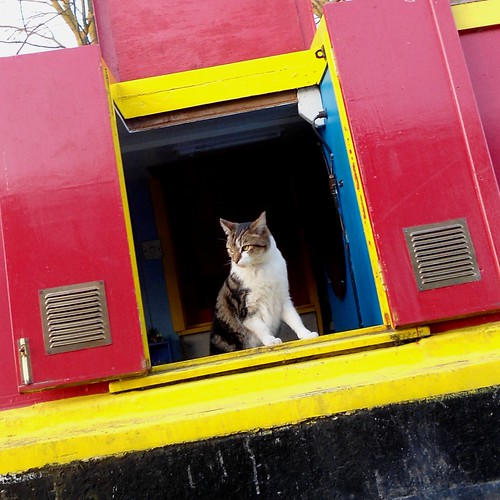
houseboat cat revisited

pet predator from my flickr pics.

Monday, June 17, 2013

emotional science

In my latest feature in Current Biology I've explored how science, after centuries of trying to shut out all emotional and subjective things, is now rediscovering emotion. After all, we now know that feelings show up in MRI scans, so they must be real. And in some contexts, from conservation through to medicine, they might even be useful.

Can science relate to our emotions?

Current Biology, Volume 23, Issue 12, R501-R504, 17 June 2013 doi:10.1016/j.cub.2013.05.056

HTML text

PDF file

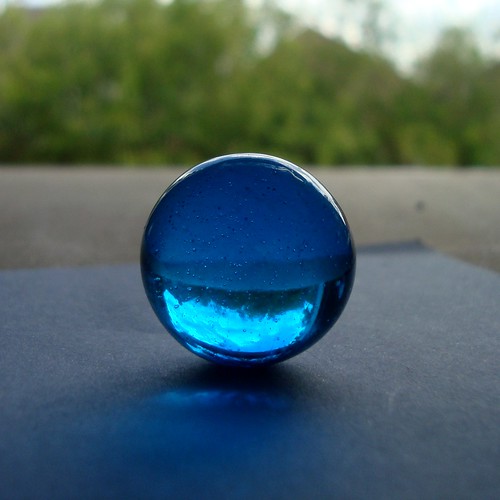
blue marble

The blue marble that I got from Wallace J Nichols whose work is discussed in the feature. It symbolises our watery planet as it can be seen from space, and also points to his views on the "blue mind."

Update 5.8.2024. Wallace J. Nichols died in June 2024. Some links to reflections on his work: