Showing posts with label biochemistry. Show all posts

Monday, April 23, 2018

weird membranes

Today's issue of Current Biology contains a special section on membranes, and my contribution to that is a feature investigating why the membranes of archaea are so weird (sorry, different from all other membranes). Back in the 90s, I did my PhD work next door to Karl Otto Stetter's Archaea Centre at Regensburg, so it was a bit of a nostalgia trip, but I also learned lots of new things about their evolution.


Archaea cloaked in mystery


Current Biology Volume 28, pages R372-R374, April 23, 2018


FREE access to full text and PDF download


Archaea represent a unique life form whose complexities science is only beginning to understand. Researchers in Regensburg and Munich, Germany, are studying the functions of cellular appendages such as the flagella-like archaella of Methanocaldococcus villosus. (Image: Gerhard Wanner, Ludwig-Maximilian University Munich.)

Monday, March 07, 2016

how plants think

Plants don't have a brain, so any claims that they can conduct cognitive processes are bound to be controversial, as they challenge our views of cognition. And yet, over the last few years, evidence has accumulated showing that plants can communicate, remember, count ... This still doesn't mean that they understand when we talk to them, but at least one should keep an open mind to be able to discover cognitive processes that may look very different from the ones in animals but ultimately serve the same functions.

I've rounded up some examples of plant cognition in my latest feature which is out today:

Could plants have cognitive abilities?

Current Biology Volume 26, Issue 5, 7 March 2016, Pages R181–R184 doi:10.1016/j.cub.2016.02.044

FREE access to the full text and PDF download
(will become open access one year after publication)

The root space of plants is a highly complex and insufficiently understood system described as the rhizosphere. It enables communication both among plants and between plants and other species. (Photo: N. H. Groß)

Wednesday, June 17, 2015

pee-back time

The round-up of German pieces published in June covers African genomics, gene editing, and advanced materials reflecting urine from the much peed-upon walls of St. Pauli district in Hamburg.

Crispr-Cas: Gen-Schere weckt Neugier, Hoffnungen und Ängste
Chemie in unserer Zeit Volume 49, Issue 3, page 158, Juni 2015
Abstract and restricted access to full text.
related content in English

Blickpunkt Biowissenschaften: Afrikas Genome
Nachrichten aus der Chemie 2015, 63, 647-649
related content in English

Ausgeforscht: Clochemerle 2.0
Nachrichten aus der Chemie 2015, 63,751

Monday, June 01, 2015

genome editing

Some time around 1994, I heard freshly-minted Nobel laureate Tom Cech (one of the discoverers of natural RNA enzymes, aka ribozymes) give a talk in Oxford, and he finished by saying that most of what he had presented happened thanks to his brilliant post-doc, and we should remember her name, she would go on to do great things. That post-doc was Jennifer Doudna, who now has a very good chance to get a Nobel prize herself for her work on CRISPR-Cas, the “bacterial immune system”, which Doudna and others turned into a turbo-charged gene editing tool.

Currently, researchers are still teasing out some very fundamental details of how this system works in the wild, while its application in the laboratory is turning the world of genetics upside down, as it allows gene editing with unprecedented ease. And while US scientists are holding meetings to call for a moratorium on its application to the human germline, a team in China has proceeded to to just that.

This is the topic of my latest feature in Current Biology. If I got my counts right, this must be the 100th in the new format we introduced in February 2011, when I started providing a feature for every issue of the magazine (i.e. two per month). I think I only missed 3 issues since then, so I guess it worked out quite nicely. So here’s number 100:

Bacterial scissors to edit human embryos?

Current Biology Volume 25, Issue 11, pR439–R442, 1 June 2015

Open access

Thursday, May 14, 2015

catching liver cancer early

It’s always great to hear from my former postdoc colleagues who have gone out into the world to set up labs and do exciting research that I can then write about, just occasionally (most of the work I report comes from people I never met). So here is the latest news from the lab of Jenny Yang who arrived at the Oxford lab just a couple of months before me, back in the olden days. She used to work around 25 hours per day, and it’s good to see that her efforts have been rewarded, as she’s now a Distinguished University Professor and associate director of the Center for Diagnostics and Therapeutics at Georgia State University at Atlanta.


Jenny’s group at Georgia State developed a protein to bind gadolinium ions, which can then be used as contrast agents in magnetic resonance imaging of cancer in the liver. Other gadolinium-based products have been available, but due to their magnetic properties (low relaxivity) and other problems, they yielded poor contrast capability , which meant that they could only detect cancers that were already quite big. The new protein now enables the detection of liver tumours (both primary tumours and metastases from elsewhere, as quite a few cancers have the habit of establishing metastases in the liver) at a much earlier stage.

ProCA32, the researchers’ newly developed contrast agent allows for imaging liver tumours that measure less than 0.25 millimeters, compared to a current detection limit of 1 cm. Thus the method is more than 40 times more sensitive than today’s commonly used and clinically approved agents used to detect tumours in the liver. (Note that a tumour 40 times larger in diameter would have 40x40x40 = 64,000 more cancer cells, which is a scary thought.)

Specifically, ProCA32 widens the MRI detection window, which is found to be essential for obtaining high-resolution images of the liver. This application has important medical implications for imaging various liver diseases, the origin of cancer metastasis, monitoring cancer treatment and guiding therapeutic interventions, such as drug delivery.

“Our new agents can obtain both positive and negative contrast images within one application, providing double the accuracy and confidence of locating cancerous tumours,” Yang said. “These agents are also expected to be much safer with reduced metal toxicity.”

The researchers have shown proof-of-concept that ProCA32 can be used to detect cancerous liver tumours at an early stage with high sensitivity. In the study, they have also demonstrated that these new agents better facilitate the imaging of multiple organs, including the kidney and blood vessels, in addition to the liver and tumours.

“ProCA32 may have far-reaching implications in the diagnosis of other malignancies, which could facilitate development of targeted treatment, along with effective monitoring of tumour burden reduction,” Yang said. “Our agent and methodology can also be applied to study the brain and monitor treatment outcomes in a number of disorders, including stroke and recovery, Alzheimer’s disease, brain tumours and gliomas.”

reference:

Protein MRI contrast agent with unprecedented metal selectivity and sensitivity for liver cancer imaging
Shenghui Xue, Hua Yang, Jingjuan Qiao, Fan Pu, Jie Jiang, Kendra Hubbard, Khan Hekmatyar, Jason Langley, Mani Salarian, Robert C. Long, Robert G. Bryant, Xiaoping Philip Hu, Hans E. Grossniklaus, Zhi-Ren Liu, and Jenny J. Yang
PNAS 2015 ; published ahead of print May 13, 2015, doi:10.1073/pnas.1423021112

This entry is based in part on the Georgia State press release.

Georgia State University researchers (left to right) Shenghui Xue, Jingjuan Qiao, Shanshan Tan, Mani Salarian and Jenny Yang developed the first robust and noninvasive detection of early stage liver cancer. Credit: Jingjuan Qiao, Georgia State University.

Saturday, April 25, 2015

the trouble with photosynthesis

If you look at plants from a technological point of view, there is a fascinating flaw in photosynthesis which is simply down to the fact that it evolved in an atmosphere with virtually no oxygen, and now it is having problems with its own waste product. Some tropical plants like maize and sugar cane have found a fix, but other crops like rice and wheat are massively inefficient at turning carbon dioxide into food, which is why various research groups are trying to improve them.

Read all about it in my feature:

Fixing photosynthesis
Chemistry & Industry April 2015, pp 42-45
Free access to the full text

In the same issue I also have a "long essay review" of the book Fracking by Hester and Harrison (from the series Issues in environmental science and technology)

Fracking - points of view
Chemistry & Industry April 2015, pp 50-51
limited access

Thursday, October 16, 2014

useful anarchy

Intrinsic disorder in proteins has fascinated me ever since 1997, when Kevin Plaxco asked me to co-author a News & Views piece (1) on what was then an emerging topic. By now it is an established scientific phenomenon feeding a whole research community, so I even had the opportunity to attend a conference about it a few years ago, and write a feature for Chemistry World among other articles.

We now know that intrinsically disordered proteins play an important role in nature. Quite a few of them work in molecular recognition and can achieve specific binding by “folding around” their target. Others are medically relevant. For instance, there are disordered domains (an oxymoron for the protein folding crowd to chuckle or argue about) in virus proteins and in transcription factors that are important targets for cancer drugs.

If nature can find use for disordered sequences, maybe scientists can also use them in molecular design? Kevin’s group at the University of California at Santa Barbara has now demonstrated an intriguing approach in which disordered sequences (of DNA, this time) can make a receptor more cooperative, meaning more likely to bind a second molecule once it has bound the first (2). The best known natural example of molecular cooperativity is the binding of oxygen to haemoglobin in our red blood cells – it can carry up to four molecules, and each position filled increases the affinity of the remaining ones. The attraction, for haemoglobin as for biotechnologists, is that cooperative binding has a much sharper transition, switching from all empty to all full in a narrower range of concentrations than a non-cooperative receptor would.

But how do you force a receptor to be cooperative if it isn’t naturally inclined to do this? What first author Anna Simon and colleagues in the Plaxco lab did was to cut the receptor (a DNA aptamer in this work, but it should in principle be possible with proteins as well) in two halves, then duplicate each half. If you think of a complete working receptor as a pair of robotic hands that can grab a ball, they glued two left hands together and two right hands, but a connected pair of left and right was needed to carry out the desired function. They then connected the ends of the left and right construct with a DNA sequence that prefers to be disordered.

Bringing one pair of robot hands together to grab one ball comes at a cost, as the disordered DNA linker loses entropy (i.e. opportunities to adopt many random conformations) when its two ends are brought closely together. Once the first ball is firmly grabbed, however, and this entropic fee has been paid, the second pair of hands is suitably arranged in close proximity and ready to grab the second ball without having to pay any entropic costs for that. Thus, as in haemoglobin, the second binding event is much more favourable than the first.

Image: Anna Simon / ref. (2)

Simon et al. tried this out with three different DNA receptors, from a primitive one binding mercury ions to a sophisticated aptamers for the molecules cocaine and doxorubicin, and found that all showed some cooperativity, and one receptor, the one for doxorubicine, gave results within the error margins of the values that theory predicts for perfect cooperativity.

Seeing this works with all three DNA receptors tested, it should also work with others and could also be transferred to proteins. In fact, a recent paper suggests that nature also uses this trick in proteins already (3). Then it could be expanded to more than two binding sites, and it would be good to have high-resolution structures of these constructs to analyse their function in detail. The application of disorder in molecular engineering may be a whole new research field that has just been born.

references

(1) K. W. Plaxco and M. Groß, Nature 1997, 386, 657.
(2) A. J. Simon et al, Proc. Natl. Acad. Sci. USA 2014, DOI: 10.1073/pnas.1410796111
(3) A. C. Ferreon et al., Nature 2013, 498, 390.

Thursday, October 02, 2014

viral DNA

Many DNA viruses pack their DNA so tightly inside their capsids (protein shells) that the molecular chain can no longer move and remain frozen in a glassy state. But how does it get out of that freeze when the virus infects a cell? The answer is in my latest news story in Chemistry World:

Viruses melt ‘glassy’ DNA (free access)

source: found floating around on tumblr

Thursday, August 07, 2014

photosynthesis and pH sensor

just two German publications to round up for July/August, a long one on artificial photosynthesis and the quest to make solar fuel, and a short one on the catfish that uses pH sensors to find its prey:

Photosynthese unter Kontrolle?
Nachrichten aus der Chemie 2014, 62, No. 7/8, pp 769-770
recent feature in English covering the same area

Ein Fisch mit pH-Meter
Chemie in unserer Zeit 2014, 48 No 4, p245
abstract and restricted access to PDF file

Monday, July 07, 2014

solar fuel

My latest feature in Current Biology discusses artificial photosynthesis and the quest to produce transport fuel from renewable energies:

Closing the carbon cycle

Current Biology Volume 24, Issue 13, pR583–R585, 7 July 2014

Free access to full text and PDF link

own photo

Monday, May 12, 2014

a gel by any other name

I'm discussing cheese-making and amyloid in my review of the book:

Physical gels from biological and synthetic polymers
Madeleine Djabourov, Katsuyoshi Nishinari, Simon B. Ross-Murphy
Cambridge University Press 2013 ISBN 978-0-521-76964-8

which is out in the May issue of Chemistry & Industry, page 51.

It's premium content, but give me a shout if you need a copy.

I love the cover of the book, by the way:

Tuesday, April 08, 2014

sense and sensitivity

I've been following the work of Kevin Plaxco's lab on biosensors made from DNA aptamers since the beginnings, and last November there was a new breakthrough to report, the development of a sensor that can monitor the concentration of a target substance in real blood in real time.

I've taken this as an opportunity to write a feature on real time sensors which has now come out:

Biosensors in real time Chemistry & Industry 2014, Nr 4, pp 42-45
restricted access (but drop me a line if you want a pdf file)

In the same issue, I also have a review of the book Bioactives in Fruit:

The good fruit guide Chemistry & Industry 2014, Nr 4, p 51
restricted access (but drop me a line if you want a pdf file)

which is a good excuse to embed one of my foodporn photos:

Wednesday, February 05, 2014

my way into science journalism

in the February round-up of German pieces there is a special piece in the popular chemistry magazine Chemie in unserer Zeit. The editor invited me to reminisce on my career as a science writer (an earlier attempt at describing my career path, in English, is here). This is kind of related to the fact that I’m being awarded the prize for journalists and writers from the German Chemical Society (GDCh) this year. Previously, the only prize I won was a bottle of Bordeaux for spotting the book title that went on to win the Diagram Prize, so this is definitely a step up.

The other pieces published in January and February cover crystallography without crystallising the substance of interest, lab-grown meat, natural ingredients, and cell-free biotechnology.

Mein Weg zum Wissenschaftsjournalismus
Chemie in unserer Zeit 2014,48, 68-71
DOI: 10.1002/ciuz.201400659 [FREE access]

Ausgeforscht: Vorsicht, die Fleischfälscher
Nachrichten aus der Chemie 2014, 62, 107

Ausgeforscht: Echt natürlich - natürlich echt?
Nachrichten aus der Chemie 2014, 62, 207

Blickpunkt Biowissenschaften: Zellfreie Biotechnik
Nachrichten aus der Chemie 2014, 62, 147-148

Kristallstrukturen von nicht kristallisierbaren Substanzen Spektrum der Wissenschaft 2014, Nr. 1, 14-16

memories ...

Friday, January 24, 2014

latest spin on carbohydrates

Even though I did much of my PhD thesis with the characteristic whining of two ancient, wardrobe-sized Beckman model E analytical ultracentrifuges in the background, I didn't really expect to get a chance to write something about this technique any time soon. It was widely used to study molecular weight and assembly of proteins back in the 1970s but for a time it became so unfashionable that there was no company left making or servicing the instruments, and only hardcore fans like my PhD supervisor, Rainer Jaenicke, kept the last of these dinosaurs alive.

By now, the technique has been rediscovered, new centrifuges have been developed and built, and various groups are using the technique. In an intriguing development, the groups of Steve Harding and Thomas Heinze have shown that certain carbohydrates can assemble reversibly just like oligomeric proteins. Read all about it in my news story which is out now in Chemistry World online, free access:

Self-assembling carbohydrates behave like proteins

Searching for an illustration for this article, I discovered this video of a simulation showing what happens to protein molecules in the cell of an ultracentrifuge. Simulation is of lysozyme in water, so nothing to do with carbohydrates, but I thought it's a lovely visualisation of the technique:

Source: Díez A, Ortega A, Garcia de la Tore J (2011). "Brownian dynamics simulation of analytical ultracentrifugation experiments". BMC Biophysics. DOI:10.1186/2046-1682-4-6.

via wikimedia commons.

Wednesday, November 20, 2013

foaming proteins

If you work with proteins in a lab, one thing is for sure: you do not want your protein solution to foam. When it does foam, you can probably throw it away. Unless, that is, it is one of the rare proteins that are meant to act as detergents. So far, they have only been discovered in tropical frogs and in the sweat of horses, so that's why my latest feature is called:

Only frogs and horses

Chemistry & Industry November 2013, pp 24 - 27

restricted access to full text

I'll be happy to send pdf reprints if you want one, email me at

m i c h a e l g r r aaaaatttt y a h o o ddoooottt co dddddooottt uk
(chew that, spammmmbots!)

Friday, August 23, 2013

sweaty horses

Just one article out in German this month, which is about the surfactant protein latherin from horse sweat:

Pferdeschweiß-Protein hält Forscher auf Trab

Chemie in unserer Zeit

Volume 47, Issue 4, page 208, August 2013

Abstract and restricted access to PDF file

An English version of this story appears here.

Tuesday, July 02, 2013

foam from the horse's mouth

In a late follow-up to the frog foam story from 2009, I covered the structure of an equine protein coming from the same groups. Latherin is found in the sweat and saliva of horses and has unusual surfactant properties suggesting a new mechanism.

Read all about it in Chemistry World (free access):

A foaming protein from the horse’s mouth

NB: this came out so quickly that I actually missed it when it appeared, hence the slight delay in horn-tooting.

horses & buttercups

Some not so sweaty horses salivating over buttercups in a field near our house.

Tuesday, May 21, 2013

my inner fish

I somehow managed to miss Neil Shubin's excellent book "Your inner fish" when it came out a few years ago. Now, however, I had the chance to read it and catch up with my inner fish on the occasion of the publication of the coelacanth genome.

Shubin's discovery of an intermediate fossil, Tiktaalik, and the genomic comparisons of coelacanth with other vertebrates tell us some amazing things on the transition from fish to land-living animals. What I find most mind-boggling, however, is this: If you look at the tree of life from the perspective of the coelacanth, you'll find that mice, chickens and humans are closer relatives than herring or zebrafish, or anything that lives in an aquarium, and never mind sharks and rays. Try to get that into your brain if you're just a fish.

By coincidence, the reference genome of the zebra fish was published almost at the same time, so I could combine one fish that tells us about our evolution with another that tells us about our development, into a feature that is now out in Current Biology;

What fish genomes can tell us about life on land

Current Biology, Volume 23, Issue 10, R419-R421, 20 May 2013

doi:10.1016/j.cub.2013.04.068

Free access to HTML text

PDF download

Source (via H2origins)

Monday, March 25, 2013

apps with inverted helices

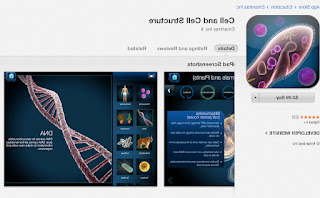
After my recent blog post on DNA double helices that twist the wrong way (inverted helices), a reader (who prefers to remain anonymous) submitted a few examples of apps featuring such mirror-world DNA. Following the example set in that previous post, I'm showing the corrected versions here:

I'm sure you can still read the text to work out who the culprits were ...

Thursday, March 07, 2013

the curse of the inverted helix

I've now figured out what to do with DNA double helices of the wrong chirality, which I frequently see in print and online. Earlier I started compiling a hall of shame, but that might reinforce the wrong image (eg by adding to the already considerable proportion of wrong helices that show up in google searches for double helix).

Instead, I'm now going to flip the images that also contain text, such that the DNA will be the right way round and the text will be mirrored. This way, I can signal-boost the correct structure while also exposing the error.

So, for example, a poster I received yesterday now looks like this:

much better, huh?

The same treatment for the historic blunders of Nature and Science yields: