Showing posts with label earthwatch. Show all posts

Monday, June 23, 2025

the big story of tiny forests

I used to get quite a few stories from Earthwatch Europe back in the noughties, when they sent expeditions to lots of places around the world. Nowadays they focus on issues closer to home such as butterfly counts and water quality, so there aren't so many different ecosystems involved, hence fewer features to write (although I did one on citizen science in 2021).

Recently I heard a talk from Claire Narraway at the Oxford Cafe Scientifique about their tiny forests programme, and was intrigued by the way the idea has travelled around the world, pioneered in Japan by Akira Miyawaki, and being scaled up in India, to arrive on some 300 tennis-court-sized plots in the UK. So I wrote a feature about it and also went to the local tiny forest in Meadow Lane to take a few photos.

My feature is out now:

How tiny forests became a big thing

Current Biology Volume 35, Issue 12, 23 June 2025, Pages R587-R589

Restricted access to full text and PDF download
(contact me if you would like a PDF)

See also my Mastodon thread where I highlighted all CB features of 2025.

The thread for 2024 is here .

Oxford's very own tiny forest in Meadow Lane. Own photo.

Monday, November 08, 2021

citizen science then and now

Back in the happy days before Brexit and Trump became a thing, I regularly attended Earthwatch events and wrote stories about their exciting research projects around the world which are made possible by recruitment of volunteers who pay for the privilege of taking part. That activity faded away as the relevant contacts at the organisation kept being replaced by new people, and I lost touch at some point. Towards the end of the phase, I suggested writing a book to be released on the 50th anniversary of the organisation, splashing out on all the wonderful work they are doing around the world. Strangely I never got anywhere with this idea. Emphasis at the organisation shifted away from the volunteer-paid research expeditions and towards partnerships with corporate sponsors as well as more affordable activities closer to home, so that may have been one reason why I didn't get much response re the history book.

The 50th anniversary happens to be now, and as there have been a couple of new developments in citizen science, I have taken the opportunity to wrap up the 50-year history of Earthwatch in a feature on new trends in citizen science more widely. Ironically, one of the trends is to get rid of the citizen scientist altogether and just use their social media posts to algorithmically identify species observations.

The resulting feature is out now:

New avenues for citizen science

Current Biology Volume 31, Issue 21, 08 November 2021, Pages R1403-R1406

FREE access to full text and PDF download

Earthwatch Institute started out organising international research expeditions with volunteer helpers, but now also offers science projects closer to home. (Photo: John Hunt, Earthwatch.)

Monday, May 23, 2016

lumbricus terrestris

Earthworms have found very little appreciation in mainstream biology ever since their biggest fan, Mr Charles Darwin, died. Now, however, several projects are underway aiming to reveal the ecology, diversity and economic benefits of worms and other soil invertebrates - including a new Earthwatch-sponsored "citizen science" project encouraging you to survey the earthworms in your garden. Read all about it in my latest feature which is out now:

Putting earthworms on the map

Current Biology Volume 26, Issue 10, pR387–R390, 23 May 2016

restricted access to full text and PDF download
(will convert to open access one year after publication)

Darwin’s interest in earthworms led to the publication, in the last year of his life, of a book about them. This is a caricature of Darwin’s theory in the Punch almanac for 1882, published at the end of 1881, just after publication of his book, The Formation of Vegetable Mould through the Action of Worms with Observations of their Habits. (Image: PD-ART(cc PD-old-100)/Wikimedia Commons.)

Monday, November 17, 2014

go wild

Back in October, I attended the Earthwatch debate on rewilding, which offered an interesting range of perspectives on the issue - and was followed by an enthusiastic audience with a majority in favour of reintroducing carnivores like lynx and wolf to the UK.

I've distilled my impressions into a feature which is out in Current Biology today:

How wild do you want to go?

Current Biology Volume 24, Issue 22, pR1067–R1070, 17 November 2014

Open access

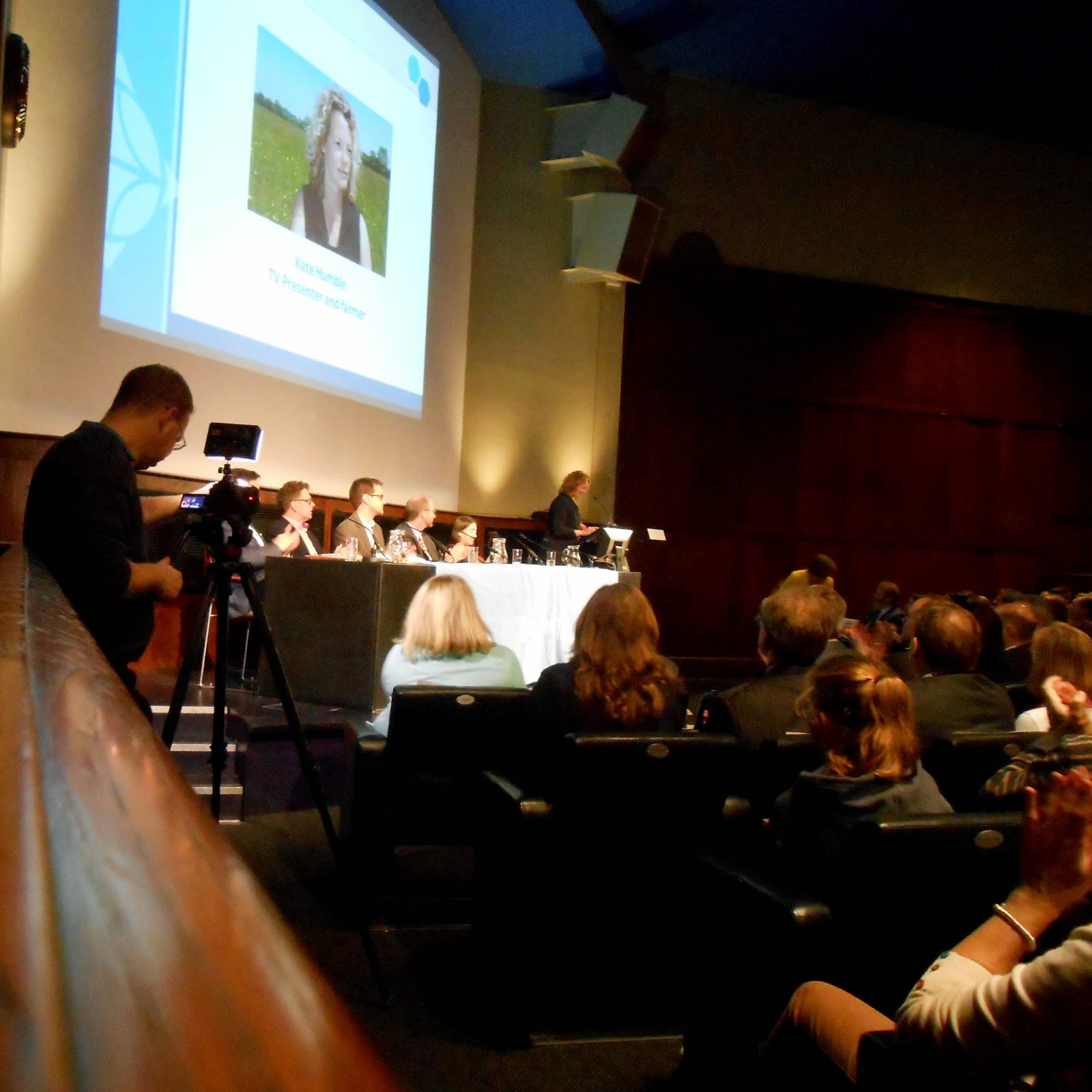
(My own photo of the event, Kate Humble giving the introductory speech.)

Tuesday, July 22, 2014

ecology all plugged in

Field workers in ecology and technology are increasingly turning to modern technology in their quest to monitor and protect wildlife. Discarded smartphones now serve as listening stations to spot illegal logging, while affordable drones help with the conservation efforts for large species, and satellite imaging provides valuable data on the ecosystems level.

I have rounded up a few surprising examples of such new applications of technology in ecology and conservation in my latest feature:

Connecting with the natural world

Today’s technology, from smartphones to drones, provides researchers and conservation workers with many new and improved ways of observing and protecting wildlife.

Current Biology
Volume 24, Issue 14, pR629–R632, 21 July 2014
OPEN access to full text and pdf file


Topher White from Rainforest Connection demonstrates a listening device built from a discarded smartphone. In real-life application the devices are installed invisibly, however, camouflaged and higher up in the trees. Photo: Rainforest Connection.

Monday, June 17, 2013

emotional science

In my latest feature in Current Biology I've explored how science, after centuries of trying to shut out all emotional and subjective things, is now rediscovering emotion. After all, we now know that feelings show up in MRI scans, so they must be real. And in some contexts, from conservation through to medicine, they might even be useful.

Can science relate to our emotions?

Current Biology, Volume 23, Issue 12, R501-R504, 17 June 2013 doi:10.1016/j.cub.2013.05.056

HTML text

PDF file

blue marble

The blue marble that I got from Wallace J Nichols whose work is discussed in the feature. It symbolises our watery planet as it can be seen from space, and also points to his views on the "blue mind."

Update 5.8.2024. Wallace J. Nichols died in June 2024. Some links to reflections on his work:

Tuesday, November 06, 2012

cats around the world

Tigers have become an icon of wildlife conservation - there are already many more of them living in captivity than in the wild, and there is a real risk that they may disappear from the wild altogether.

They are not the only big cats in difficulties though. Around the world, on the five continents where felidae became top predators, most of the over 30 existing species are threatened, as I explore in my most recent feature, which is out in Current Biology today:

Felids fighting for survival
Current Biology, Volume 22, Issue 21, R893-R895, 6 November 2012
doi:10.1016/j.cub.2012.10.033

HTML text

PDF file

FREE ACCESS

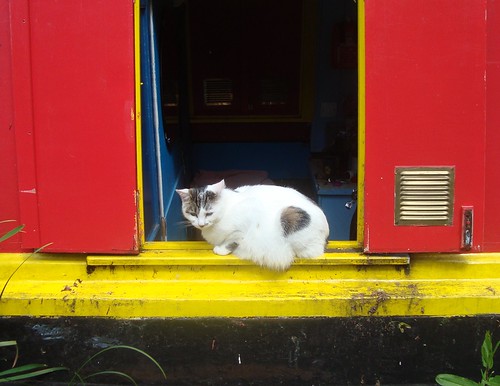
Here's one feline species that's not threatened and found lots of new habitats in recent times:

houseboat cat

Tuesday, May 08, 2012

do protected areas protect species?

My latest feature in Current Biology looks at some protected areas and which measures help to actually protect the threatened species in them. Examples feature Earthwatch research in Madagascar and Belize, as well as the work of Save the Elephants in Kenya.

Full text is freely accessible here (NB: my features remain on free access only until the next issue appears, i.e. normally 2 weeks, sometimes 3, and they return to free access a year after publication) :

PDF file

HTML text

Photo: Earthwatch/Ryan Cox.

Wednesday, March 16, 2011

how volunteers help science

Tomorrow's Earthwatch lecture:

Many hands, new knowledge: The value of citizen science
Thursday 17 March, 7pm (doors 6pm, event end 8.30pm)
Royal Geographical Society, 1 Kensington Gore, London, SW7 2AR
focuses on the breadth of tasks that volunteers can perform to help field science.

Chris Newman from Oxford's WildCRU (wildlife conservation research unit) will talk about the volunteer experience on the mammalian ecology projects in Wytham Woods and in Nova Scotia. William Megill will explain the challenges of observing whales and sea turtles in the Pacific Ocean, where both robots and volunteers come in handy.

More details and free tickets here.

PS a related BBC news story is here

Friday, January 28, 2011

well-studied woods

England's forests are in the news this week, as the government is planning to sell them off (it's so hard to keep up with the swing of their wrecking-ball, anyone know what it will hit next week?). Fortunately, that won't affect our local patch, Wytham Woods, as it is owned by Oxford University. Here's my review of a recent book on Wytham Woods, which came out last year and is due to appear in paperback in June:

Wytham Woods: Oxford's Ecological Laboratory
by Peter Savill, Christopher Perrins, Keith Kirby, Nigel Fisher (eds.)
OUP 2010

Going for a walk in the woods, we may naively think we are looking at nature, but in reality, as Chris Perrins writes in the introduction of this book: “Wytham Woods is like a book which records the activities of people over many centuries.” This forest just outside Oxford, like all other forests in Europe, is most definitely not what grew naturally after the ice of the last Ice Age receded. Humans planted and cut trees, erected fences to keep animals in or out, and used the woods for a variety of purposes, including, in the last five decades, for ecological research. As climate change forces us to rethink our relationship to nature, this is exactly what makes Wytham Woods so interesting: While it has always been woodland, it is a silent witness of human interaction with nature, from the arrival of agriculture through to the symptoms of climate change.

Therefore, it is quite appropriate that a proper book should record what we know about this metaphorical book of interactions between humans and nature. This one is pitched at a very academic level (as is obvious from the prohibitive price of the hardback), so the editors have invited experts to review various aspects of the research conducted at Wytham Woods. However, some parts are also readable and interesting to the lay person who may just come to it from a “local interest” perspective. The introduction, detailing the history of this patch of land (which Raymond ffennel, ne Schumacher, donated to Oxford University after the death of his only child) is very accessible, as is chapter 3 on land use changes over time. There are, inevitably, chapters regarding the trees and the flowers of the forest, which I skipped, as I’m not much of a botanist.

What I found very endearing was the section on the badgers of Wytham Woods – apparently the land has the highest recorded population density of badgers in the world, and also the best-studied badger population in the world. At its peak, the badger count was 46 animals per square km, and the latest figure is 37 adults per square km. I learned that biologists are puzzled by the fact that badgers live in groups, even though the benefit of doing so isn’t immediately obvious (they hunt earth worms, which doesn’t exactly require a team effort, and since the disappearance of wolves, their biggest natural enemy is the motor car, against which, again, groups don’t help much). More than once the badgers made me think of human behaviour.

Climate change research, including the ongoing partnership program between the Earthwatch Institute and HSBC, which is now also open to volunteers from the general public (see project page or my feature in Oxford Today), is confined to the last, rather short chapter. The wealth of data already recorded on the plants and animals of Wytham Woods, as detailed in the previous chapters of the book, is a big asset for climate change research. Quite how climate change will affect the forest and its inhabitants isn’t clear yet, but researchers have a good knowledge base to start finding out what’s going on, and this book is a great introduction to this scientific treasure.


I don't expect anyone is going to pay 50 quid for the hardback (I borrowed it from the library, thinking "use it or lose it"), so here's an advance link to order the paperback:


Alternatively, you can read the first chapter on the publisher's site.

Friday, January 14, 2011

passport pics for penguins

The cover of this week's Nature highlights the danger of banding penguins for identification:


However, alternative recognition methods have been available for years now and have been applied in the field to various animal species including penguins. Years ago, I did a feature on the pattern recognition on whale sharks using a program borrowed from astronomy (included in my platypus book).

Regarding the penguins, Earthwatch say that they are already road-testing a non-invasive identification method in their penguin project on Robben Island (South Africa). Scientists are using an automatic recognition system which records patterns of spots on the chests of adult birds through digital photography. The technique is still being tested and refined, but eventually it may be possible to monitor remotely more than 90 per cent of the African penguins (Spheniscus demersus) on the island. This automated system will help to eliminate the need to band penguins, except for specific purposes such as measuring chick survival rates, when flipper bands still need to be used.

Referring to the Nature report concluding that king penguins had 40 per cent fewer chicks if they were banded, and lived shorter lives, Earthwatch team leader Peter Barham said: "There have been several studies on the effect of banding on African penguins and Magellanics penguins which have been unable to find any significant differences between banded and unbanded penguins when it comes to breeding success. There are, however, other impacts of banding which is one reason why we want to introduce the recognition system to replace banding where possible. From time to time, for example, we find African penguins trapped by their bands."

More info about the penguin project and how to join

Friday, December 17, 2010

wytham woods

A couple of years ago I wrote a feature for Oxford Today about the climate change research that Earthwatch carries out in Wytham Woods, just outside Oxford. Wytham Woods is actually a reasonably large (by today's standards) patch of wood, with an intriguing history and an amazing track record in ecological research, to the extent that there is now an entire book about it:

Peter Savill, Christopher Perrins, Keith Kirby, and Nigel Fisher:
Wytham Woods: Oxford's Ecological Laboratory
Oxford University Press 2010
Publisher's page with link to pdf of first chapter


When I visited the Earthwatch project in Wytham Woods, it was run as a corporate partnership, recruiting volunteers only among the employees of the relevant company. From next year, however, the project appears in the generall Earthwatch programme, so everybody can join the fun, jug the trees and weigh the voles:

Full details of the Earthwatch project.

Friday, October 15, 2010

bumblebees for Britain

Had a great evening at the Earthwatch debate yesterday, where 5 groups of species competed for the title of environmental mascot for britain, and the bumblebees won:


Left to right: Tony Juniper (song thrush), Stephen Hopper (oak), Samantha Burgess (coldwater corals), George McGavin (bumblebee), Johannes Vogel (bluebell), and host Andrea Catherwood (a former Earthwatch volunteer).

George McGavin championed the bumblebee pointing out that it is a keystone in the ecological network, upon which many other species depend, and that the 25 bumblebee species found in the UK today represent 10% of the global bumblebee fauna.

Twitter hashtag for the event is#SpeciesForBritain

Monday, September 20, 2010

pick a species as UK mascot

At the forthcoming Earthwatch debate you can vote for a species to serve as an environmental mascot for Britain.

Among the five debaters will be Dr George McGavin, winner of the Earthwatch ‘Irreplaceable Species’ debate in 2008, when he won over the audience with his knowledge and wit, arguing the case for bees. This year Dr McGavin, BBC Lost Lands presenter and Honorary Research Associate at the Oxford University Museum of Natural History, will once more set the audience buzzing about bumblebees as his choice for Britain’s environmental mascot.

Also entering the fray to find the archetypal British species will be Tony Juniper, writer, campaigner and independent environmental advisor who will sing the praises of the song thrush; Professor Stephen Hopper, Director of the Royal Botanic Gardens, Kew, will be rooting for the oak tree; Dr Johannes Vogel, the Keeper of Botany at London’s Natural History Museum, will paint a colourful picture of the bluebell; and Dr Samantha Burgess, Earthwatch Senior Research Manager (Oceans), will make waves for deep-sea coral.

The debaters have been challenged to choose a species which both represents the UK’s invaluable natural heritage, but also the British people’s inimitable spirit. They will work to persuade the audience that their chosen species is vital to ecosystem health and British social and cultural identity.

Earthwatch executive vice president Nigel Winser says “Our annual debate at the RGS is always a thought provoking and entertaining event, while addressing serious environmental issues. Do come along and cast your vote and help us choose the new environmental mascot for Britain for the 21st Century.”

Thursday 14 October 2010
at the Royal Geographical Society
1 Kensington Gore, London SW7 2AR

For full details and to book free tickets, click here.


Perfect excuse to dig out one of my own bumblebee photos from this summer! Vote bumblebees!

Tuesday, June 22, 2010

biodiversity in focus

Today's issue of Current Biology has a special news focus on biodiversity, which includes an exceptional three contributions from me:

Tiger in the bank R495
Michael Gross
(re. the debate whether tiger conservation efforts are failing)
summary and restricted access to pdf file

Missed targets R496
Michael Gross, Nigel Williams
(re. the UN's recent biodiversity report)
summary and restricted access to pdf file

Forest alliance R497
Michael Gross
(re. rainforest research and conservation in Borneo)
summary and restricted access to pdf file


Borneo - photo by Jen Alger

(short URL for this post: http://bit.ly/aNM9sC)

Thursday, May 20, 2010

mangroves and rainforests

There is a pair of Earthwatch lectures happening today at London, both concerning tropical forests under threat:

Forests: challenged by a changing climate
(follow this link to book free tickets)

Thursday 20 May 2010
The Royal Geographical Society
1 Kensington Gore, London SW7 2AR
Chaired by Bernard Mercer,
Chief Executive of Forests Philanthropy Action Network

Speakers:
Dr Mark Huxham, Napier University
Dr Glen Reynolds, Royal Society SE Asia Rainforest Research Programme

6pm - Doors. Cash bar
7pm – Lecture
8.30pm – Cash bar

I have covered Mark Huxham's work on mangroves last summer (see here), and will cover the Borneo work soon, watch this space.

Wednesday, March 17, 2010

towards sustainable farming

Today there will be a couple of Earthwatch lectures at the Royal Geographic Society in London, covering research aimed at improving the sustainability of food production. Mark Chandler will talk about his work with coffee farmers in Costa Rica, while Ken Norris will focus on cocoa production in Ghana.

I have mentioned Mark's work in a news feature last November (blog entry and link), and Ken's in June 2008 (blog entry and link). Both very thought-provoking re. connections between the food we consume and the state the world is in.

Both projects are corporate partnerships (with Starbucks and Cadbury, respectively), and are also addressing issues of how economics can better cooperate with nature, rather than destroying it, as discussed in this recent story.

2010 Earthwatch Lectures

Farming and sustainable environments
Wednesday 17 March 2010
The Royal Geographical Society,
1 Kensington Gore, London SW7 2AR

Chaired by Countryfile and Watchdog presenter
Julia Bradbury

Speakers: Professor Ken Norris, University of Reading;
Dr Mark Chandler, Earthwatch

5.30pm to 6.30pm Citizen Science Competition Advice Clinic
6pm - Cash bar, photo exhibition
7pm – Lecture
8.30pm – Cash bar

Tuesday, March 09, 2010

investing in nature

I only reluctantly admit this -- because I foolishly believe in people doing the right thing without being bribed to do so -- but the economy, if handled correctly, could possibly save the planet. In February, Pavan Sukhdev held the annual Earthwatch Lecture here at Oxford and explained how an appreciation of the real value of natural resources left intact (e.g. south american rainforest as a water pump for the Argentinian cattle industry) could shift the balance so far that preserving wild nature would appear as a sound investment rather than a financial burden.

With this in mind I have looked at two examples of finance deals aiming to save rainforests -- one in Ecuador, coupled to (non-exploration of) crude oil, and the other in Guyana -- and written a news feature for Current Biology which is out today:

Ransom for rainforests
Current Biology, Volume 20, Issue 5, R217-R218, 9 March 2010
doi:10.1016/j.cub.2010.02.022

summary and restricted access to pdf file

Thursday, November 19, 2009

water crisis

Earthwatch is organising a public debate on water & drought today:

From Tsunami to Drought
Thursday 19th November 2009, 7pm-9pm (Doors/Cash Bar open from 6pm), The Royal Geographical Society, 1 Kensington Gore, London SW7 2AR
Chaired by award-winning broadcaster and radio and television presenter, Andrea Catherwood

full details

Comments by four of the speakers have appeared in the Guardian.

Two related article of mine (on Earthwatch-supported research re. water resources in Kenya) have appeared in Current Biology:

Ebb tidings (2006, about Lake Naivasha)

Mapping hidden resources (2007, about a project to map water supplies and thereby reduce human/wildlife conflict)

Tuesday, November 17, 2009

enjoy your coffee

... while it's still available. I've learned from my research for the piece published in today's issue of Current Biology that coffee growers in central america would have to shift their plantations to higher altitudes at a rate of 3-4 metres per year -- which is physically impossible, as coffee grows slowly, and as they will be running out of suitable mountain surface area quite soon.

A stark reminder that climate change isn't something that's going to happen in 2050, it's happening now, and people are suffering the consequences already. For farmers in tropical countries, this means they may no longer be able to feed their families. For us, less catastrophically, it means we may not be able to drink as much tea and coffee as we used to. But maybe a few empty shelves in our supermarkets is what it takes to make people understand ?

anyhow, my article is here:

Coffee growers feel the heat
Current Biology, Volume 19, Issue 21, R965-R966, 17 November 2009
summary and restricted access to pdf file