Thursday, July 25, 2013

anonymously yours

Back in 2003, the web was a very different place – there was no facebook, and I used to socialise on the Shakira forum where at that point people still went by pseudonyms and didn’t show their faces except after you’d won their trust. I got to know quite a few lovely people this way, mainly by exchanging written words, and it always intrigued me how we influenced each other’s lives just through writing. I always wanted to write a movie script about that experience, but I didn’t quite have the right address book to make this sort of thing work.

Over time, I had the pleasure of meeting a few of my forum friends in real life, among them Ana Esther from Spain who spent a few months in Ireland and came over on a night coach to stay with my family for a weekend:
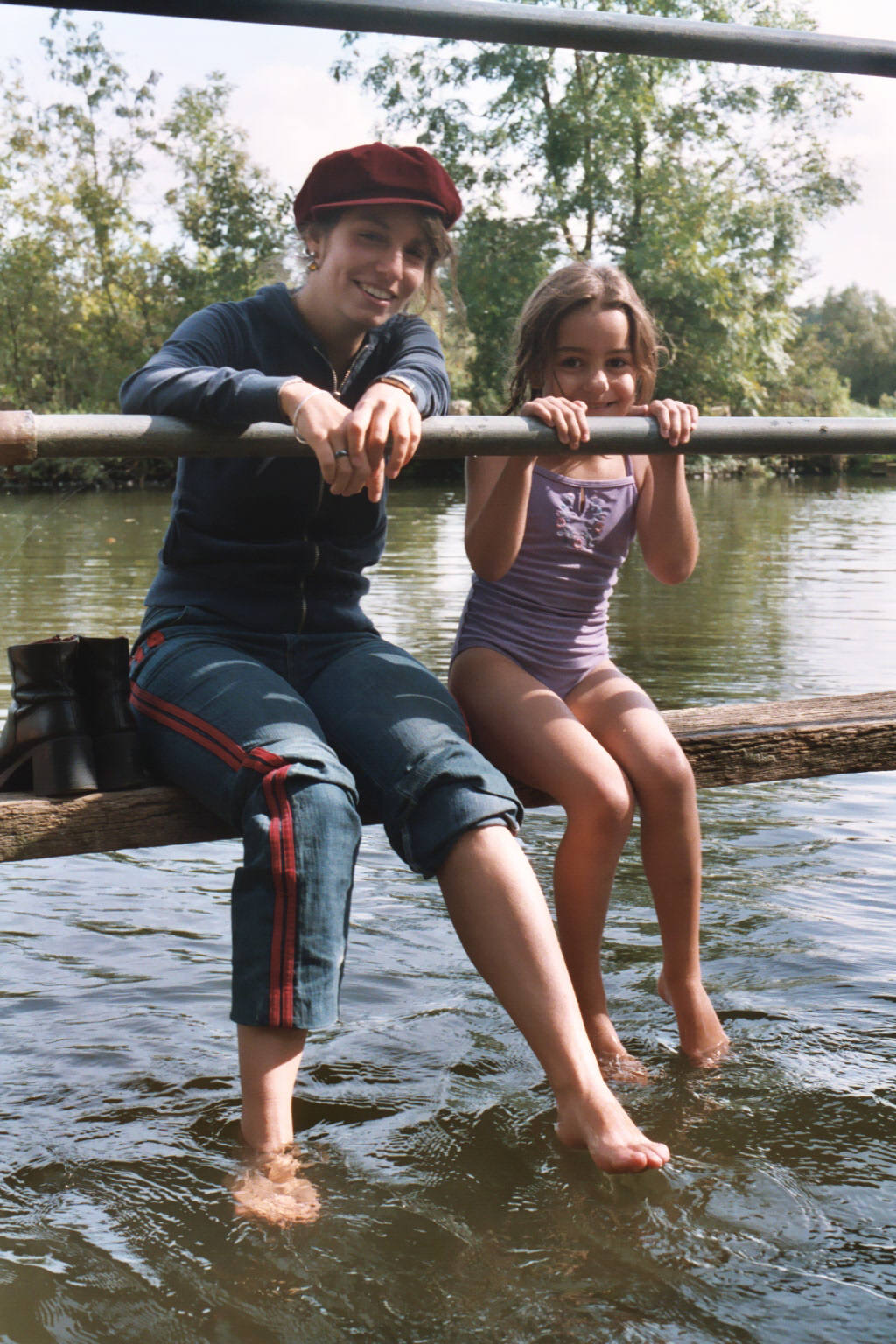
We met again for a concert in Madrid, but then lost touch, except for google+ which we both hardly use at all. Checking google+ this week, I found a link to one of her videos (she’s studied audiovisual communication) and through that discovered an earlier video where she examined the issue of anonymity in online chat. A boy who pretends to be a girl chats with a girl who pretends to be a boy. And when they meet up and discover their mutual deception, they look extremely cute and embarrassed.

Ana Esther wrote the script and plays the girl, check it out (Spanish only, I’m afraid), I love it to bits:

PS I'm basking in the warm glow of the illusion that I might have provided 0.0001% of the inspiration for this, even though I've never pretended to be a girl. Still, my nick, pensandoenti, may have come across as a bit girly, I suppose?

Monday, July 22, 2013

drugs prohibition kills

I wrote a feature about psychoactive drugs a few weeks ago, mainly inspired by the recent paper from David Nutt and colleagues who argued that the blanket ban of psychoactive drugs harms progress in neuroscience (apart from ruining the lives of millions of people with the unwinnable "war on drugs").

Since then, tragic events, including the death of a teenage girl here in Oxford, have highlighted the issue. There is a properly dangerous drug making the rounds in the UK right now, PMA (paramethoxyamphetamine) (probably called Dr Death for a reason), but as drugs are banned regardless of their harm, it's hard to know what is and what isn't dangerous. Plus, there is no quality control, and if kids buy an illegal pill, it could contain anything. In the Netherlands, by contrast, there are labs checking up on what is being traded, and they haven't had problems with PMA yet.

Essentially, my bottom line is, people always have used mind-altering drugs and always will do, and if there wasn't this blanket prohibition banning harmless and dangerous things alike, it would be much safer for them to do so. Hardline prohibitionists are just creating most of the problems they are pretending to solve.

Oh well. Don't get me started on this, it drives me up the wall in no time. Just read my feature:

Drugs prohibition is criminals’ gain, neuroscience’s loss

Current Biology, Volume 23, Issue 14, R585-R588, 22 July 2013 doi:10.1016/j.cub.2013.07.012

which is freely accessible (and legal, still!) as

HTML text

PDF file.

Cannabis sativa - picture credit: GW pharmaceuticals.

PS: couple of further links re. the recent deaths linked to PMA:

PPS only after publishing this blog entry I became aware of the organisation Transform Drug Policy Reform, which has published detailed suggestions for a drugs regulation based on actual scientific evidence and on policies that are feasible (borrowing bits and pieces from established frameworks such as the handling of prescription drugs). "After the War on Drugs: Blueprint for Regulation" is freely available as a PDF download, but if you would like to support the organisation, you can also order it as a book from them. You can also download the executive summary only, which is also available in several other languages including Spanish, Russian, and Italian.

Monday, July 08, 2013

people, pets, and predators

My latest feature in Current Biology covers the triangular relationship between humans, their pets, and undomesticated animals that may come in conflict with one or the other. I've specifically looked at two cases that made headlines recently, namely badgers vs. cattle, and cats vs. birds. As always, problems are complex, and emotional involvement that people tend to have with specific animal species can make it even harder to find rational solutions.

The feature is out in today's issue:

Where wildlife and tame life collide

Current Biology, Volume 23, Issue 13, R545-R548, 8 July 2013 doi:10.1016/j.cub.2013.06.038

Free access to

Full Text (HTML)

PDF file

houseboat cat revisited

pet predator from my flickr pics.

Tuesday, July 02, 2013

foam from the horse's mouth

In a late follow-up to the frog foam story from 2009, I covered the structure of an equine protein coming from the same groups. Latherin is found in the sweat and saliva of horses and has unusual surfactant properties suggesting a new mechanism.

Read all about it in Chemistry World (free access):

A foaming protein from the horse’s mouth

NB: this came out so quickly that I actually missed it when it appeared, hence the slight delay in horn-tooting.

horses & buttercups

Some not so sweaty horses salivating over buttercups in a field near our house.

Sunday, June 23, 2013

algae, bees, and chemists

The roundup of German pieces published in June includes red algae caught stealing, bees being invited for coffee, and chemists in high office.

Nachrichten aus der Chemie 61, 647
Blickpunkt Biowissenschaften: Extremophile Rotalge des Gen-Diebstahls überführt

Nachrichten aus der Chemie 61, 623
Ausgeforscht: Wir sind Papst (und mehr)

Chemie in unserer Zeit 47, 146
Koffein stärkt Gedächtnis der Bienen Abstract and restricted access to PDF file

bee25

one of the bumblebees buzzing around on my flickr photostream.

Friday, June 21, 2013

Vénus noire

review of the film

Vénus noire by Abdellatif Kechiche (France 2010)

This film from the auteur of Cous cous (La graine et le mulet) and this year’s Palme d’Or winner Blue is the warmest colour (La vie d’Adèle) tells in epic breadth the sufferings of Sarah Baartman, one of the African women shown around as a curiosity ("the Hottentot Venus") in European cities at the beginning of the 19th century.

While mentions and images of the historical Venuses are familiar to many, I think they remained curiosities so far. The film very successfully lifts the human being caught up in this show off the page and makes her experience of hopes, disappointment and exploitation the focus of the story. With the benefit of living in a (slightly) more enlightened age, we can see that she is beautiful, intelligent, and talented in ways that the contemporary audiences – neither the workers in London nor the aristocrats and scientists in Paris – could hardly fathom.

Seeing her strength in the face of adversity is uplifting, but watching her European audiences and the males that exploit her is very uncomfortable if you happen to be white and/or male. The underlying curiosity for people who are different from one’s own is of course not a bad thing, but without respect for the otherness it can have devastating effects.

I find it rather puzzling and depressing that this film didn’t get a UK release (not even on DVD - I bought mine in France, and amazon UK offers an import version). In many ways the London episode (where anti-slavery campaigners even try to liberate Baartman from her employer in a court case) is the less depressing part of the story.

Image from amazon.co.uk

Thursday, June 20, 2013

1000 photos

Tomorrow marks the 3rd birthday of my Flickr photostream, and as it happens, I am also celebrating my 1000th picture there. Oh, and I even got used to the new design. Looks kind of cool as long as you don't scratch the shiny surface and it saves me money on the pro membership ...

The most-viewed photos are still the same ones as last year, so instead I'm posting a brand-new one here, photo number 1000:

liege guillemins

This is of course Calatrava's Liege Guillemins station.

Monday, June 17, 2013

emotional science

In my latest feature in Current Biology I've explored how science, after centuries of trying to shut out all emotional and subjective things, is now rediscovering emotion. After all, we now know that feelings show up in MRI scans, so they must be real. And in some contexts, from conservation through to medicine, they might even be useful.

Can science relate to our emotions?

Current Biology, Volume 23, Issue 12, R501-R504, 17 June 2013 doi:10.1016/j.cub.2013.05.056

HTML text

PDF file

blue marble

The blue marble that I got from Wallace J Nichols whose work is discussed in the feature. It symbolises our watery planet as it can be seen from space, and also points to his views on the "blue mind."

Update 5.8.2024. Wallace J. Nichols died in June 2024. Some links to reflections on his work:

Saturday, June 15, 2013

amor (celos de ti)

I just came across an audio file of Shakira performing this song on tumblr and didn't recognise it (it doesn't appear on any of her CDs). Investigating further, I found the video:

The song is by Puerto-Rican composer Pedro Flores and according to this site it was recorded for an anthology of his work.

Wednesday, June 12, 2013

control freakery

Each time I’m taking the Eurostar to continental Europe I am left wondering, why is a single passport check ok to travel out, but two or three are done on the way back?

Coming back from Germany via Brussels last Sunday (on the Eurostar departing Brussels at 19:52) we had our passports checked three times (by Belgian and UK authorities in Brussels, and then by UK people again in St. Pancras). The ticket was also checked three times, by the machine at checkin, by the UK passport control in Brussels and by a train manager on the train.

I don’t really see the need for any passport controls within the EU. If I can fly from Madrid to Helsinki or Athens under the Schengen agreement without border control, what’s so special about the UK and Ireland that they can’t join? I’m really not buying the argument that these countries are so attractive they need extra protection.

Then, if you do need passport controls, why not do them once in the right place, and be done with it? If I’m a legal traveller on the first contol, I’ll surely still be legal on the third one. To me, the third passport control on the same leg of the journey really is where security measures end and harassment begins. It didn’t improve my mood that a steward, as I was stepping up to the counter with my son who has autism and needs constant supervision and assistance, shouted at us “one at a time”. If he had actually looked at us before, he could have figured out why we went ahead together.

My personal gripes apart, surely, it can’t be good for the UK economy if people who may be travelling to London on business get harassed this way?

New art work suspended from the roof of St. Pancras station.

Monday, June 10, 2013

bees memories

Recent research and the EU's temporary ban on neonicotinoid pesticides has brought the threats to bees and other pollinators on the agenda again. While manufacturers insist that neonicotinoids aren't toxic to bees in concentrations found in the environment, the interest now focuses on the more subtle effects the substances may have. For instance, by making bees forgetful, even sublethal doses can endanger the survival of the colony.

Read all about it in my feature that came out in Current Biology last week:

EU ban puts spotlight on complex effects of neonicotinoids

Current Biology, Volume 23, Issue 11, R462-R464, 3 June 2013 doi:10.1016/j.cub.2013.05.030

Free access to

HTML text

PDF file

bumblebee 1103

(one of my many bumblebees on Flickr)

Incidentally, in this month's issue of Chemie in unserer Zeit I also have a piece on bees' memories. Unlike the neonicotinoids, caffeine seems to improve it.

Pflanzeninhaltsstoffe: Koffein stärkt Gedächtnis der Bienen

Chemie in unserer Zeit

Volume 47, Issue 3, page 146, Juni 2013 DOI: 10.1002/ciuz.201390029

Abstract and limited access to PDF file

Friday, May 24, 2013

cultural history of geek speak

review of Netymology, by Tom Chatfield

Over the last two decades, the world-wide web has rapidly evolved to become the focus of a world-wide super-culture shared by several billion people using it. This culture has developed new standards of communication and civility, virtual communities (some with their own distinctive cultures), and terminology.

Just with a brief discussion of the etymology and usage of 100 of the termini of the internet age, Tom Chatfield has achieved much more than just creating an annotated list of fancy new words. While one could use it as a reference to look up words that have remained unfamiliar or puzzling (though an index would help with this kind of use), a cover-to-cover reading conjures up a cultural history of the internet age. Each of the words and concepts discussed also serves as a mirror reflecting the behaviour of web users and online communities from a different angle.

Along the way there are lovely little factoids waiting to be picked up. My favourites include: Thomas Edison writing about “bugs” in his inventions; the patron saint of the internet (St. Isidore of Seville, apparently); the use of “OMG” in a 1917 letter addressed to Churchill; and the fact that there is a Wikipedia entry on the gender of connectors and fasteners.

In some cases, the the 3-pages standard length of the chapters left me yearning for more, but then again, the book might have easily become unwieldy, and for those who want to investigate further, there’s always the internet …

PS: on a related topic, also see my recent feature on the evolution of online culture.