Thursday, December 21, 2017

ammonia goes east

I recently noticed that there is an amazing amount of research into improved methods for ammonia synthesis happening in Japan (and hardly any in Europe). It turns out that a continuous tradition links this research to Setsuro Tamaru, a Japanese post-doc who worked with Fritz Haber in Karlsruhe and then in Berlin, until the beginning of the first world war.

As I've always used nitrogen fixation as a key example of how nature does things better than we do, I had a closer look at what the Japanese researchers are up to and where we stand on the spectrum between Haber's classic high temperature, high pressure synthesis, and nature's ambient conditions nitrogen fixation.

The resulting feature is out now in Chemistry & Industry:

N2: no quick fix

Chemistry & Industry Volume 81, Issue 10, pages 36-38


Restricted access to full (HTML) text via SCI website

restricted access to PDF file via Wiley Online Library


Setsuro Tamaru (1916∼1917 in New York).

Monday, December 18, 2017

bacterial voting

Quorum sensing is the fascinating mechanism by which bacteria decide whether they are present in sufficient numbers to have an effect, eg to produce light for a symbiotic host organism, or to launch an infection in an unsuspecting victim. This field has a fan community among those interested in the resulting phenomena (eg bioluminescence, infection) or in bacterial communications more generally, but I don't think it has received nearly the attention it deserves. Part of the reason may be that some of the most important areas where QS occurs are also incredibly complex. However, bioluminescence offers very simple and elegant model systems, and on the basis of things learned there, science can eventually progress to the messy ones, like our guts.

I think I last wrote about quorum sensing around 10 years ago (and, definitely, in my book Light and Life), so it was about time to revisit the field, which is becoming more important as we are beginning to appreciate the importance of the bacterial symbionts in our bodies. My feature on is out now:


Shining new light on quorum sensing

Current Biology Volume 27, Issue 24, pR1293–R1296, 18 December 2017


FREE access to full text and PDF download


Embryos of the Hawaiian bobtail squid (Euprymna scolopes), which are colonised specifically by the luminescent symbiont Vibrio fischeri, are an ideal model system to study aspects of symbiosis and quorum sensing.

(Image: Tim Miyashiro and Andrew Cecere (Appl. Environ. Microbiol. (2016) 82, 3082–3091.)

Monday, December 11, 2017

bacterial wires

Open Archive Day

I heard last week that the ability of bacteria to form pili that act as electrical wires is not limited to the species of geobacter in which it was first discovered (press release here).

This reminded me of a different kind of bacterial electricity which I described in a feature back in 2012, which is now freely accessible:

Surprises from the sea floor


Microbiologist Derek Lovley and colleaugues at UMass Amherst report finding electrically conducting pili or 'e-pili' in more bacteria species than just the original Geobacter discovery he made 30 years ago.
Credit: UMass Amherst

Saturday, December 09, 2017

well connected

In the round-up of German pieces published in November and December, we gain information and energy from the bloodstream, while solar powered worms are running around in circles and everything is connected to everything else. Business as usual, really.


Netzwerk Leben: GTex - alles vernetzt

Chemie in unserer Zeit Volume 51, Issue 6, December 2017, pp 428-429
Access via Wiley Online Library
(last instalment of my 12-part series on the molecular network of life)


Ausgeforscht: Frankensteins Blutturbine
Nachrichten aus der Chemie
Volume 65, Issue 11, November 2017, page 1175
Access via Wiley Online Library

Warnende Moleküle im Blutkreislauf

Nachrichten aus der Chemie
Volume 65, Issue 12, December 2017, pages 1203–1204
Access via Wiley Online Library


Ausgeforscht: Solarkreisel statt Energiewende
Nachrichten aus der Chemie
Volume 65, Issue 12, December 2017, page 1267
Access via Wiley Online Library

Friday, December 08, 2017

misa campesina 2018

Musicians and singers wanted for the Misa Campesina Nicaraguense 2018. This folk mass is sung every year in celebration of Oxford’s partnership with Leon, Nicaragua.

The date for 2018 is now confirmed, it is the Sunday 22 April, i.e. Sunday morning during the Folk Weekend. The idea behind this scheduling is that the Oxford Leon Association and Trust is going to invite a very special guest from Nicaragua to take part in the misa and in other events during the Folk Weekend.

There will be around three rehearsals in the weeks before the event, so probably starting from late March. Further info, links, and my ravings on this year’s misa (which was the first time I took part) are here.

Wednesday, December 06, 2017

estevanico's stories

review of:

The Moor’s account

Laila Lalami

I have a thing about the history around 1492 – the end of the reconquista (expulsion of Arabs and Jews from the Iberian peninsula) and the beginning of the conquest of the New World. Arguably, that’s where all our problems started, including slavery, global imperialism, never-ending wars allegedly about religion. One of my cultural reference points here is from Don Quijote - the scene on a market place in Toledo where Christians, Jews, and Moslems mingle and the narrator has no trouble finding a translator for an Arabic document when he needs one. The imperialism and nationalism emerging after the reconquista banished that kind of multiculturalism from Spain for centuries, and other European nations looked at monocultural Spain as an example.

Given this mild obsession, the Moor’s Account is perfectly positioned to attract my attention – it is set just after 1492, with the protagonist, an African Muslim slave getting involved in a Spanish expedition to Florida that goes catastrophically wrong. Estevanico is one of only four known survivors of a crew of several hundreds that set out from Sevilla in 1527. The other three have given reports that were recorded, but his weren’t, or they didn’t survive. Thus, Laila Lalami fills this gap and uses her imagination to figure out what he might have written.

History knows little about the real Estevanico (although he does have a decent Wikipedia entry), but Lalami has given him a childhood and nascent career as a merchant in Azemmour, Morocco, where (according to her guess) he sold himself into slavery in time of need. The value of freedom is a key theme of the novel, as is the power of storytelling. The latter is of course a favourite subject of almost everybody who writes, but it is handled very convincingly here. Storytelling saves Estevanico’s life multiple times, and the novel is also structured as a collection of stories.

Using the accounts of the other three survivors as a scaffold, Lalami also fills in significant events that the Spaniards may have plausibly swept under the rug, including cannibalism among starving groups of the shipwrecked party, their role as healers among the Native Americans (she hints that catholic authorities would have frowned upon that as suspected witchcraft), and marriages with Native women.

The resulting account looks very convincing as invented history and makes a lovely novel. Only occasionally did some English phrase that doesn’t exist in Spanish remind me of what I would consider its only weakness, namely that it is written in a language that Estevanico would have never encountered in his life. (Then again, the same applies to Robert Harris’s brilliant 3-volume biography of Cicero, which purports to be the lost work of his secretary, Tiro.)

In any case, with the links it draws between the Muslim world, Europe and the Americas, and the problems that were to overshadow centuries, it is a great novel not just about what happened after 1492, but about what went wrong in the last 500 years.


PS by crazy coincidence, while I was reading the book I discovered one of the sources that Lalami used at the flea market - Bernal Diaz, The conquest of New Spain, a beautiful hardback of the English translation for £1. Not entirely sure I'll actually want to read it as well, but it does have lovely illustrations ...


Tuesday, December 05, 2017

changing climate

It has become common practice in the media reports after extreme weather events to say that while climate change makes such events more likely, a specific connection to climate change cannot be made. This, however is now changing as climate attribution science is improving its methods.

While the climate summit was underway in Bonn, I wrote up a feature on the current situation in climate change and the progress in attribution science which is out now:


Finding good explanations for bad weather


Current Biology Volume 27, Issue 23, pR1249–R1252, 4 December 2017


FREE access to full text and PDF download


Bonus material: right behind my feature is a Q&A with phage researcher Britt Koskella, who starred in one of the first features I wrote in this format, back in 2011.


The COP23 climate conference at Bonn was accompanied by large demonstrations in favour of more effective measures to curb CO2 emissions. (Photo: Takver/flickr by a CC BY-SA 2.0 licence.)

Wednesday, November 29, 2017

wine moves

Around harvest time this year, I wrote a feature on how climate change affects wine production (good news for English wines, not so good for French ones), which is out in the latest issue of Chemistry & Industry, and also on the cover (I objected to the grape/great puns but to no avail):


Grape expectations

Chemistry & Industry Volume 81, Issue 09, pages 22-25
DOI: 10.1002/cind.819_6.x

open access to full (HTML) text via SCI website

restricted access to PDF file via Wiley Online Library


Monday, November 27, 2017

woods and trees

Open Archive Day

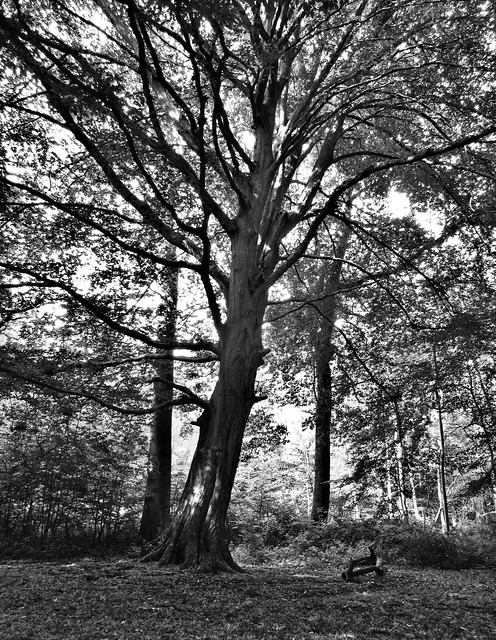
In October, Oxford University marked the 75th anniversary of possession of its own local forest, Wytham Woods, with the unveiling of a blue plaque and a series of special events underlining the importance of the woods as a community resource and basis for both citizen and academic science.

I have written about Earthwatch projects involving Wytham Woods back in the 00s, but not so much recently. The most recent mention I could find in my features is from the 2014 feature about a global deforestation map which is now on open access:

Fears for the woods and the trees

Wytham Woods


Wytham Woods. Photo by Nerys Groß

Monday, November 20, 2017

how whales learn new tunes

Humpback whales are just people like you and me, as I realised recently when reading a paper about how they learn new tunes. This was one of those moments when hours of leisure time (in this case: time spent in pubs playing wrong notes at the wrong time) magically transform into valuable research. The resulting feature, covering whale songs and folk tunes among other cultural highlights, is out now:


Cultured cetaceans

Current Biology Volume 27, Issue 22, 20 November 2017, Pages R1193–R1196


FREE access to full text and PDF download


Humpback whales are known for their elaborate songs, which spread through
entire populations by social learning. (Photo: skeeze/Pixabay.com.)


PS there's also a research paper on feeding strategies in blue whales in the same issue, which is why there is a whale shown on the cover as well:


Saturday, November 18, 2017

dvořák times seven

I've rounded up all recordings we have of the Dvořák cello concerto (including two I inherited from my grandad who didn’t play but had witnessed (and photographed) his dad playing cello).

Still space for a few more. Natalie Clein, I’m looking in your direction ...

Monday, November 13, 2017

global genomes

Open Archive Day

I recently reported about the research on hidden biases that are widespread even among people with liberal / egalitarian worldviews who would find the discrimination resulting from bias unacceptable.

One area where biased outlooks have harmed science is modern genomics. The most interesting revelations about the diversity, history and evolution of our species are to be expected from detailed analyses of African genomes as well as from comparing them to genomes representing the endpoints of the migrations that distributed our species around the world.

Instead, genomics spent its first ten years on sequencing males of European origin like Craig Venter and James Watson. Only in recent years, more than a decade after the first genome, has science begun to do our globalised species justice.

A year ago I wrote a feature on how the study of genomes of the native populations of Australia and New Guinea helps our understanding of human migrations and diversity. This feature is now on open access:

Out of Africa, into Australia