Friday, December 17, 2021

just take carbon

In my school days, pure carbon came in two allotropes, graphite and diamond. By now there are dozens of them, or maybe even an infinite number as you could stitch together any number of fullerenes and polyynes to produce a new molecule consisting only of carbon.

But even fundamentally new types of carbon materials keep popping up, so I wrote a feature on the latest patterns which is out now:

Carbon rapture

Chemistry & Industry Volume 85, Issue 12, December 2021, Pages 22-25

access via:

Wiley Online Library (paywalled)

SCI (premium content, ie members only)

I'm loving the design of the first double page spread (although I'm not sure about the title).

In the same issue, on page 39, there's my long essay review of the book

Ethics of chemistry

by Joachim Schummer, Tom Børsen, eds.

which is much better than the previous book on chemical ethics that I reviewed. (I may have forgotten to publicise that review, as the book was really not worth promoting.)

Thursday, December 16, 2021

checkpoint Glaner Brücke 1929(ish)

Every picture tells a story, No. 16

Frieda the pianist from episode 7 met a violinist called Paul during her studies at Bückeburg, but somehow that didn't work out. Instead she found love closer to home. Her parents (Heinrich the station master and Luise the railway worker's daughter) had taken up a lodger in their flat overhanging the narrow gauge railway line at the station Minden Stadt. That lodger was a budding customs officer, and he introduced Frieda to his colleague, Peter Eberle (son of the baker Adam Eberle).

Peter and Frieda married in 1924, but still stayed with her parents in the flat overhanging the tracks (I do love that house!), had their first daughter the next year, then their own flat in 1926, but soon moved on to Peter's first proper customs role on an actual border, namely on the Dutch border at Gronau, where they stayed until the end of 1932 and had their second daughter.

I'm going on about this, because it dates the photo shown below, about which I wouldn't have known anything otherwise. You can see a car with the "NL" plate, so it must have been on the Dutch border, ie between 1927(ish) and 1932. The checkpoint was called Glaner Brücke, referring to a very small bridge across a brook which marks the border. Altes Zollhaus (old customs office) was where they lived, except for a period when they were moved to the Dutch side of the border, a move immortalised in the fact that, in December 1929, their second daughter was born at Lonneker (just north of Enschede, with which it was merged in 1934).

Peter is the second guy from the left, the only one not wearing a hat, for whatever reason. I have no idea who the other guys are and I'm no good at reading their clothes, so all hints appreciated.

This was as much as I knew until I started preparing this entry. Then I felt obliged to google the name of the border post and it turns out there is a flickr account that has an album with 114 photos of this border crossing from 1900 to this century (mostly from the Dutch side, where it's called glanerbrug). I'm still recovering from the shock.

The building we see in the background of our group photo, with the characteristic white stripes running both horizontally and also vertically on either sides of the windows, is recognisable in this lovely postcard from 1950:

Grensovergang 1950~, Gronau. Glaner-Brücke

as well as in several modern photos from the account holder, including this one from 2005 and this one from 2003.

The photos from the 1920s show trams as well as dense rows of mature trees lining both sides of the narrower road. In most views the buildings are obscured by the trees. Then the cars came and ate both the trams and the trees. In the most recent photos you mainly see cars.

After Gronau came a move to Hamm as well as, obviously, the Nazi takeover, but we'll get to that some other time.

This photo is also on flickr.

Every picture tells a story series so far:

  1. string quartet Wuppertal Elberfeld 1927
  2. greetings from Adamsweiler
  3. Gastwirthschaft Ferd. Weirich
  4. quartet times three
  5. Neumühl 1923
  6. Tangermünde railway station 1889
  7. a singing lesson
  8. bei Wilhelm Geppert
  9. a bakery at Lorsch 1900
  10. Consumgeschäft von Julius Düsselmann
  11. Hanna and Ruth
  12. a young chemist
  13. school's out at Reichenstein, 1886
  14. a patchwork family in East Prussia
  15. the case of the missing grandmother
  16. checkpoint Glaner Brücke 1929(ish)

Twitter thread

In a somewhat roundabout way, this series relates to my research for the family history music memoir I'm writing.

Monday, December 13, 2021

why the vaccine-only approach will backfire

After yesterday's announcement of betting everything on the booster programme to hold the omicron variant at bay I hear that the medical staff meant to deliver a million jabs per day from today were as surprised as the rest of us to find out about it from yesterday's speech.

Nothing wrong with protecting people with a third dose of vaccine, and I've had mine a week ago, but it's a bad idea to rely only on a vaccine in the face of a raging epidemic and do nothing else. Here's just one little number crunching to show why:

If the booster (or any other vaccine applied in an ongoing epidemic) is 90% effective in preventing undesirable outcome (eg hospitalisation, or deaths) and makes people feel safe so they engage in 20x more risky behaviour (eg take the tube to work and come into close contact with 60 people per day, rather 3 if they cycle to work; or they go out clubbing rather than staying safe at home), what happens?

The 90% efficient booster divides the likelyhood of the undesirable outcome by 10, but the behaviour change multiplies it by 20, so you get twice as many cases of the undesirable outcome. Which is why relying _only_ on a vaccination with less than 100% efficiency may produce the opposite of the desired effect. Behaviour/culture eats vaccination/policy for breakfast as the old saying goes.

I remember epidemiologists warning of this backlash effect since before we even had vaccines, and it's been the reason why we've had unsustainably high numbers since September inspite of good vaccine coverage, but the UK govt still does not understand this. So, starting from a high plateau we're going straight over the cliff with omicron again, and will need another screeching U-turn to sort this out. When will they ever learn?

Update 15.12.: Here's a good opinion piece from SAGE member Stephen Reicher on the mess we're in with omicron's arrival. As Reicher points out, the booster programme is a slow-acting measure, so the important bit is to have contact reduction to slow omicron down until the boosters take effect.

Friday, December 10, 2021

Diels Alder revisited

I don't often write about chemistry these days, but every once in a while I have great fun revisiting things that are so elementary and easy that even I can still remember them. Such as the Diels Alder reaction, which on paper goes like this:

Source

I wrote a news story for Chemistry World on an effort to observe the Diels Alder reaction happening on a surface, using atomic force microscopy (AFM). You can read the story here (open access if you haven't used up your quota of CW stories).

Sadly, the researchers had to make this very simple and elegant reaction quite complicated to achieve this. It made me wonder (after sending off the news piece) if biomolecules might offer a way of positioning a pair of simpler Diels Alder reactants on a surface.

It was long believed that nature didn't have Diels Alder enzymes, so various researchers took up the challenge to fill this gap and produced:

to catalyse the reaction.

More recently, however, natural Diels-Alderases were discovered, including this one earlier this year.

So there are plenty of biomolecules that by definition recognise and bind Diels Alder reactants. Surely one of them can be persuaded to handle the reaction in a way that is amenable to AFM studies?

Thursday, December 09, 2021

the case of the missing grandmother

Every picture tells a story, No. 15

Staying in East Prussia, here's another mystery that needs solving. Auguste Adschuck, born around 1865, died in January 1945 in the turbulences at the end of World War II, somewhere between East Prussia and the river Oder, so in today's Poland. The first version I heard was that after visiting family in the West she was trying to get back home to East Prussia. Written notes from one of her grandchildren now suggest she was fleeing from East Prussia to the West, which makes more sense. At a push, both versions could be true if she was attempting to return East and then had to turn around and flee westwards.

From a family portrait dated 1930.

We have no documentation of her birth, marriage or death, so even the name could be spelled differently. It sounds to me like it may have been a Polish name originally (maybe a longer one like Solodczuk) and there are multiple versions to be found in East Prussia including Odzuk, Odczuk, Otsick, Atschuk, etc. Her husband (Friedrich Kosmowsky) was born in Gerdauen, so for lack of a better clue it makes sense to look there. This website with church records from Kreis Gerdauen has some Adschuck entries, as well as Adschack and other variants, but nothing that could immediately be linked to her.

She had three daughter and five sons. The only two for whom we have birth details were born in 1899 and 1904 in Ernstwalde, Kr. Wehlau (just north of Kr. Gerdauen), so that's another clue. The sons include Friedrich on the fiddle photo (No. 5), as well as Ernst Leopold whose family appears in the photo from which I clipped her portrait. Descendants of her three daughters go by the surnames of Kalippke, Cichy, and Popp. All three surnames turn up in the Gerdauen database, although not necessarily with the specific people we're looking for.

This photo is also on flickr.

Every picture tells a story series so far:

  1. string quartet Wuppertal Elberfeld 1927
  2. greetings from Adamsweiler
  3. Gastwirthschaft Ferd. Weirich
  4. quartet times three
  5. Neumühl 1923
  6. Tangermünde railway station 1889
  7. a singing lesson
  8. bei Wilhelm Geppert
  9. a bakery at Lorsch 1900
  10. Consumgeschäft von Julius Düsselmann
  11. Hanna and Ruth
  12. a young chemist
  13. school's out at Reichenstein, 1886
  14. a patchwork family in East Prussia
  15. the case of the missing grandmother

Twitter thread

Wednesday, December 08, 2021

omicron blues

So here we go again, for the fourth time in a row, the UK govt (acting only for England as the devolved administrations have wisely gone their own ways) is doing too little too late and spouting nonsense while blatantly advertising the most important rule of all, namely that rules don't apply to them and their friends. (Impersonating police officers, anyone? Punishable offence for most of us, but not for the shifty character recently photographed at a dawn raid.) Their rules are only made for the rest of us, and we should be grateful, apparently. After today's news of how deatheaters are basically dancing on the graves of the people they killed with their stupidity (current hashtag on twitter: #ToriesPartiedWhilePeopleDied), I'm seriously running out of effs to give.

So, well, the science from wastewater monitoring (about which I've written a new article last week, due out early next year) through to vaccine development is still brilliant, but it doesn't save us from a never-ending chain of disasters if the guys at the top eff it all up. I could throw around some numbers etc, but probably won't bother. We don't have a shortage of scientific facts and figures, we just have a surplus of dangerous lunatics in high places. The immunisation against that is yet to be discovered.

What cheered me up immensely, however, was the recent front page of the taz (disclaimer: I own a share in the cooperative) linking the change of government in Germany to the change of coronavirus variant:

Source.

Rough translation: New Merkel variant prevails.

Oh, just now I also enjoyed the subtitles on today's Channel 5 News suggesting BJ was talking about Oma Crown. Sounds like a bilingual toddler trying to define the Queen.

Monday, December 06, 2021

rights of nature

Every once in a while we read in the news that a river here or a forest there has been granted legal rights, mostly the right not to be destroyed by human greed. Following a suggestion from one of the editors at Current Biology, I did a round-up of recent developments in rights of nature and examined whether it's more of a symbolic thing or actually helps protection.

My resulting feature is out now:

Reclaiming nature's rights

Current Biology Volume 31, Issue 23, 06 December 2021, Pages R1505-R1507

FREE access to full text and PDF download

See also my twitter thread listing all the 2021 features in Current Biology as they move to the open archives. I will keep this thread on twitter until the end of the year, but probably launch the new one for 2022 open archives on Mastodon, assuming that the decline and fall of the bird app continues.

The former nature reserve Te Urewera in New Zealand has now become a legal entity that effectively owns its land. (Photo: Department of Conservation, New Zealand/Flickr (CC BY 2.0).)

Thursday, December 02, 2021

a patchwork family in East Prussia

Every picture tells a story, No. 14

Karl Franz Faust (1857-1938) and Wilhelmine Justine Domscheit (1863-1942), shown here in 1920:

married in 1896, after they were both widowed. Each brought along around five children and then they went on to produce another five, some of whom are in the next picture, which is the one I want to talk about. (Due to the poor quality of the original, it looked horrible in preview so I've moved the couple portrait up to the top to appear in previews instead.)

Their shared batch of children includes the one we're interested in, Luise Auguste (1898-1979), third from right, at the back, who postumously became my grandmother in law. Her parents are at the back too, and who the other ones are is anybody's guess - the one holding a baby could be the oldest daughter from Wilhelmine's first marriage, Marie Wittke, who married a Karl Witt and had her first child in 1915, which is about the time the photo was taken.

The photo is a tiny print held in a souvenir etui opposite a portrait of one of Franz Faust's sons from the first marriage in uniform. All of which supports a date during World War I. The postal address during the war was Friederikenruh, Post Eiserwagen, Kirchspiel Allenburg, Kreis Wehlau, East Prussia. Friederikenruh was a Rittergut ("landed estate" the internet tells me but I don't know where that leaves the Ritter=knight) with 95 inhabitants. All of whom probably worked for the resident knight in some form. Franz is referred to as a Kämmerer in documents, ie financial administrator. Franz and Wilhelmine's joint son Karl Otto, born 1895, also was a Kämmerer.

Auguste moved to Hamborn in the Ruhr area in 1922, but her parents stayed in East Prussia all their lives. They both died at Groß-Neumühl (Kr.Wehlau), which may be the place mentioned on the photo with the fiddle.

The next family portrait is from 15 years later (1930) and shows Franz and Wilhelmine with the family of Marie and Karl Witt:

Their ancestry is poorly recorded but interesting. The Faust lineage hails from Lablack, Kr. Labiau, where Faust families are documented since 1619. Domscheit is a Lithuanian name found in East Prussia - a famous carrier is the painter Franz Domscheit who changed his name back to the Lithuanian version Pranas Domšaitis and emigrated to South Africa. The history of the (mostly bilingual) Prussian Lithuanians is a fascinating one.

Their descendants could be just about everywhere - two of Wilhelmine's daughters from her first marriage emigrated to Australia.

PS No idea what the shiny round thing is. Born in 1857, he was too young for the war of 1870 and too old for WWI, so I'm guessing it can't be a military medal.

Correction: I just realised he went by his second name, Franz. His father was just Karl.

This photo is also on flickr.

Every picture tells a story series so far:

  1. string quartet Wuppertal Elberfeld 1927
  2. greetings from Adamsweiler
  3. Gastwirthschaft Ferd. Weirich
  4. quartet times three
  5. Neumühl 1923
  6. Tangermünde railway station 1889
  7. a singing lesson
  8. bei Wilhelm Geppert
  9. a bakery at Lorsch 1900
  10. Consumgeschäft von Julius Düsselmann
  11. Hanna and Ruth
  12. a young chemist
  13. school's out at Reichenstein, 1886
  14. a patchwork family in East Prussia

Twitter thread

Sunday, November 28, 2021

the importance of being Virginia

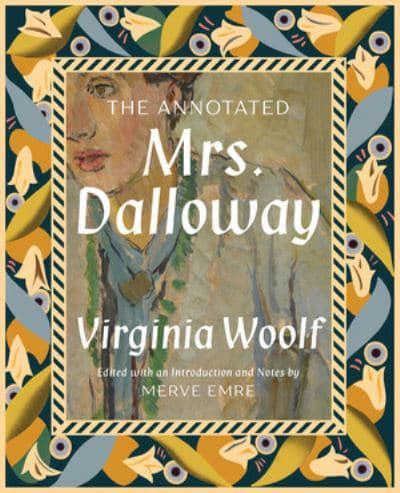
I finished reading The hours, by Michael Cunningham, which is a postmodern triple refraction (or maybe a fractured triptych?) of the theme of the novel Mrs. Dalloway and the life of its author, Virginia Woolf. As I haven’t read Mrs. Dalloway I am not really qualified to review this spin-off, but I’ll take the opportunity to convene all the books I’ve read that are in one way or another related to it or to Virginia Woolf. I had the idea when I read the scene where her sister, Vanessa Bell, comes visiting with her children, and I had to juggle a very complex network of memories of the same characters from other books. So here goes:

K, the art of love by Hong Ying (2002)

I loved this book way back when, should read it again. One of the main characters is based on Vanessa’s son Julian Bell (who appears in The hours as a child). The book was censored in China and studiously ignored in the UK.

Among the Bohemians by Virginia Nicholson (2003)

another favourite of mine, this is a non-fiction account of the unconventional lives of Virginia, Vanessa and the rest of the gang. This Virginia is Quentin Bell’s daughter, so the earlier Virginia was her great-aunt.

moving on from people to places, this 1950s book simply called

Bloomsbury

covers all the streets and many of the houses and historic residents, but hasn’t got much time for the bohemians of the Bloomsbury set.

Charleston by Quentin Bell and Virginia Nicholson, photographs by Alen Macweeney

This gloriously illustrated book about the Sussex countryhouse gives a very good idea of their interior decorations and art works. Should have reviewed this but didn’t obviously.

Who’s afraid of Virginia Woolf

I saw this play many years ago, memories are very vague, but I seem to remember Virginia was no more than a figure of speech in this one.

A room of one's own

I read this one, but again, memory is fading …

Maybe I should continue my studies with this new, annotated edition of Mrs Dalloway:

Thursday, November 25, 2021

school's out at Reichenstein, 1886

Every picture tells a story, No. 13

Returning to the in-laws in Silesia, here is Wilhelm Geppert, the baker from picture number 8 in his school days. We're not quite sure which one he is, but the streak in the top right corner may be a deliberate mark, and the boy closest to it has the right sort of head shape. He is too blurred for more detailed analysis, but let's pretend it's him.

To try and identify him we used his wedding photo (1912):

His name is on the back of the photo, too, with the beautifully handwritten inscription:

Als Andenken an meine Schulzeit
Reichenstein, d. 26.Juni 1886

So something to remember his school days by - sounds like his school days are over, but the scary thing is that he's only eight years old at the date given - he was going to turn nine in September. The four years we now call primary school may have been all the schooling he got.

Reichenstein (today: Złoty Stok) was in the Kreis Frankenstein and mainly known for its gold mine dating back to medieval times.

This photo is also on flickr.

Every picture tells a story series so far:

  1. string quartet Wuppertal Elberfeld 1927
  2. greetings from Adamsweiler
  3. Gastwirthschaft Ferd. Weirich
  4. quartet times three
  5. Neumühl 1923
  6. Tangermünde railway station 1889
  7. a singing lesson
  8. bei Wilhelm Geppert
  9. a bakery at Lorsch 1900
  10. Consumgeschäft von Julius Düsselmann
  11. Hanna and Ruth
  12. a young chemist
  13. school's out at Reichenstein, 1886

Twitter thread

Tuesday, November 23, 2021

cantigas de santa Maria revisited

As it's the 800th birthday of Alfonso X el sabio today, I've gone a bit wild on twitter and made a thread with some cantiga videos (only ten cantigas, not all 420, you'll be pleased to know).

I'm running out of time now, but at some point I will also have to spend some serious time obsessing with the two manuscripts that are now available online (since July or so).

The best thing I rediscovered in today's youtube raid was this video from Triskilian:

Monday, November 22, 2021

all about Allium

a rare excursion into food related botany with this feature sweeping up genome studies of garlic and onion, along with the recent discovery of a new Allium species. All in all, a surprising amount of really challenging science to be found around the plants in the Allium genus, which also includes leek, chives, and lots of ornamental plants.

Read all about garlic et al. in my latest feature:

All about Allium

Current Biology Volume 31, Issue 22, 22 November 2021, Pages R1449-R1452

FREE access to full text and PDF download

Chives, unless they are eaten before they get the chance, produce decorative spherical umbels similar to the larger ones of many ornamental Allium species. (Photo: PublicDomainPictures/Pixabay.)