Thursday, December 09, 2021

the case of the missing grandmother

Every picture tells a story, No. 15

Staying in East Prussia, here's another mystery that needs solving. Auguste Adschuck, born around 1865, died in January 1945 in the turbulences at the end of World War II, somewhere between East Prussia and the river Oder, so in today's Poland. The first version I heard was that after visiting family in the West she was trying to get back home to East Prussia. Written notes from one of her grandchildren now suggest she was fleeing from East Prussia to the West, which makes more sense. At a push, both versions could be true if she was attempting to return East and then had to turn around and flee westwards.

From a family portrait dated 1930.

We have no documentation of her birth, marriage or death, so even the name could be spelled differently. It sounds to me like it may have been a Polish name originally (maybe a longer one like Solodczuk) and there are multiple versions to be found in East Prussia including Odzuk, Odczuk, Otsick, Atschuk, etc. Her husband (Friedrich Kosmowsky) was born in Gerdauen, so for lack of a better clue it makes sense to look there. This website with church records from Kreis Gerdauen has some Adschuck entries, as well as Adschack and other variants, but nothing that could immediately be linked to her.

She had three daughter and five sons. The only two for whom we have birth details were born in 1899 and 1904 in Ernstwalde, Kr. Wehlau (just north of Kr. Gerdauen), so that's another clue. The sons include Friedrich on the fiddle photo (No. 5), as well as Ernst Leopold whose family appears in the photo from which I clipped her portrait. Descendants of her three daughters go by the surnames of Kalippke, Cichy, and Popp. All three surnames turn up in the Gerdauen database, although not necessarily with the specific people we're looking for.

This photo is also on flickr.

Every picture tells a story series so far:

  1. string quartet Wuppertal Elberfeld 1927
  2. greetings from Adamsweiler
  3. Gastwirthschaft Ferd. Weirich
  4. quartet times three
  5. Neumühl 1923
  6. Tangermünde railway station 1889
  7. a singing lesson
  8. bei Wilhelm Geppert
  9. a bakery at Lorsch 1900
  10. Consumgeschäft von Julius Düsselmann
  11. Hanna and Ruth
  12. a young chemist
  13. school's out at Reichenstein, 1886
  14. a patchwork family in East Prussia
  15. the case of the missing grandmother

Twitter thread

Wednesday, December 08, 2021

omicron blues

So here we go again, for the fourth time in a row, the UK govt (acting only for England as the devolved administrations have wisely gone their own ways) is doing too little too late and spouting nonsense while blatantly advertising the most important rule of all, namely that rules don't apply to them and their friends. (Impersonating police officers, anyone? Punishable offence for most of us, but not for the shifty character recently photographed at a dawn raid.) Their rules are only made for the rest of us, and we should be grateful, apparently. After today's news of how deatheaters are basically dancing on the graves of the people they killed with their stupidity (current hashtag on twitter: #ToriesPartiedWhilePeopleDied), I'm seriously running out of effs to give.

So, well, the science from wastewater monitoring (about which I've written a new article last week, due out early next year) through to vaccine development is still brilliant, but it doesn't save us from a never-ending chain of disasters if the guys at the top eff it all up. I could throw around some numbers etc, but probably won't bother. We don't have a shortage of scientific facts and figures, we just have a surplus of dangerous lunatics in high places. The immunisation against that is yet to be discovered.

What cheered me up immensely, however, was the recent front page of the taz (disclaimer: I own a share in the cooperative) linking the change of government in Germany to the change of coronavirus variant:

Source.

Rough translation: New Merkel variant prevails.

Oh, just now I also enjoyed the subtitles on today's Channel 5 News suggesting BJ was talking about Oma Crown. Sounds like a bilingual toddler trying to define the Queen.

Monday, December 06, 2021

rights of nature

Every once in a while we read in the news that a river here or a forest there has been granted legal rights, mostly the right not to be destroyed by human greed. Following a suggestion from one of the editors at Current Biology, I did a round-up of recent developments in rights of nature and examined whether it's more of a symbolic thing or actually helps protection.

My resulting feature is out now:

Reclaiming nature's rights

Current Biology Volume 31, Issue 23, 06 December 2021, Pages R1505-R1507

FREE access to full text and PDF download

See also my twitter thread listing all the 2021 features in Current Biology as they move to the open archives. I will keep this thread on twitter until the end of the year, but probably launch the new one for 2022 open archives on Mastodon, assuming that the decline and fall of the bird app continues.

The former nature reserve Te Urewera in New Zealand has now become a legal entity that effectively owns its land. (Photo: Department of Conservation, New Zealand/Flickr (CC BY 2.0).)

Thursday, December 02, 2021

a patchwork family in East Prussia

Every picture tells a story, No. 14

Karl Franz Faust (1857-1938) and Wilhelmine Justine Domscheit (1863-1942), shown here in 1920:

married in 1896, after they were both widowed. Each brought along around five children and then they went on to produce another five, some of whom are in the next picture, which is the one I want to talk about. (Due to the poor quality of the original, it looked horrible in preview so I've moved the couple portrait up to the top to appear in previews instead.)

Their shared batch of children includes the one we're interested in, Luise Auguste (1898-1979), third from right, at the back, who postumously became my grandmother in law. Her parents are at the back too, and who the other ones are is anybody's guess - the one holding a baby could be the oldest daughter from Wilhelmine's first marriage, Marie Wittke, who married a Karl Witt and had her first child in 1915, which is about the time the photo was taken.

The photo is a tiny print held in a souvenir etui opposite a portrait of one of Franz Faust's sons from the first marriage in uniform. All of which supports a date during World War I. The postal address during the war was Friederikenruh, Post Eiserwagen, Kirchspiel Allenburg, Kreis Wehlau, East Prussia. Friederikenruh was a Rittergut ("landed estate" the internet tells me but I don't know where that leaves the Ritter=knight) with 95 inhabitants. All of whom probably worked for the resident knight in some form. Franz is referred to as a Kämmerer in documents, ie financial administrator. Franz and Wilhelmine's joint son Karl Otto, born 1895, also was a Kämmerer.

Auguste moved to Hamborn in the Ruhr area in 1922, but her parents stayed in East Prussia all their lives. They both died at Groß-Neumühl (Kr.Wehlau), which may be the place mentioned on the photo with the fiddle.

The next family portrait is from 15 years later (1930) and shows Franz and Wilhelmine with the family of Marie and Karl Witt:

Their ancestry is poorly recorded but interesting. The Faust lineage hails from Lablack, Kr. Labiau, where Faust families are documented since 1619. Domscheit is a Lithuanian name found in East Prussia - a famous carrier is the painter Franz Domscheit who changed his name back to the Lithuanian version Pranas Domšaitis and emigrated to South Africa. The history of the (mostly bilingual) Prussian Lithuanians is a fascinating one.

Their descendants could be just about everywhere - two of Wilhelmine's daughters from her first marriage emigrated to Australia.

PS No idea what the shiny round thing is. Born in 1857, he was too young for the war of 1870 and too old for WWI, so I'm guessing it can't be a military medal.

Correction: I just realised he went by his second name, Franz. His father was just Karl.

This photo is also on flickr.

Every picture tells a story series so far:

  1. string quartet Wuppertal Elberfeld 1927
  2. greetings from Adamsweiler
  3. Gastwirthschaft Ferd. Weirich
  4. quartet times three
  5. Neumühl 1923
  6. Tangermünde railway station 1889
  7. a singing lesson
  8. bei Wilhelm Geppert
  9. a bakery at Lorsch 1900
  10. Consumgeschäft von Julius Düsselmann
  11. Hanna and Ruth
  12. a young chemist
  13. school's out at Reichenstein, 1886
  14. a patchwork family in East Prussia

Twitter thread

Sunday, November 28, 2021

the importance of being Virginia

I finished reading The hours, by Michael Cunningham, which is a postmodern triple refraction (or maybe a fractured triptych?) of the theme of the novel Mrs. Dalloway and the life of its author, Virginia Woolf. As I haven’t read Mrs. Dalloway I am not really qualified to review this spin-off, but I’ll take the opportunity to convene all the books I’ve read that are in one way or another related to it or to Virginia Woolf. I had the idea when I read the scene where her sister, Vanessa Bell, comes visiting with her children, and I had to juggle a very complex network of memories of the same characters from other books. So here goes:

K, the art of love by Hong Ying (2002)

I loved this book way back when, should read it again. One of the main characters is based on Vanessa’s son Julian Bell (who appears in The hours as a child). The book was censored in China and studiously ignored in the UK.

Among the Bohemians by Virginia Nicholson (2003)

another favourite of mine, this is a non-fiction account of the unconventional lives of Virginia, Vanessa and the rest of the gang. This Virginia is Quentin Bell’s daughter, so the earlier Virginia was her great-aunt.

moving on from people to places, this 1950s book simply called

Bloomsbury

covers all the streets and many of the houses and historic residents, but hasn’t got much time for the bohemians of the Bloomsbury set.

Charleston by Quentin Bell and Virginia Nicholson, photographs by Alen Macweeney

This gloriously illustrated book about the Sussex countryhouse gives a very good idea of their interior decorations and art works. Should have reviewed this but didn’t obviously.

Who’s afraid of Virginia Woolf

I saw this play many years ago, memories are very vague, but I seem to remember Virginia was no more than a figure of speech in this one.

A room of one's own

I read this one, but again, memory is fading …

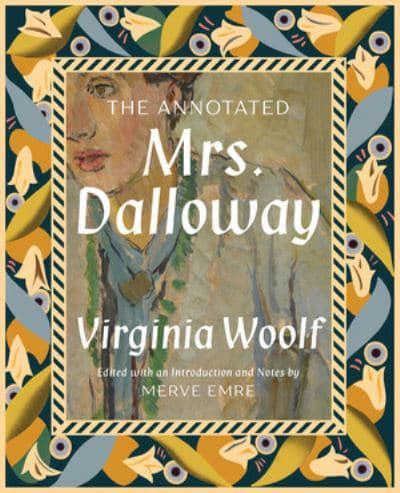
Maybe I should continue my studies with this new, annotated edition of Mrs Dalloway:

Thursday, November 25, 2021

school's out at Reichenstein, 1886

Every picture tells a story, No. 13

Returning to the in-laws in Silesia, here is Wilhelm Geppert, the baker from picture number 8 in his school days. We're not quite sure which one he is, but the streak in the top right corner may be a deliberate mark, and the boy closest to it has the right sort of head shape. He is too blurred for more detailed analysis, but let's pretend it's him.

To try and identify him we used his wedding photo (1912):

His name is on the back of the photo, too, with the beautifully handwritten inscription:

Als Andenken an meine Schulzeit
Reichenstein, d. 26.Juni 1886

So something to remember his school days by - sounds like his school days are over, but the scary thing is that he's only eight years old at the date given - he was going to turn nine in September. The four years we now call primary school may have been all the schooling he got.

Reichenstein (today: Złoty Stok) was in the Kreis Frankenstein and mainly known for its gold mine dating back to medieval times.

This photo is also on flickr.

Every picture tells a story series so far:

  1. string quartet Wuppertal Elberfeld 1927
  2. greetings from Adamsweiler
  3. Gastwirthschaft Ferd. Weirich
  4. quartet times three
  5. Neumühl 1923
  6. Tangermünde railway station 1889
  7. a singing lesson
  8. bei Wilhelm Geppert
  9. a bakery at Lorsch 1900
  10. Consumgeschäft von Julius Düsselmann
  11. Hanna and Ruth
  12. a young chemist
  13. school's out at Reichenstein, 1886

Twitter thread

Tuesday, November 23, 2021

cantigas de santa Maria revisited

As it's the 800th birthday of Alfonso X el sabio today, I've gone a bit wild on twitter and made a thread with some cantiga videos (only ten cantigas, not all 420, you'll be pleased to know).

I'm running out of time now, but at some point I will also have to spend some serious time obsessing with the two manuscripts that are now available online (since July or so).

The best thing I rediscovered in today's youtube raid was this video from Triskilian:

Monday, November 22, 2021

all about Allium

a rare excursion into food related botany with this feature sweeping up genome studies of garlic and onion, along with the recent discovery of a new Allium species. All in all, a surprising amount of really challenging science to be found around the plants in the Allium genus, which also includes leek, chives, and lots of ornamental plants.

Read all about garlic et al. in my latest feature:

All about Allium

Current Biology Volume 31, Issue 22, 22 November 2021, Pages R1449-R1452

FREE access to full text and PDF download

Chives, unless they are eaten before they get the chance, produce decorative spherical umbels similar to the larger ones of many ornamental Allium species. (Photo: PublicDomainPictures/Pixabay.)

Thursday, November 18, 2021

a young chemist

Every picture tells a story, No. 12

Richard was behind the camera in the last instalment, now here's the photographer himself, from the same stash of negatives, so presumably also from the time between 1930 and 1933. Not quite sure what's happening here, but he seems to be conducting chemical experiments at home. He was studying chemistry, maths and physics for a teaching degree. He appears to be having a good time, too. And a sense of mischief. (And no safety specs. Don't do that, kids!)

Another photo of a simlilar home-experimenting situation, this time looking more serious:
He went on to marry Ruth from episode 11. Although they took geographically very different routes before doing their last terms of university at Bonn, they were both born in small towns in Lorraine, and three of their four parents had lived in Alsace. (As Nazism got from bad to worse, they visited Strasbourg in the spirit of "while we still can".) And they each had one railway grandfather.

This photo is also on flickr (and a few others, too).

Every picture tells a story series so far:

  1. string quartet Wuppertal Elberfeld 1927
  2. greetings from Adamsweiler
  3. Gastwirthschaft Ferd. Weirich
  4. quartet times three
  5. Neumühl 1923
  6. Tangermünde railway station 1889
  7. a singing lesson
  8. bei Wilhelm Geppert
  9. a bakery at Lorsch 1900
  10. Consumgeschäft von Julius Düsselmann
  11. Hanna and Ruth
  12. a young chemist

Twitter thread

Tuesday, November 16, 2021

elusive memories

Impressions of

Dans le café de la jeunesse perdue
Patrick Modiano

Rummaging around the library I inherited I discovered a few books by the 2014 Nobel laureate for literature Patrick Modiano, including this one both in the French original and in a German translation:

I loved the French title and the German cover art, so went on to read the original. It is very short, with chapters from different perspectives describing the comings and goings of people who remain enchantingly mysterious, plus, it’s Paris shrouded in darkness and a haze of nostalgia, so what’s not to like. I disapproved of the ending though. And I'm wondering if, by not saying much at all about the characters, the author lets me do all the work. I mean I do love his elusive protagonist, Jacqueline, but I realise that I may be projecting my own expectations onto a blank canvas here.

After enjoying the misty mysteries of this one, I also read Du plus loin de l’oubli, which turns out to be very much the same, with some of the characters possibly overlapping (hello again, Jacqueline!), except that now part of the story (?) is moved to London, which somehow put me off a bit. So I guess I know the pattern now, and I don’t have to read the third one I found, which is called Pour que tu ne te perdes pas dans le quartier.

Thursday, November 11, 2021

Hanna and Ruth

Every picture tells a story, No. 11.

Ruth Düsselmann, the little girl on the steps of shop in Luisenthal grew up, and here she is in her student days in Bonn, sharing a giggle with her friend Hanna Dissmann (left). The photo was taken by fellow student Richard Groß, who may have known Hanna before he met Ruth, but he ended up marrying Ruth. Both Richard and Ruth were studying natural sciences for a teacher degree, so I'm guessing Hanna did too, but not sure. I did meet her once or twice half a century later, but didn't ask her any personal questions. Ruth arrived at Bonn University in the summer of 1930, Richard in the winter before, and they both graduated in 1933 (in a hurry as they were worried that their favourite profs would be chased away by the Nazis), so I am guessing the photo dates from between 1930 and 1933.

In these last five years, as various forms of 21st century fascism began to spread and eat away the progress we made over the previous decades, I often thought of my grandparents and what it must have been like for them, in their 20s, to see their world being pulled away from under their feet. I'm looking at these photos for a glimpse of who they were before shit happened - all I got to know as a child was the version after shit happened.

Richard was a keen photographer and left mountains of photos and negatives when he died. This is one of a bunch of photos I found as negatives of which I made small prints back then, in the late 1980s, so this is now the second time I am attempting to rescue this from oblivion. Here is another one from the same film, now trying to look serious:

There will be more photos from his vaults to be rescued for sure.

This photo is also on flickr.

Every picture tells a story series so far:

  1. string quartet Wuppertal Elberfeld 1927
  2. greetings from Adamsweiler
  3. Gastwirthschaft Ferd. Weirich
  4. quartet times three
  5. Neumühl 1923
  6. Tangermünde railway station 1889
  7. a singing lesson
  8. bei Wilhelm Geppert
  9. a bakery at Lorsch 1900
  10. Consumgeschäft von Julius Düsselmann
  11. Hanna and Ruth

Twitter thread

Monday, November 08, 2021

citizen science then and now

Back in the happy days before Brexit and Trump became a thing, I regularly attended Earthwatch events and wrote stories about their exciting research projects around the world which are made possible by recruitment of volunteers who pay for the privilege of taking part. That activity faded away as the relevant contacts at the organisation kept being replaced by new people, and I lost touch at some point. Towards the end of the phase, I suggested writing a book to be released on the 50th anniversary of the organisation, splashing out on all the wonderful work they are doing around the world. Strangely I never got anywhere with this idea. Emphasis at the organisation shifted away from the volunteer-paid research expeditions and towards partnerships with corporate sponsors as well as more affordable activities closer to home, so that may have been one reason why I didn't get much response re the history book.

The 50th anniversary happens to be now, and as there have been a couple of new developments in citizen science, I have taken the opportunity to wrap up the 50-year history of Earthwatch in a feature on new trends in citizen science more widely. Ironically, one of the trends is to get rid of the citizen scientist altogether and just use their social media posts to algorithmically identify species observations.

The resulting feature is out now:

New avenues for citizen science

Current Biology Volume 31, Issue 21, 08 November 2021, Pages R1403-R1406

FREE access to full text and PDF download

Earthwatch Institute started out organising international research expeditions with volunteer helpers, but now also offers science projects closer to home. (Photo: John Hunt, Earthwatch.)